5 citations
,
August 1981 in “Archives of Dermatology” Alopecia areata may be caused by the immune system attacking hair follicles.
January 2020 in “JAAD case reports” Systemic mastocytosis may cause a type of hair loss called cicatricial alopecia.
1 citations
,
October 2021 in “Journal of Investigative Dermatology”  July 2024 in “JAAD Case Reports”
 Corticosteroid injections for hair loss may cause eye problems, so caution is needed.
 3 citations
,
March 2015 in “Journal of the European Academy of Dermatology and Venereology”
3 citations
,
March 2015 in “Journal of the European Academy of Dermatology and Venereology” Some people with primary cicatricial alopecia also have inflammatory bowel disease, suggesting a possible connection.
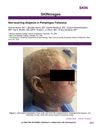 January 2026 in “SKIN The Journal of Cutaneous Medicine”
 Rituximab treatment led to complete hair regrowth and improved skin in a woman with pemphigus foliaceus.
July 2026 in “Dermatology Practical & Conceptual” Trichoscopy is important for diagnosing Folliculotropic Mycosis Fungoides on the scalp.
 1 citations
,
October 2012 in “QJM”
1 citations
,
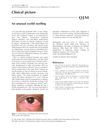
October 2012 in “QJM” A 47-year-old man's eyelid swelling didn't improve with basic treatments, so a biopsy was needed.
April 2018 in “The journal of investigative dermatology/Journal of investigative dermatology” A high-fat diet worsens neutrophilic folliculitis by increasing certain chemokines.
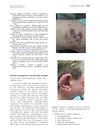
A 72-year-old man was diagnosed with a rare skin form of Rosai-Dorfman disease after years of misdiagnosis.
July 2024 in “LA Referencia (Red Federada de Repositorios Institucionales de Publicaciones Científicas)” Adipose tissue and eccrine gland displacement are common in certain alopecias but don't help differentiate between them.
September 2023 in “Journal of the American Academy of Dermatology” Bullous pemphigoid can look like erythema multiforme, so awareness is needed for proper treatment.
 19 citations
,
September 2016 in “Journal of the European Academy of Dermatology and Venereology”
19 citations
,
September 2016 in “Journal of the European Academy of Dermatology and Venereology” Trichofolliculoma is a unique benign tumor mainly affecting middle-aged adults' faces, often misdiagnosed without histopathology.
January 2026 in “Dermatologic Therapy” Folliculotropic Mycosis Fungoides requires stage-based treatment, with early stages using skin therapies and advanced stages needing aggressive treatments.
Combining pentoxifylline with corticosteroids improves alopecia areata treatment.
3 citations
,
December 2003 in “Archives of Pathology & Laboratory Medicine” The nodule was a benign cutaneous lymphadenoma, not cancer, and was successfully removed.
 9 citations
,
August 2014 in “The Journal of Dermatology”
9 citations
,
August 2014 in “The Journal of Dermatology” Scalp areas that look normal in people with hair loss may still show signs of disease under a microscope.
1 citations
,
January 1987 in “Veterinary Dermatology” Topical 0.1% tacrolimus improved a rare ear condition in cats.
18 citations
,
February 2023 in “eLife” ILC1-like cells can independently cause alopecia areata.
 2 citations
,
March 2019 in “Veterinary dermatology”
2 citations
,
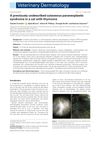
March 2019 in “Veterinary dermatology” Thymoma in cats can cause hair loss without inflammation.
 November 2022 in “Journal of the Endocrine Society”
 Immunotherapy for cancer caused a patient to develop a condition affecting hormone production, requiring ongoing hormone replacement therapy.
 5 citations
,
March 2004 in “Journal of The American Academy of Dermatology”
5 citations
,
March 2004 in “Journal of The American Academy of Dermatology” Patients with systemic lupus erythematosus and hair loss had non-scarring alopecia with fewer hair follicles, and direct immunofluorescence did not help identify lupus.
January 1999 in “대한피부과학회지” Isotretinoin treatment improved scalp condition and stopped hair loss.
June 2025 in “Veterinary Sciences” Oclacitinib effectively treated a diabetic cat's severe skin issues without raising glucose levels, and surgery fixed eyelid fusion.
5 citations
,
February 2008 in “Histopathology” 19 citations
,
December 2011 in “PubMed” Inflammation and immunity play a key role in androgenetic alopecia, with better treatment outcomes in certain immune-positive cases.
3 citations
,
January 2016 in “Dermatology online journal” Some people with lichen planus pigmentosus might later develop frontal fibrosing alopecia.
1 citations
,
January 2020 in “Skin Appendage Disorders” Treatment with methotrexate and prednisolone led to complete hair regrowth and no relapse for 2 years.

Microinfusion therapy and testosterone use may cause scalp inflammation, requiring early recognition and treatment.
8 citations
,
July 2020 in “Dermatologic Therapy” Tofacitinib may effectively treat folliculitis decalvans.