 28 citations
,
January 2014 in “Indian Journal of Dermatology, Venereology and Leprology”
28 citations
,
January 2014 in “Indian Journal of Dermatology, Venereology and Leprology” Chinese patients with primary cicatricial alopecia often have folliculitis decalvans, benefit from treatment, but may experience relapse, with dermoscopy being a useful diagnostic tool.
10 citations
,
May 2017 in “Clinical and experimental dermatology”  2 citations
,
February 2009 in “Journal of the American Academy of Dermatology”
2 citations
,
February 2009 in “Journal of the American Academy of Dermatology” Injecting triamcinolone into the eyebrow area may help eyelash regrowth in alopecia areata patients.
332 citations
,
June 1994 in “Archives of Dermatology” Postmenopausal frontal fibrosing alopecia may be a unique condition linked to postmenopausal changes.
1 citations
,
April 2022 in “Clinical Cosmetic and Investigational Dermatology” Topical treatment improved rare scalp lichen amyloidosis.
 3 citations
,
October 2021 in “Journal of Cosmetic Dermatology”
3 citations
,
October 2021 in “Journal of Cosmetic Dermatology” Trichoscopy helps tell apart Frontal Fibrosing Alopecia and Lichen planopilaris by showing different hair and scalp features.
 February 2026 in “Journal of Cutaneous and Aesthetic Surgery”
 Ectopic acanthosis nigricans can occur at surgical sites due to skin graft mismatches.
 November 2021 in “CRC Press eBooks”
 Fibrosing alopecia in a pattern distribution is a new type of scarring hair loss that resembles common baldness and an autoimmune skin disease.
 3 citations
,
July 2021 in “Aesthetic Plastic Surgery”
3 citations
,
July 2021 in “Aesthetic Plastic Surgery” PHAT may improve hair growth better than PRP alone.
 January 2014 in “Revista del Centro Dermatológico Pascua”
 Cutaneous lupus can cause permanent hair loss by damaging hair follicles.
 November 2022 in “PubMed”
 Deep dermal tissue dislocation injury in pigs leads to thicker fibrotic tissue and increased type III collagen, affecting skin repair.
5 citations
,
April 2017 in “DOAJ (DOAJ: Directory of Open Access Journals)” Liposomes are useful for treating skin conditions by effectively delivering drugs.
 6 citations
,
October 2015 in “Clinical Case Reports”
6 citations
,
October 2015 in “Clinical Case Reports” A woman with acromegaly experienced severe hair loss from a drug called Lanreotide Autogel, which improved after stopping the treatment.
 5 citations
,
July 2020 in “JAMA Dermatology”
5 citations
,
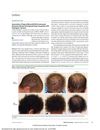
July 2020 in “JAMA Dermatology” Minoxidil solution applied twice daily improved hair growth in patients with Woolly Hair/Hypotrichosis due to LIPH gene issues, with mild side effects.
25 citations
,
June 2009 in “British Journal of Dermatology” Early scar classification in lupus can improve treatment and patient outcomes.
71 citations
,
October 2017 in “Journal of Investigative Dermatology” PPAR-γ agonists like pioglitazone may help manage lichen planopilaris but don't fully reverse scarring.
November 2010 in “PubMed” Human hair keratin can help repair fat tissue.
 8 citations
,
June 2012 in “Australasian Journal of Dermatology”
8 citations
,
June 2012 in “Australasian Journal of Dermatology” A rare form of alopecia causes hair thinning without bald spots and may be more common than thought, responding well to steroid treatment.
 7 citations
,
August 2021 in “Journal of the European Academy of Dermatology and Venereology”
7 citations
,
August 2021 in “Journal of the European Academy of Dermatology and Venereology” Early treatment of fibrosing alopecia in a pattern distribution may improve outcomes.
 September 2019 in “Journal of evolution of medical and dental sciences”
 Obesity significantly affects skin health, causing conditions like acanthosis nigricans and skin tags, and should be considered during skin exams.
 1 citations
,
January 2014 in “Health Renaissance”
1 citations
,
January 2014 in “Health Renaissance” Pseudopelade of Brocq is hard to diagnose and treat, with limited effective options.
January 2022 in “Clinical Cases in Dermatology” A 47-year-old man was diagnosed with a specific type of hair loss and advised to use certain medications and avoid hair transplants.
 408 citations
,
January 2017 in “Science”
408 citations
,
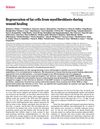
January 2017 in “Science” Some wound-healing cells can turn into fat cells around new hair growth in mice.
 3 citations
,
May 2022 in “Clinical and experimental dermatology”
3 citations
,
May 2022 in “Clinical and experimental dermatology” Drugs targeting EMT molecules show promise for treating lichen planopilaris.
 January 2013 in “Journal of dermatology”
 A new medical syndrome may include skin changes, hair loss, sweating issues, bone malformations, leg swelling, and low cortisol.
 January 2023 in “Springer eBooks”
 Using one's own blood platelets and fat can improve facial and hair appearance without surgery.
 January 2015 in “Hair transplant forum international”
 Up to 10% of hair loss patients might have early signs of a condition called Lichen Planopilaris.
January 2026 in “Dermatologic Therapy” APCs may improve hair density in cicatricial alopecia but effects may not last long.
December 2020 in “Journal of Endocrinology and Reproduction” Certain inflammatory molecules and leptin may contribute to hair loss in cicatricial alopecia.
2 citations
,
February 2021 in “Indian Dermatology Online Journal” Imatinib can cause hair loss due to lichen planopilaris.