4 citations
,
May 2023 in “Cells” Baricitinib and its combination with lonafarnib improve fat cell formation in certain genetic disorders.
 18 citations
,
January 2000 in “Food Science and Technology Research”
18 citations
,
January 2000 in “Food Science and Technology Research” Apple polyphenols, especially from unripe apples, can help prevent cells from turning into fat cells.
June 2026 in “British Journal of Dermatology” Hairline-lowering surgery may trigger lichen planopilaris in some people.
11 citations
,
December 2013 in “Clinical and experimental dermatology” A child with skin and heart issues had rare genetic mutations affecting skin and heart cell cohesion.
September 2024 in “Dermatologica Sinica” Ponatinib can cause a rare skin reaction that resolves with topical treatment and temporary drug discontinuation.
January 2026 in “Animal Genetics” A genetic variant in the GJB6 gene likely caused the Labrador's paw pad condition.
39 citations
,
January 2008 in “World Journal of Gastroenterology” Pegylated interferon-alpha 2a can cause a rare nerve disorder, but early treatment can lead to full recovery.
12 citations
,
August 2007 in “Human Molecular Genetics” Lymphotoxin-β is crucial for proper skin development in embryos.
 March 2026 in “Folia Histochemica et Cytobiologica”
 LTBP1 is a key regulator in diseases and a potential target for new treatments.
 June 2024 in “International Journal of Dermatology”
 Upadacitinib may effectively treat resistant lichen planopilaris.
October 2022 in “Zenodo (CERN European Organization for Nuclear Research)” Combining PDLLA and PRP effectively reduces wrinkles and improves skin quality.
 January 2024 in “Brazilian Journal of Hair Health”
 Combining low-level laser therapy with topical corticosteroids effectively improved Lichen Planopilaris symptoms.
 14 citations
,
May 2018 in “Journal of the American Academy of Dermatology”
14 citations
,
May 2018 in “Journal of the American Academy of Dermatology” Platelet-rich plasma might be a new way to treat lichen planopilaris.
 94 citations
,
October 2017 in “International Journal of Dermatology”
94 citations
,
October 2017 in “International Journal of Dermatology” Lichen planus pigmentosus causes dark skin patches and is treated by avoiding triggers and using anti-inflammatory medications.
 April 2023 in “Journal of Investigative Dermatology”
 A protein called MPZL3 in mitochondria slows down hair growth and could be a target for treating hair growth disorders.
90 citations
,
May 2018 in “Molecular Cell” Caspase-3 helps control cell growth and organ size by activating YAP.
8 citations
,
July 2015 in “International Journal of Dermatology” A new DSG4 gene mutation causes hair defects in a young girl.
 18 citations
,
September 2016 in “International Journal of Molecular Sciences”
18 citations
,
September 2016 in “International Journal of Molecular Sciences” Polydeoxyribonucleotide (PDRN) may help lighten skin and treat hyperpigmentation.
 November 2022 in “Journal of Investigative Dermatology”
 Neutrophils quickly respond to skin injury.
October 2025 in “Our Dermatology Online” Tranexamic acid and oral retinoids may effectively treat lichen plan pigmentosus.
3 citations
,
November 2022 in “Molecules/Molecules online/Molecules annual” The substances improved hair regrowth and protected hair cells in humans and mice.
 4 citations
,
September 2024 in “Oncology Research Featuring Preclinical and Clinical Cancer Therapeutics”
4 citations
,
September 2024 in “Oncology Research Featuring Preclinical and Clinical Cancer Therapeutics” 3D models and organoids improve liposarcoma research and therapy development.
5 citations
,
January 2017 in “Chalmers Publication Library (Chalmers University of Technology)” Cubosomes enhance antimicrobial peptide stability and effectiveness.
 16 citations
,
September 2018 in “Journal of Molecular Liquids”
16 citations
,
September 2018 in “Journal of Molecular Liquids” The PS-b-PAA copolymer nanomicelles are effective for delivering a cancer treatment drug in photodynamic therapy.
 January 2025 in “Cellular and Molecular Biology”
 The PIP5K1A gene helps cashmere growth in goats by promoting cell proliferation, and melatonin boosts its expression.
12 citations
,
January 2013 in “Indian dermatology online journal” Dermatopathia pigmentosa reticularis causes skin discoloration, hair loss, and nail problems.
 April 2017 in “Journal of Investigative Dermatology”
 A boy with Oculodentodigital syndrome had a unique GJA1 gene mutation causing his symptoms.
 32 citations
,
September 2015 in “Dermatology”
32 citations
,
September 2015 in “Dermatology” Certain leukemia drugs can cause severe skin reactions that may require stopping treatment.
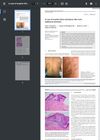 1 citations
,
December 2022 in “Pediatric dermatology”
1 citations
,
December 2022 in “Pediatric dermatology” A boy developed a rare skin condition after recovering from a severe skin reaction, and it improved with lotion treatment.
46 citations
,
May 2013 in “The journal of investigative dermatology/Journal of investigative dermatology” Significant progress was made in understanding PXE, but effective treatments are still needed.