15 citations
,
June 2020 in “Processes” CMX from Centipeda minima can significantly improve hair growth in mild to moderate balding.

Plant-based compounds can improve wound dressings and skin medication delivery.
 3 citations
,
November 2011 in “European Journal of Dermatology”
3 citations
,
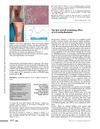
November 2011 in “European Journal of Dermatology” 4-O-methylhonokiol from Magnolia officinalis significantly promotes hair growth.
 21 citations
,
February 2013 in “Clinics in Dermatology”
21 citations
,
February 2013 in “Clinics in Dermatology” New treatments for advanced skin cancer are improving patient outcomes, but drug resistance and finding the right treatment combinations are still big challenges.
 8 citations
,
February 2025 in “Swiss Medical Weekly”
8 citations
,
February 2025 in “Swiss Medical Weekly” Integrating best practices for steroid users in Swiss primary care is feasible and beneficial, but doping laws need change.
5 citations
,
August 2021 in “Journal of Ethnobiology and Ethnomedicine” Smilax aristolochiifolia is declining in Puebla, Mexico, needing conservation efforts.
 87 citations
,
September 2019 in “Nature Communications”
87 citations
,
September 2019 in “Nature Communications” SOX11 and SOX4 help skin cells act like embryonic cells to heal wounds in mice.
 February 2026 in “IOP Conference Series Earth and Environmental Science”
 Candlenut plants in Karo have common traits and varied kinship, with MTB1 and MTB2 being closest.
 41 citations
,
March 2010 in “Psychology Research and Behavior Management”
41 citations
,
March 2010 in “Psychology Research and Behavior Management” Using psychological treatments can help manage skin conditions along with regular medical care.
 16 citations
,
January 1980 in “Planta Medica”
16 citations
,
January 1980 in “Planta Medica” Some natural extracts and one hair tonic can promote hair growth in mice.
 12 citations
,
January 2007 in “Acta dermato-venereologica”
12 citations
,
January 2007 in “Acta dermato-venereologica” Europe needs a clear system to watch over cosmetics for safety and to make sure product claims are true.
 12 citations
,
January 1988 in “YAKUGAKU ZASSHI”
12 citations
,
January 1988 in “YAKUGAKU ZASSHI” Certain natural extracts can promote hair regrowth.
 5 citations
,
February 2010 in “Expert Review of Dermatology”
5 citations
,
February 2010 in “Expert Review of Dermatology” Treating both the mind and skin together, especially by managing stress, can greatly improve outcomes for skin disorders linked to psychological issues.
Dental procedures and treatments show promise but need more research for conclusive results.
The treatment improved facial structure and corrected bite issues in patients.
 March 2012 in “Daehan hwajangpum hakoeji/Daehan hwa'jangpum haghoeji”
 The cream with plant components increased skin collagen and the hair tonic promoted hair growth in mice.
 7 citations
,
October 2019 in “Evidence-based Complementary and Alternative Medicine”
7 citations
,
October 2019 in “Evidence-based Complementary and Alternative Medicine” Chinese medicine may help hair growth and reduce hair loss in androgenetic alopecia.
 46 citations
,
November 2011 in “Forest Ecology and Management”
46 citations
,
November 2011 in “Forest Ecology and Management” Understanding the fruiting patterns of Ficus trees can improve forest restoration by ensuring pollinators survive and biodiversity is supported.

Smilax aristolochiifolia is less abundant due to environmental changes, but still used in traditional medicine.
 January 2023 in “Open Access Research Journal of Biology and Pharmacy”
 Martynia annua shows promise for future medical research due to its many medicinal properties.
August 2025 in “International Journal of Molecular Sciences” Osmanthus fragrans var. aurantiacus Makino may help treat inflammation due to its antioxidative and anti-inflammatory properties.
82 citations
,
April 2014 in “Plant Cell & Environment” Magnesium levels control root hair growth in plants.
November 2024 in “DELOS Desarrollo Local Sostenible” Thunbergia grandiflora and Russelia equisetiformis help each other grow by changing their shapes.
 May 2020 in “Research, Society and Development”
 Mutamba fruits are rich in soluble solids, vitamin C, and minerals, making them good for food industry use.
 3 citations
,
April 2018 in “Holzforschung”
3 citations
,
April 2018 in “Holzforschung” Scientists found a new natural compound and other known compounds in Cercidiphyllum japonicum twigs, which might be useful for medicine.
 July 2025 in “New Phytologist”
 MLO proteins help regulate calcium and ROS levels, promoting root hair growth in Arabidopsis.
 1 citations
,
December 2022 in “BMC Plant Biology”
1 citations
,
December 2022 in “BMC Plant Biology” The black orchid Brasiliorchis schunkeana produces chemicals that attract certain insects and have potential antimicrobial properties.
 May 2022 in “Journal of pharmacognosy and phytochemistry”
 The evaluation of Creeping Daisy leaves found important characteristics and compounds that support its use in medicine.
 6 citations
,
November 2021 in “Journal of Ethnopharmacology”
6 citations
,
November 2021 in “Journal of Ethnopharmacology” Calanthe orchids have medicinal potential and contain 265 chemical compounds, but are underexplored.