UC-MSC-Es help human hair cells grow.
 1 citations
,
November 2002 in “Journal of dermatology”
1 citations
,
November 2002 in “Journal of dermatology” The antibody created from BCC tissues reacts similarly to both BCC and hair follicles, suggesting BCC may come from hair follicle cells.
 18 citations
,
November 2008 in “Disease-a-Month”
18 citations
,
November 2008 in “Disease-a-Month” A common cause of skin infections in the U.S. is a strain of bacteria resistant to certain antibiotics, and prevention focuses on cleanliness and avoiding close contact.
3 citations
,
August 2024 in “The Journal of Cell Biology” Actin filaments help stabilize and reshape cell membranes.
 July 2012 in “European journal of cancer”
 MPA increases cancer spread by boosting Eph A2 activity.
 10 citations
,
January 2016 in “Dermatology”
10 citations
,
January 2016 in “Dermatology” People with myotonic dystrophy type 1 tend to develop basal cell carcinoma at a younger age but not more frequently than others.
2 citations
,
April 2020 in “International Journal of Dermatology and Venereology” Beta-HPV and MCPyV are linked to certain skin cancers, with ongoing research and vaccine development.
39 citations
,
February 2024 in “Small” Microneedles are becoming essential tools in medicine for sensing, drug delivery, and communication.
46 citations
,
November 2019 in “Journal of Integrative Plant Biology” CaM7 and CNGC14 interaction controls root hair growth in Arabidopsis.
3 citations
,
July 2022 in “Brain and Behavior” The HtrA1L364P mutation causes brain dysfunction and blood vessel damage.
Mdm2 is crucial for controlling p53 to maintain healthy cells and prevent tumors.
January 2008 in “Zhongguo zuzhi gongcheng yanjiu yu linchuang kangfu” Vaginal mucosa stem cells can be effectively isolated and cultured using specific methods.
12 citations
,
July 2004 in “Molecular genetics and genomics” A new mouse mutation causes skin and hair defects due to a gene change.
11 citations
,
September 2019 in “The journal of investigative dermatology/Journal of investigative dermatology” A specific group of skin stem cells was found to help maintain hair follicle cells.

The digital system for measuring melasma shows promise but needs more development for better accuracy and automation.
 1 citations
,
November 2024 in “Cureus”
1 citations
,
November 2024 in “Cureus” Recognizing RSCC is crucial due to its aggressive nature and high risk of poor outcomes.
 3 citations
,
February 2012 in “The American Journal of Dermatopathology”
3 citations
,
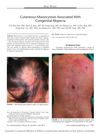
February 2012 in “The American Journal of Dermatopathology” A 3-year-old girl with skin mast cell buildup and congenital baldness improved with treatment, suggesting a rare link between these conditions.
July 2024 in “International Journal of Molecular Sciences” MicroRNAs could help assess and manage multiple chronic diseases.
April 2026 in “Journal of Cutaneous Pathology” Alopecia can be caused by multicentric reticulohistiocytosis.
 2 citations
,
February 2023 in “Research Square (Research Square)”
2 citations
,
February 2023 in “Research Square (Research Square)” The scaffold effectively prevents melanoma relapse and aids wound healing.
 January 2024 in “Medical mycology journal”
 A mother and her two daughters got a skin infection from their cat.
7 citations
,
February 2012 in “Journal of cutaneous pathology” The document describes previously unreported unique skin changes in a rare genetic disorder called Hereditary mucoepithelial dysplasia.
 June 2026 in “Discover Immunity.”
 Mesenchymal stem cells help improve skin healing and rejuvenation.
 December 2023 in “Medical Times”
 The MEST method increases cell yield and volume for regenerative medicine but needs more testing.
3 citations
,
May 2025 in “Lasers in Surgery and Medicine” Microneedle radiofrequency helps skin repair and rejuvenate by activating fibroblasts and remodeling the skin's structure.
2 citations
,
January 2014 in “Case Reports in Clinical Medicine” Cronkhite-Canada syndrome is a rare condition causing gut polyps, hair loss, skin changes, and nail issues, often with a poor outlook.
January 2025 in “Stem Cells International” Exosomes from stem cells can reduce UV-induced skin damage by lowering inflammation and oxidative stress.
 4 citations
,
May 2013 in “Dermatologic Surgery”
4 citations
,
May 2013 in “Dermatologic Surgery” Three new techniques simplify and improve the preparation of tissue samples for skin cancer surgery.
1 citations
,
July 2017 in “PubMed” Two patients with Cronkhite-Canada syndrome achieved remission after treatment.
9 citations
,
April 2025 in “Stem Cell Research & Therapy” MSC-derived conditioned media can improve skin treatments.