 September 2025 in “PubMed”
 Mechanical stimulation and new therapies show promise for hair regrowth.
April 2026 in “Stem Cell Reviews and Reports”  April 2025 in “ACS Applied Nano Materials”
 A new treatment using dissolvable microneedles with nickel-copper and minoxidil improves hair growth and health in androgenetic alopecia.

Mechanical surface cues can control macrophage behavior for better immunotherapy and tissue healing.
 2 citations
,
April 2017 in “Journal of Investigative Dermatology”
2 citations
,
April 2017 in “Journal of Investigative Dermatology” Tofacitinib helped over half of the patients with severe hair loss regrow at least 50% of their hair.
 June 2026 in “Zenodo (CERN European Organization for Nuclear Research)”
 Mechanical scalp stimulation may help with hair loss, but more research is needed to confirm its effectiveness.
 June 2026 in “Zenodo (CERN European Organization for Nuclear Research)”
 Mechanical scalp stimulation may help with hair loss, but more research is needed.
7 citations
,
March 2024 in “Biomedical Engineering Letters”  December 2023 in “Medical Times”
 The MEST method increases cell yield and volume for regenerative medicine but needs more testing.
May 2020 in “Meeting abstracts/Meeting abstracts (Electrochemical Society. CD-ROM)” Self-powered devices can speed up healing, boost hair growth, and help control weight without batteries.
1 citations
,
June 2015 in “Journal of anatomy” A compound named ZCZ90 can increase muscle spindle firing, potentially helping treat muscle spasms and hypertension.
 5 citations
,
March 2023 in “bioRxiv (Cold Spring Harbor Laboratory)”
5 citations
,
March 2023 in “bioRxiv (Cold Spring Harbor Laboratory)” Dynamic, light touch is sensed through a common mechanism involving Piezo2 channels in sensory axons.
January 2011 in “Hispania Judaica bulletin” Mechanical forces are crucial for hair regeneration in skin organoids.
 13 citations
,
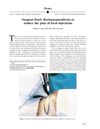
April 2001 in “Journal of The American Academy of Dermatology”
13 citations
,
April 2001 in “Journal of The American Academy of Dermatology” Using a vibrating device during injections can help reduce pain.
 December 2025 in “Progress in Biomedical Engineering”
 New techniques like electrical stimulation and microneedling may improve hair growth and offer alternatives to current treatments.
Electrical stimulation with minoxidil boosts hair cell growth.
January 2022 in “Social Science Research Network” Potassium channel modulators mostly increase the activity of rat whisker mechanoreceptors.
 163 citations
,
April 2019 in “Nature Communications”
163 citations
,
April 2019 in “Nature Communications” Mechanical stretching of the skin can promote hair growth by activating certain immune cells.
 January 2023 in “Theranostics”
 Mechanical force is important for the first contact between skin cells and hair growth in mini-organs.
January 2005 in “日本機械学會論文集. C編” Minoxidil sulfate and pinacidil promote hair growth likely by increasing blood flow, not by activating K channels.
April 2026 in “Journal of Investigative Dermatology” Mechanotransduction aids healthy wound healing by promoting specific fibroblasts.
1 citations
,
January 2001 in “PubMed” Mechanoreceptors convert physical touch into electrical signals through specialized nerve structures.
 92 citations
,
September 2019 in “ACS nano”
92 citations
,
September 2019 in “ACS nano” A wearable device using electric stimulation can significantly improve hair growth.
July 2026 in “Organoid Research” Hydrogel microspheres can improve the development and effectiveness of musculoskeletal organoids.
January 2026 in “SSRN Electronic Journal”  13 citations
,
January 2016 in “Burns & Trauma”
13 citations
,
January 2016 in “Burns & Trauma” Vacuum massage may improve skin elasticity and induce changes in skin cells, but evidence for treating burn scars is insufficient and more research is needed.
 April 2018 in “Journal of Investigative Dermatology”
 The conclusion is that a new method combining magnetic tweezers and traction force microscopy may help understand skin cell interactions and diseases.

The hydrogel platform speeds up healing in diabetic wounds.
October 2020 in “Faculty Opinions – Post-Publication Peer Review of the Biomedical Literature” Mechanical stretching can promote hair growth by activating certain immune cells.