13 citations
,
June 2014 in “Molecular therapy” The lentiviral array can monitor and predict gene activity during stem cell differentiation.
 June 2018 in “Journal of Acupuncture and Meridian Studies”
 New technologies in acupuncture and biosensors show promise for better medical treatments and healing.
 119 citations
,
March 2020 in “Frontiers in Bioengineering and Biotechnology”
119 citations
,
March 2020 in “Frontiers in Bioengineering and Biotechnology” Asia has made significant progress in tissue engineering and regenerative medicine, but wider clinical use requires more development.
December 2023 in “bioRxiv (Cold Spring Harbor Laboratory)” Actin filaments help stabilize and integrate cell membranes during transfer.
 15 citations
,
June 2020 in “Applied Materials Today”
15 citations
,
June 2020 in “Applied Materials Today” The SA-MS hydrogel is a promising material for improving wound healing and skin regeneration in diseases like diabetes and skin cancer.

Bubble microneedles effectively deliver drugs through the skin and mouth, improving treatment speed and efficiency.
February 2026 in “Apollo (University of Cambridge)” Droplet microfluidics can precisely create microgels for advanced bioengineering uses.
 3 citations
,
July 2024 in “Annals of Biomedical Engineering”
3 citations
,
July 2024 in “Annals of Biomedical Engineering” Multiphoton microscopy can effectively detect early endometrial cancer by analyzing collagen changes.
 January 2024 in “Wiadomości Lekarskie”
 Multiomics is revolutionizing biology by enabling breakthroughs in research and disease diagnosis.
5 citations
,
March 2025 in “Tissue Engineering and Regenerative Medicine”  88 citations
,
December 2018 in “Advanced Healthcare Materials”
88 citations
,
December 2018 in “Advanced Healthcare Materials” Layer-by-Layer self-assembly is promising for biomedical uses like tissue engineering and cell therapy, but challenges remain in material safety and process optimization.
October 2024 in “Acta Biomaterialia” Collagen makes skin stiff, and preservation methods greatly increase tissue stiffness.
 29 citations
,
July 2014 in “PloS one”
29 citations
,
July 2014 in “PloS one” Meis1 is crucial for skin health and tumor development.
22 citations
,
November 2023 in “Molecules” Smart microneedles can deliver drugs painlessly and accurately for diseases like diabetes and tumors.
 1 citations
,
September 2025 in “Clinical Cosmetic and Investigational Dermatology”
1 citations
,
September 2025 in “Clinical Cosmetic and Investigational Dermatology” Adipose-derived stem cell exosomes and AI can improve personalized skincare by offering anti-aging benefits and precise product customization.
 84 citations
,
April 2013 in “Applied Microbiology and Biotechnology”
84 citations
,
April 2013 in “Applied Microbiology and Biotechnology” Mannosylerythritol lipids are good for skin and hair care products.
December 2022 in “Nature Communications” Bead-jet printing of stem cells improves muscle and hair regeneration.
November 2025 in “bioRxiv (Cold Spring Harbor Laboratory)” Lateral plate mesoderm helps create skin and amnion-like tissues for studying development and therapies.
323 citations
,
November 2017 in “Bioanalysis” Matrix effects in LC-MS can be managed but not completely avoided.
6 citations
,
June 2025 in “Nano Biomedicine and Engineering” Smart nano-PROTACs improve cancer treatment by targeting proteins more precisely and reducing side effects.
 1 citations
,
April 2026 in “Cancer Nanotechnology”
1 citations
,
April 2026 in “Cancer Nanotechnology” Nanozymes could improve cancer diagnosis and treatment by mimicking enzymes and enhancing delivery to tumors.
1 citations
,
July 2024 in “Nanomedicine” Stem cell-derived vesicles improve blood vessel growth in limbs.
1 citations
,
August 2025 in “Frontiers in Pharmacology” Dissolving microneedles improve the delivery of traditional Chinese medicine by making it easier, safer, and more effective.
 December 2023 in “Medical Times”
 The MEST method increases cell yield and volume for regenerative medicine but needs more testing.
18 citations
,
April 2016 in “The journal of immunology/The Journal of immunology” Thymic mesenchymal cells have unique gene expression that supports their specific functions in the thymus.
 March 2021 in “Research Square (Research Square)”
 The new 3D sponge-like material helps cells grow and heals wounds effectively.
 April 2023 in “Journal of Investigative Dermatology”
 Human TMEM2 does not break down hyaluronan but helps control its metabolism.
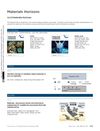 January 2026 in “Materials Horizons” 17 citations
,
January 2024 in “Journal of Materials Chemistry B”
January 2026 in “Materials Horizons” 17 citations
,
January 2024 in “Journal of Materials Chemistry B” Magneto-responsive biocomposites help heal wounds faster and better.
 January 2024 in “Regenerative Biomaterials”
 Metal organic frameworks-based scaffolds show promise for tissue repair due to their unique properties.