 4 citations
,
January 2021 in “Archives of dermatological research”
4 citations
,
January 2021 in “Archives of dermatological research” The study created a new model to better understand human hair growth and health.
 4 citations
,
September 2010 in “Journal of Dermatological Science”
4 citations
,
September 2010 in “Journal of Dermatological Science” A new gene location for Keratosis follicularis squamosa was found on chromosome 7p14.3-7p12.1.
 3 citations
,
August 2024
3 citations
,
August 2024 Deep skin fibroblasts help recruit immune cells for better wound healing.
 3 citations
,
March 2023 in “Life”
3 citations
,
March 2023 in “Life” Obesity can worsen wound healing by negatively affecting the function of stem cells in fat tissue.
 3 citations
,
April 2022 in “Frontiers in Physiology”
3 citations
,
April 2022 in “Frontiers in Physiology” Ptch2 plays a key role in controlling stem cell function and the ability to regenerate after birth.
 3 citations
,
February 2021 in “Experimental dermatology”
3 citations
,
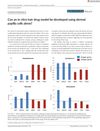
February 2021 in “Experimental dermatology” Dermal papilla microtissues could be useful for initial hair growth drug testing.
 2 citations
,
February 2024 in “Nature cell biology”
2 citations
,
February 2024 in “Nature cell biology” Mechanical forces are crucial for shaping cells and forming tissues during development.
 2 citations
,
January 2023 in “BioMed Research International”
2 citations
,
January 2023 in “BioMed Research International” The secretome from mesenchymal stromal cells shows promise for improving facial nerve injury treatment.
 2 citations
,
September 2018 in “Tissue Engineering Part A”
2 citations
,
September 2018 in “Tissue Engineering Part A” Xeno-free three-dimensional stem cell masses are safe and effective for improving blood flow and tissue repair in limb ischemia.
 2 citations
,
January 2017 in “AIMS cell and tissue engineering”
2 citations
,
January 2017 in “AIMS cell and tissue engineering” Mesenchymal stem cells show promise for treating various skin conditions and may help regenerate hair.
1 citations
,
December 2025 in “Stem Cell Research & Therapy” Stem cell-derived exosomes can help repair ear damage and improve balance and hearing.
1 citations
,
November 2025 in “Stem Cell Research & Therapy” Immortalized hair follicle cells could be useful for regenerative medicine and treating inflammation and oxidative stress.
 1 citations
,
September 2023 in “Stem cell research & therapy”
1 citations
,
September 2023 in “Stem cell research & therapy” Mesenchymal stem cells could help treat aging-related diseases better than current methods.
 1 citations
,
July 2023 in “International Journal of Molecular Sciences”
1 citations
,
July 2023 in “International Journal of Molecular Sciences” Treating fat stem cells with low oxygen boosts hair growth cell growth through specific signaling pathways.
 1 citations
,
November 2021 in “American Journal of Clinical Pathology”
1 citations
,
November 2021 in “American Journal of Clinical Pathology” The conclusion is that certain physical signs in the body can indicate past acute and chronic stress, which may help in child abuse investigations.
 1 citations
,
October 2012 in “Elsevier eBooks”
1 citations
,
October 2012 in “Elsevier eBooks” Skin stem cells can help improve skin repair and regeneration.
 June 2026 in “Applied Biological Chemistry”
 The M5 method is best for isolating cells that help hair growth.
 June 2026 in “Scientific Reports”
 Nestin-expressing hair follicle cells may be useful for nerve repair and regeneration.
 May 2026 in “Medical Sciences”
 Vesicle-based therapies from stem cells and plants improve burn healing and could be safe, scalable alternatives to cell transplants.
 February 2026 in “Frontiers in Pharmacology”
 Genetics can help tailor treatments for male pattern hair loss, improving outcomes like stabilization or modest regrowth.
 January 2026 in “Frontiers in Cell and Developmental Biology”
 Platelet-derived products can help regenerate the temporomandibular joint by enhancing natural healing processes.
 November 2025 in “Stem Cell Research & Therapy”
 Human hair follicle cells can help regenerate hair and reduce inflammation, aiding in hair loss treatment.
 September 2025 in “Arthritis Research & Therapy”
 BMS-470539 reduces skin fibrosis and inflammation.
 August 2025 in “Stem Cell Research & Therapy”
 Exosomes from stem cells can help regrow hair better than minoxidil.
 June 2025 in “Medical & Clinical Case Reports Journal”
 Exosomes may improve hair growth, but more research is needed for safety and approval.

Human hair follicle stem cells improved memory and brain health in rats.
Exosome therapy could help hair growth but needs more research for safety and effectiveness.
 March 2025 in “World Journal of Stem Cells”
 Stem cell exosomes may help treat hair loss by promoting hair growth.
 November 2024 in “Stem Cell Research & Therapy”
 Stem cells from umbilical cords can help regrow hair in mice with hair loss.

New methods efficiently isolate dermal papilla cells from hair follicles, preserving their characteristics better than traditional methods.