 August 2018 in “Journal of The American Academy of Dermatology”
 Oral alitretinoin is effective for certain types of chronic hand eczema, with mild side effects.
 December 2017 in “Springer eBooks”
 Transplant patients often get skin problems, with treatments varying by condition.
 March 2017 in “InTech eBooks”
 Acne vulgaris is a common skin condition that can cause low self-esteem and depression, and early treatment is important to prevent scarring.
 December 2013 in “Biomedical and biopharmaceutical research”
 Nanotechnology shows promise for better drug delivery and cancer treatment.
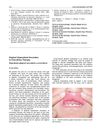 January 2010 in “Actas Dermo-Sifiliográficas”
 A woman developed thick gums from everolimus treatment after a kidney transplant.
 June 2008 in “Springer eBooks”
 The document concludes that permanent hair loss conditions are complex, require early specific treatments, and "secondary permanent alopecias" might be a more accurate term than "secondary cicatricial alopecia."
 September 2002 in “Fertility and sterility”
 Female relatives of PCOS patients have a higher chance of showing PCOS symptoms.
 December 1989 in “The Journal of Dermatologic Surgery and Oncology”
 New techniques and findings in dermatologic surgery show improved pain management, safer liposuction, better hair transplantation, and effective treatments for skin conditions.
72 citations
,
July 2022 in “Frontiers in Systems Biology” Modern lifestyles harm beneficial microbes, affecting health.
1 citations
,
November 2009  3 citations
,
August 2023 in “World Journal of Biology and Biotechnology”
3 citations
,
August 2023 in “World Journal of Biology and Biotechnology” The human microbiome is vital for health and can help treat diseases.
 8 citations
,
October 2022 in “Cold Spring Harbor perspectives in biology”
8 citations
,
October 2022 in “Cold Spring Harbor perspectives in biology” The document concludes that better understanding the wound microbiome can improve chronic wound care by preserving helpful bacteria and targeting harmful ones.
 March 2026 in “Zenodo (CERN European Organization for Nuclear Research)”
 The N-K GM Series offers highly selective, eco-friendly antimicrobials free for everyone.
June 2025 in “Frontiers in Immunology” Sampling methods greatly affect skin microbiome data in acne studies.
January 2026 in “Methods in molecular biology” Using PMA treatment before sequencing helps accurately identify living microbes on the scalp.
 March 2026 in “Zenodo (CERN European Organization for Nuclear Research)”
 The N-K GM Series offers highly selective, eco-friendly medicines targeting harmful microbes, free for personal use.
 July 2000 in “Dermatologic Surgery”
 Many skin products get contaminated with bacteria, especially if they're in jars or previously opened.
July 2026 in “Frontiers in Bioengineering and Biotechnology” Microbioreactors improve cell-based therapies and personalized medicine but face scalability challenges.
 36 citations
,
June 2019 in “eLife”
36 citations
,
June 2019 in “eLife” The study developed a tool to predict how gut microbes process foods and drugs, showing that similar compounds often share metabolic pathways and effects.
August 2025 in “Journal of Clinical Medicine” Skin diseases alter the skin's microbiome, and prebiotic treatments might help.
June 2020 in “Zenodo (CERN European Organization for Nuclear Research)” Controlled microflora in animals delays immune cell maturation and affects immunity.
November 2025 in “Dermato” The skin microbiome is crucial for skin health and new treatments like probiotics can improve skin conditions.
194 citations
,
October 2018 in “Microbiome” Acne is linked to complex skin microbe interactions, and new findings suggest microbiome-based treatments could be effective.
8 citations
,
March 2023 in “BMC Research Notes” Laser-capture microdissection effectively analyzes hair follicle microbiomes, revealing region-specific bacterial differences.
11 citations
,
October 2024 in “International Journal of Molecular Sciences” Psoriasis patients have different skin bacteria, which may cause flare-ups.
 April 2024 in “Frontiers in cellular and infection microbiology”
 Blue light might help treat skin conditions by affecting the skin's bacteria.
114 citations
,
February 2023 in “International Journal of Molecular Sciences” The skin microbiome is crucial for skin health, and more research is needed to explore its role and potential treatments.
1 citations
,
November 2024 in “Pathogens” Lung microbiome research is growing, focusing more on specific mechanisms and clinical uses.
 June 2025 in “Microorganisms”
 Microbial imbalances in hair follicles may contribute to hair loss, especially in women.
5 citations
,
October 2020 in “Food Science and Technology” Better hygiene is needed in handling dry salted shrimp to ensure safety.