55 citations
,
February 2014 in “Journal of Structural Biology” Human hair has a complex, variable structure with a consistent matrix and double-twist pattern.
 18 citations
,
July 2014 in “Molecular Medicine Reports”
18 citations
,
July 2014 in “Molecular Medicine Reports” UVB radiation changes the levels of certain microRNAs in skin cells, which may affect cell survival and hair growth.
20 citations
,
April 1959 in “A M A Archives of Dermatology” Alopecia mucinosa causes red, raised skin patches and hair loss.
 August 2025 in “International Journal of Contemporary Pediatrics”
 HLD10 can include increased body hair and Mongolian spots.
 January 2018 in “Sohag Medical Journal”
 Combining topical dutasteride with microneedling is more effective for hair growth than microneedling alone.
 62 citations
,
January 2010 in “Hormone research in paediatrics”
62 citations
,
January 2010 in “Hormone research in paediatrics” Genetic screening is crucial for accurately diagnosing APS-1 due to its varied symptoms.
 38 citations
,
July 1998 in “Journal of surgical oncology”
38 citations
,
July 1998 in “Journal of surgical oncology” A woman with breast cancer developed a rare condition causing excessive fine hair growth on her face and body.
1 citations
,
January 2007 in “The Internet Journal of Dermatology” A rare, harmless skin tumor was found on a man's nose.
65 citations
,
September 2014 in “Orphanet Journal of Rare Diseases” Different STUB1 gene mutations cause varied symptoms in autosomal recessive ataxias.
January 2022 in “Clinical Cases in Dermatology” A man developed a unique rash on his neck after taking niacinamide, and doctors recommend considering niacinamide as a cause for similar rashes and using dermatoscopy for diagnosis.
 January 2024 in “Pediatric Dermatology”
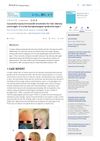
 Minoxidil improved hair growth in a child with a rare genetic disorder.
 March 2026 in “Dermatology Online Journal”
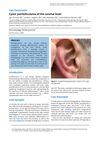
 Cystic panfolliculoma is a rare, harmless tumor that can be confused with other skin tumors.
 April 2017 in “The journal of investigative dermatology/Journal of investigative dermatology”
 Most patients experienced mild to moderate skin problems during a trial for a desmoid tumor treatment.
8 citations
,
January 2013 in “Australasian journal of dermatology” Trichodysplasia spinulosa is a rare skin condition caused by a virus, treatable with antiviral medication.
October 2025 in “Clinical and Experimental Pediatrics” A novel CLDN1 mutation in a 2-month-old with NISCH showed improvement with symptom management.
 13 citations
,
June 2020 in “BMC genomics”
13 citations
,
June 2020 in “BMC genomics” A specific microRNA, chi-miR-30b-5p, slows down the growth of hair-related cells by affecting the CaMKIIδ gene in cashmere goats.
 7 citations
,
September 2011 in “International Journal of Dermatology”
7 citations
,
September 2011 in “International Journal of Dermatology” The Korean study found that twenty-nail dystrophy mainly affects adults, more often women, and has five distinct types with different clinical progressions.
April 2025 in “Indian Journal of Dermatology” A rare, benign facial tumor called fibrofolliculoma was successfully treated with surgery.

The human scalp has different types of pigment cells in hair follicles with varying abilities to produce pigment.
 60 citations
,
September 2010 in “Journal of the American Academy of Dermatology”
60 citations
,
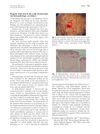
September 2010 in “Journal of the American Academy of Dermatology” Small white dots on the scalp seen with a dermoscope correspond to sweat ducts and vary with different hair disorders.
 June 2023 in “Romanian Medical Journal”
 The case shows how hard it is to tell apart Multiple Autoimmune Syndrome from other similar autoimmune conditions, but correct diagnosis is key for treatment to work.
Onychomatricoma is a unique nail tumor, not related to other hair-related tumors.
26 citations
,
October 1998 in “Experimental Dermatology” A keratin hHb6 mutation causes a hair disorder with varying severity, influenced by other factors.
7 citations
,
June 2017 in “Journal of Cutaneous Pathology” Cystic panfolliculoma resembles hair follicle tumors due to specific cell interactions.
 January 2016 in “Experimental Dermatology”
 New findings suggest potential treatments for melanoma, hyperpigmentation, hair defects, and multiple sclerosis, and show skin microbiome changes don't cause atopic dermatitis.
September 2016 in “Journal of dermatological science” The conclusion is that the variation in hair thinness in patients is mostly due to the amount of underdeveloped hairs, and treatments that thicken fine hairs might work for those with mild to severe conditions.
1 citations
,
January 2026 MicroRNA-200 prevents sebaceous gland development by inhibiting SOX9 and cell cycle progression.
 September 2022 in “Journal of medical sciences and health”
 A person had two different benign skin tumors, a trichoadenoma and melanocytic naevi, at the same time but in different places on the face.
July 2025 in “Preprints.org” Specific miRNA profiles can help diagnose and treat alopecia areata.
 7 citations
,
November 2013 in “Pediatric and Developmental Pathology”
7 citations
,
November 2013 in “Pediatric and Developmental Pathology” Over half of the children had abnormal hair under a microscope, with many having genetic hair conditions.