Search
for
Sort by
Research
360-390 / 1000+ resultsresearch Observation of cultured amelanotic melanocytes from hair follicles by atomic force microscopy
Amelanotic melanocytes from hair follicles are immature and likely don't transfer melanosomes to keratinocytes.
research ‘Follicular Swiss cheese’ pattern–another histopathologic clue to alopecia areata
The study concluded that a 'Swiss cheese' pattern in hair follicles is a useful sign for diagnosing alopecia areata.
research Responsive Microneedles as a New Platform for Precision Immunotherapy
Microneedles can precisely deliver cancer treatments with fewer side effects.

research A Cross-sectional Observational Study to Correlate the Trichoscopic Findings of Female Pattern Hair Loss with the Disease Severity and Underlying Histopathological Changes
Trichoscopic features help diagnose and assess female pattern hair loss severity, with inflammation playing a key role.

research Hafnium Oxide Nanostructure-IntegratedSilk FibroinMicroneedles Reshape Cutaneous Melanocyte Microenvironment for VitiligoTherapy
A new microneedle treatment shows promise for repigmenting skin in vitiligo.
research Scalp Micropigmentation (SMP), a Cosmetic Treatment for Hair Restoration in Asians
SMP creates illusion of full hair, addressing various issues and bringing happiness to those with thinning hair.

research Complication following treatment with a microneedling technique for a female pattern hair loss: hair dye-induced tattoo-like pigmentation
Avoid hair dye after microneedling to prevent scalp pigmentation.

research Hair follicle gene expression profiling in the SubPopulations and InteRmediate Outcome Measures in COPD Study (SPIROMICS)
Hair follicles can be used to study gene expression and understand conditions like COPD.

research Dissolving microneedles incorporating kopexil multicomponent crystals for improved transdermal delivery
Multicomponent crystals in microneedles improve drug delivery for hair loss treatment.
research Hair trace elementary profiles in aging rodents and primates: links to altered cell homeodynamics and disease
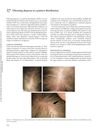
research Fibrosing alopecia in a pattern distribution
Fibrosing alopecia in a pattern distribution is a unique hair loss condition with inflammation and scarring, resembling but distinct from common balding.
research Morphological analyses in fragility of pili torti with Björnstad syndrome
Pili torti hair is fragile due to loose keratin filaments and weak disulfide bonds.
research Expression profile analysis of microRNAs during hair follicle development in the sheep foetus
Ten miRNAs may play key roles in starting secondary hair follicle development in sheep foetuses.
research Scanning electron microscopy of murine skin ultrathin sections and cultured keratinocytes
The protocol helps visualize detailed structures in mouse skin and cells using scanning electron microscopy.
research Figure 1, Androgenetic alopecia patterns in men
research Feature characterization of scarring and non-scarring types of alopecia by multiphoton microscopy
Multiphoton microscopy can non-invasively tell apart scarring from non-scarring hair loss and could aid in treatment.
research Swellable Microneedles in Drug Delivery and Diagnostics
Swellable microneedles could improve drug delivery and diagnostics but need more research on materials and technology integration.
research Characterization of surface deposits on human hair fibers
research Investigation of differences in follicular penetration of particle-and nonparticle-containing emulsions by laser scanning microscopy
Particles similar in size to hair cells penetrate hair follicles better.

research Synchronous profiling and analysis of mRNAs and ncRNAs in the dermal papilla cells from cashmere goats
Non-coding RNAs help control hair growth in cashmere goats.
research MicroRNA profiles of four induced pluripotent stem cell lines derived from distinct tissues
iPSC lines from different tissues share a common miRNA profile, supporting their pluripotent nature.

research MicroRNA in skin diseases
Certain microRNAs are linked to various skin diseases and could be used to diagnose and treat these conditions.
research Characteristic intraepidermal nerve fibre endings of the intervibrissal fur in the mystacial pad of the rat: morphological details revealed by intravital methylene blue staining and the zinc iodide‐osmium tetroxide technique
Methylene blue staining effectively reveals detailed nerve structures in rat snouts.

research Detection of hair-microRNAs as the novel potent biomarker: Evaluation of the usefulness for the diagnosis of scleroderma
Hair microRNAs could be effective biomarkers for diagnosing scleroderma.
research A case of congenital pili multigemini
A rare, harmless hair condition was found in an infant's eyebrow, needing no treatment.
research Alopecia Areata and Habit Tic Deformities
Nail issues are common in alopecia areata patients.

research Investigating the potential mechanism of microneedling in alopecia areata mice based on 16S rRNA sequencing and metabolomics
Microneedling, especially with halometasone, improves hair regrowth and gut health in alopecia areata.

research Hair presentation test
The woman's hair loss pattern doesn't match typical conditions like alopecia areata or female pattern hair loss.
research Circulating MicroRNA Signatures in Severe Alopecia Areata: Diagnostic Discrimination, Pathway Analysis, and Therapeutic Implications
Specific miRNA profiles can help diagnose and treat alopecia areata.