12 citations
,
May 2006 in “Journal of Neurology Neurosurgery & Psychiatry” Neuromyotonia and morphoea can occur together in the same body areas.
18 citations
,
February 2001 in “Der Hautarzt” A woman with myotonic dystrophy had multiple skin tumors on her scalp, suggesting a genetic link.
1 citations
,
January 2013 in “Indian journal of dermatology, venereology, and leprology” A girl inherited excessive body hair from her mother and grandmother.
 April 2017 in “Journal of Investigative Dermatology”
 HPH-15, a new compound, effectively reduces skin fibrosis in experiments without causing harm.
 September 2017 in “Journal of Investigative Dermatology Symposium Proceedings”
 A 73-year-old woman with Hypopigmented Mycosis Fungoides, a rare skin lymphoma, experienced disease progression despite treatment, emphasizing the need for ongoing monitoring.
37 citations
,
June 2000 in “Experimental dermatology” The Lanceolate hair-J mutation in mice mimics human hair disorders like Netherton's syndrome.
 February 2024 in “Cureus”
 Pilomatrixoma should be considered for nodular lesions in adults.
 22 citations
,
December 2003 in “Veterinary clinical pathology”
22 citations
,
December 2003 in “Veterinary clinical pathology” The Persian cat has a skin infection caused by a fungus, treatable with antifungal medication.
January 2026 in “JCEM Case Reports” A rare case of Cushing's syndrome and pheochromocytoma requires careful re-evaluation to avoid complications.
 December 2014 in “Bangladesh Journal of Veterinary Medicine”
 Ectoparasites cause skin issues in Egyptian lesser blind mole rats, affecting their population.
1 citations
,
January 2025 in “JAAD reviews.” Hypertrichosis involves excessive hair growth and needs careful diagnosis and treatment, considering its psychological effects.
5 citations
,
March 1981 in “PubMed” A girl grew extra hair in areas where she had insect bites.
January 2015 in “Nasza Dermatologia Online” Monilethrix causes fragile, patchy hair loss.
 7 citations
,
September 2020 in “Journal of The American Academy of Dermatology”
7 citations
,
September 2020 in “Journal of The American Academy of Dermatology” Low-dose oral minoxidil for hair loss can cause mild excessive hair growth, usually appearing within the first 3 months, but it can be managed by adjusting the dose or removing the unwanted hair, with most people not needing to stop the treatment.
4 citations
,
December 1994 in “PubMed” A woman’s skin bumps healed almost completely with tretinoin cream after a leg infection.
1 citations
,
May 2011 in “DOAJ (DOAJ: Directory of Open Access Journals)” The study found genetic diversity in coat color dilution among Czech pointers in Slovakia.
36 citations
,
July 1996 in “The journal of investigative dermatology/Journal of investigative dermatology” Mice with the 'lanceolate hair' mutation have abnormal hair and skin similar to human Netherton's syndrome.

Diagnosing and managing monilethrix is harder when it occurs with other hair loss conditions.

Diagnosing and managing monilethrix is harder when it occurs with other hair loss conditions.
1 citations
,
January 2008 in “SKINmed Dermatology for the Clinician” Treatment with prednisolone and dapsone stopped new blisters and partially healed previous ones.
 July 2022 in “The journal of investigative dermatology/Journal of investigative dermatology”
 A patient with a PLEC mutation has epidermolysis bullosa, muscular dystrophy, and myasthenia gravis, which improved with steroid treatment.
2 citations
,
December 2013 in “Journal of dermatology” A specific gene mutation causes a rare hair loss condition in a Chinese patient.
6 citations
,
January 2011 in “European Journal of Dermatology” It's important to consider genetic hair disorders when diagnosing hair loss.
73 citations
,
November 1979 in “British Journal of Dermatology” Minoxidil can cause excessive hair growth.
2 citations
,
April 2012 in “American Journal of Dermatopathology” Accurate diagnosis of NLS with dilated hair follicles is crucial to distinguish it from other conditions.
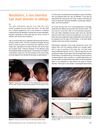 4 citations
,
January 2014 in “Indian dermatology online journal”
4 citations
,
January 2014 in “Indian dermatology online journal” Monilethrix is a genetic hair disorder causing fragile, beaded hair with no effective treatment.
January 2000 in “The Mouseion at the JAXlibrary (Jackson Laboratory)” The lanceolate hair-J mutation in mice helps understand human hair disorders like Netherton's syndrome.
February 2024 in “Pediatric Dermatology” A 5-year-old girl with a rare genetic disorder, lipoid proteinosis, showed reduced new lesions but persistent scars after avoiding skin trauma.
 January 2011 in “Journal of Human Genetics”
 A Japanese patient with a rare genetic disorder had a less severe case than others, suggesting other factors may affect symptoms.
Melanocytes can regenerate around hair follicles in bullous pemphigoid, especially in patients with darker skin.