The conclusion is that closing scalp wounds is possible, but restoring hair without donor material is still a major challenge.

The hairline can reliably guide neurosurgical planning.
 March 2026 in “Clinical Cosmetic and Investigational Dermatology”
 Effective hair removal is crucial for better cosmetic results in forehead flap reconstruction, with laser hair removal being the preferred method.
 February 2026 in “Frontiers in Bioengineering and Biotechnology”
 Liposome-based systems improve skin wound healing effectively.
 February 2026 in “Frontiers in Medicine”
 FUE hair transplants are generally safe but require careful planning to avoid rare complications.
 January 2026 in “Archive ouverte UNIGE (University of Geneva)”
 Skin-sparing techniques in gynecomastia surgery lead to good chest results and high patient satisfaction with less scarring.
 December 2025 in “International Journal of Research in Ayurveda and Pharmacy”
 Ayurvedic treatment, including Pracchana Karma, successfully improved vitiligo in a young woman.
 December 2025 in “Lviv clinical bulletin”
 PRP therapy may help with ovarian issues and fertility, but more research is needed.
 October 2025 in “Pakistan journal of urology.”
 Personalized, minimally invasive treatments improve urology outcomes.
 July 2025 in “Bulgarian Portal for Open Science”
 Granulation and epithelialization are crucial for healing large skin wounds.
 July 2025 in “Communications Biology”
 Rat vibrissae structure relates to their sensory function.
 June 2025 in “Clinical Cosmetic and Investigational Dermatology”
 FUE hair transplantation is safe and effective for improving hair loss in children.

Microneedling may improve neck scars, but more research is needed.
 March 2025 in “Journal of Neonatal Surgery”
 Robotic surgery and AI improve precision and recovery in medicine but face cost and training challenges.
 January 2025 in “Bright Sky Publications eBooks”
 Advancements in medical physics and laser technology are improving healthcare but access remains unequal globally.
More men are getting plastic surgery due to social media influence and less stigma.
 December 2023 in “Ophtha Therapy”
 Eyebrow lifts are effective for facial rejuvenation but may leave visible scars.
 November 2023 in “Pakistan Journal of Medical & Health Sciences”
 Careful technique and planning lead to successful, natural-looking eyebrow transplants.
Choose the best brow lift method based on patient needs and goals.

Using calvarial bone for maxilla augmentation is less painful and allows for single-procedure dental implants.
 December 2017 in “Journal of the Portuguese Society of Dermatology and Venereology”
 A sutura tricofítica melhora a aparência de cicatrizes em transplantes de cabelo e outras áreas pilosas.
 January 2017 in “Lasers in Surgery and Medicine”
 The 2017 issue emphasized progress in laser and energy-based skin treatments, but noted the need for more research on certain procedures and technologies.

Modern hair restoration techniques can effectively treat hair loss and provide natural-looking results.
 January 2016 in “Georg Thieme Verlag eBooks”
 Hair transplantation in East Asians needs special techniques to ensure natural results and prevent complications due to their unique hair and scalp characteristics.
 January 2014 in “Journal of the turkish academy of dermatology”
 Hair transplantation is safe and effective for permanent hair loss due to scarring, with high patient satisfaction.
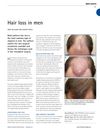 May 2013 in “Trends in Urology & Men's Health”
 Male-pattern hair loss is normal, often involves hormone effects on hair follicles, and can be treated with medication or surgery, but new treatments are being researched.
 January 2009 in “Indian Journal of Plastic Surgery”
 Surgical methods for hair loss due to scarring should be chosen based on the size, location, and shape of the area, with most patients seeing good results.
 December 2008 in “The American Journal of Cosmetic Surgery”
 Multi-pass laser skin treatments improved healing, reduced pain, and had no major complications.
 November 2006 in “Dermatologic Surgery”
 Cutting hair follicles into pieces for transplantation results in poor growth and thinner hair, and the technique is more invasive than previously thought.
 October 2002 in “Dermatologic Surgery”
 The document concludes that careful planning, efficient use of every hair graft, and setting surgical priorities are crucial for successful hair restoration surgery.