 April 2024 in “Frontiers in endocrinology (Lausanne)”
 Melatonin improved secondary hair growth in goats but didn't affect primary hair density or litter size.
 March 2024 in “Cell communication and signaling”
 Lack of sleep in mice leads to prostatitis by reducing certain hormones and activating an inflammatory pathway, which can be temporarily fixed with normal sleep.
February 2024 in “Pharmaceutics” Microneedles with extracellular vesicles show promise for treating various conditions with targeted delivery.
 January 2024 in “Cosmetics”
 HAIR & SCALP COMPLEX may help treat hair loss by stimulating hair growth and restarting the hair cycle.
 January 2024 in “Journal of Ayurveda and integrative medicine”
 Millets may help reduce chemotherapy side effects like nausea, fatigue, and hair loss.
 October 2023 in “Biomaterials”
 Nanotechnology could improve hair regrowth but faces challenges like complexity and safety concerns.
 October 2022 in “Frontiers in Endocrinology”
 New tools show that in fish, NPY increases feeding and somatostatin decreases it.
ISX9 helps regrow hair by activating a specific cell signaling pathway.
 January 2017 in “Journal of Investigative Dermatology Symposium Proceedings”
 The 2015 Hair Research Congress concluded that stem cells, maraviroc, and simvastatin could potentially treat Alopecia Areata, topical minoxidil, finasteride, and steroids could treat Frontal Fibrosing Alopecia, and PTGDR2 antagonists could also treat alopecia. They also found that low-level light therapy could help with hair loss, a robotic device could assist in hair extraction, and nutrition could aid hair growth. They suggested that Alopecia Areata is an inflammatory disorder, not a single disease, indicating a need for personalized treatments.
 May 2026 in “Russian Journal of Skin and Venereal Diseases”
 Salmon tissue-derived exosomes improve hair growth better than platelet-rich plasma for treating hair loss.
 May 2026 in “Frontiers in Medicine”
 Androgenetic alopecia is linked to factors like age, family hair loss history, diet, and health conditions.
 April 2026 in “International Journal of Molecular Sciences”
 Wnt signaling is crucial for skin, hair, and nail health and regeneration.

Bio-nanovesicles could improve hair and skin regeneration by delivering important molecules to repair and heal.
 March 2026 in “Preprints.org”
 The combined stem cell secretome in the skin care product effectively reduces inflammation and promotes tissue regeneration.
 March 2026 in “Pharmaceutics”
 Plant-derived nanovesicles show promise in cancer treatment but need standardized preparation.
 February 2026 in “Applied Biosciences”
 The study found potential new DNA patterns in fertility genes, but further testing is needed.
February 2026 in “Molecular and Cellular Probes” Stem cell and plant exosomes may help heal and regenerate skin.
January 2026 in “Research” New technologies show promise for safer, more effective hair loss treatments.
December 2025 in “Cosmetics” New treatments for alopecia show promise in restoring hair growth by targeting immune and hormonal factors.
December 2025 in “Aesthetic Surgery Journal” Exosomes are promising tools in aesthetic medicine for skin and hair regeneration.
November 2025 in “Plant Science Today” Natural anti-aging products from plants may help improve skin health.
October 2025 in “Molecular Genetics and Genomics” August 2025 in “Bioactive Materials” Ac-GFFY-IGF peptide is a promising, safe, and effective treatment for hair loss, better than current options.
July 2025 in “Ultrasound in Medicine & Biology” UTMD with diclofenac and Doxil® improves cancer treatment by boosting immune response and reducing tumor-supporting cells.
 May 2025 in “Frontiers in Veterinary Science”
 Cashmere quality differences are due to gene expression variations affecting hair development and adaptation to cold.
 December 2024 in “Molecules”
 Bovine milk-derived exosomes may improve skin, hair, gut, brain, and bone health.
November 2024 in “Clinical Nutrition Open Science” High doses of resveratrol improve bone cell health and differentiation.
 July 2024 in “Current Pharmaceutical Design”
 Biodegradable polymers help wounds heal faster.
March 2024 in “Current issues in molecular biology” Personalized medicine in dermatology uses molecular biomarkers to improve diagnosis and treatment but needs further advancements for practical use.
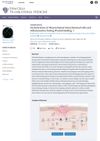 July 2023 in “Stem Cells Translational Medicine”
 Mesenchymal Stem/Stromal Cells (MSCs) help in wound healing and tissue regeneration, but can also contribute to tumor growth. They show promise in treating chronic wounds and certain burns, but their full healing mechanisms and potential challenges need further exploration.