January 2015 in “Pathology” A 64-year-old man had a rare skin cancer near his ear, unresponsive to antibiotics, with specific skin and hair follicle changes.
 11 citations
,
April 2020 in “Journal of Dermatological Treatment”
11 citations
,
April 2020 in “Journal of Dermatological Treatment” Taking oral isotretinoin with creams worked better for treating a type of hair loss than creams alone.
 86 citations
,
July 2012 in “British journal of dermatology/British journal of dermatology, Supplement”
86 citations
,
July 2012 in “British journal of dermatology/British journal of dermatology, Supplement” There may be a connection between Frontal Fibrosing Alopecia and Lichen Planus Pigmentosus, and more research is needed to confirm this.

The document recommends a multidisciplinary approach and experience sharing to advance facial feminization surgery as a medical field.
 134 citations
,
June 2012 in “International Journal of Oral and Maxillofacial Surgery”
134 citations
,
June 2012 in “International Journal of Oral and Maxillofacial Surgery” Facial feminization surgery is effective in helping transgender women appear more feminine and has high patient satisfaction.
 11 citations
,
August 2004 in “Facial Plastic Surgery”
11 citations
,
August 2004 in “Facial Plastic Surgery” The endobrow-midface lift is a safe and effective way to rejuvenate the upper face with minimal complications and rare temporary hair loss.

Lichen planopilaris and frontal fibrosing alopecia are likely the same disease with different clinical appearances.
1 citations
,
July 2023 in “Clinical Cosmetic and Investigational Dermatology” Familial dyskeratotic comedones are a rare, benign skin disorder that is hard to treat.
September 2011 in “Chinese Journal of Dermatology” A man's skin condition was misdiagnosed and later identified as a rare type of skin cancer, which did not improve with treatment.
April 2019 in “Journal of Investigative Dermatology” Targeting immune pathways like JAK/STAT may help treat frontal fibrosing alopecia.
 46 citations
,
January 2015 in “Journal of The American Academy of Dermatology”
46 citations
,
January 2015 in “Journal of The American Academy of Dermatology” Trichoscopy helps diagnose and assess the severity of Frontal Fibrosing Alopecia.
5 citations
,
September 2022 in “Facial Plastic Surgery & Aesthetic Medicine” Facial feminization surgery helps make facial features more feminine, improving patient satisfaction and safety.
20 citations
,
November 2004 in “Archives of Pathology & Laboratory Medicine” A rare benign skin growth called melanocytic matricoma was identified in a 69-year-old man.
 38 citations
,
January 2019 in “International Journal of Women's Dermatology”
38 citations
,
January 2019 in “International Journal of Women's Dermatology” The document concluded that more research is needed to find the best treatment for Frontal fibrosing alopecia.
 11 citations
,
December 2010 in “Archives of Dermatology”
11 citations
,
December 2010 in “Archives of Dermatology” A man with rare skin changes on his fingers was diagnosed with multiple myeloma-linked amyloidosis.
CDPDFM can improve acne symptoms in rabbit ears.
1 citations
,
January 2022 in “Clinical dermatology review” A young man's cheek papule was identified as a benign hair follicle tumor using a skin surface microscope.
 2 citations
,
January 2020 in “Elsevier eBooks”
2 citations
,
January 2020 in “Elsevier eBooks” The document concludes that individualized Facial Feminization Surgery plans and comprehensive care are crucial for successful outcomes.
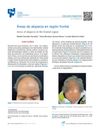 January 2025 in “Revista del Centro Dermatológico Pascua”
 Early diagnosis and treatment can help manage fibrosing alopecia in older women.
 November 2022 in “bioRxiv (Cold Spring Harbor Laboratory)”
 MOF controls skin development by regulating genes for mitochondria and cilia.
1 citations
,
July 2001 in “Pediatrics in review” The girl has a hormonal imbalance causing increased hair growth and other male characteristics.
1 citations
,
March 2013 in “British Journal of Dermatology” Recognizing eyebrow hair loss linked to a rare skin condition is crucial for proper treatment.
 March 2026 in “Dermatology Reports”
 FFA has higher long-term remission rates than LPP.
 November 2018 in “Skin appendage disorders”
 The document concludes that a woman has both Frontal Fibrosing Alopecia and Lichen Simplex Chronicus, a previously unreported combination of conditions.
 August 2021 in “Acta Haematologica Polonica”
 Folliculotropic mycosis fungoides has a worse prognosis than other types, with survival rates varying significantly based on subtype and organ involvement.
 May 2026 in “Scholars Journal of Medical Case Reports”
 Intralesional betamethasone and oral hydroxychloroquine improved hair loss in a woman with frontal fibrosing alopecia.
 December 2024 in “PubMed”
 Cyclosporine effectively treated a woman's stubborn skin condition.
12 citations
,
April 2004 in “PubMed” A rare skin condition in a baby showed unusual fat and hair follicle changes.
January 2018 in “JAMA dermatology” Facial papules can occur with lichen planopilaris.
 April 2023 in “Journal of Investigative Dermatology”
 The study suggests fibrosing alopecia in a pattern distribution has distinct features and may vary by race.