1 citations
,
December 2016 in “Revista română de medicină de laborator” The NIPAL4 mutation c.527C>A is common in Romanian patients with autosomal recessive congenital ichthyosis.
 July 2022 in “Journal of the Dermatology Nurses' Association”
 The document encourages attending the 2023 Dermatology Nurses' Association Convention.
July 2017 in “Journal of the Dermatology Nurses’ Association” The convention highlighted knowledge sharing, networking, and the importance of active participation in dermatology.
April 2016 in “Journal of Investigative Dermatology” CD73 may regulate hair growth and could be targeted for hair growth treatments.

Polydopamine is promising for personalized medicine and biomedical technology due to its strong adhesion and biocompatibility.
 3 citations
,
July 2023 in “International Journal of Biological Macromolecules”
3 citations
,
July 2023 in “International Journal of Biological Macromolecules” The hydrogel helps heal wounds and regrow hair by mimicking a baby's environment.
 March 2026 in “FMDB Transactions on Sustainable Health Science Letters”
 A deep learning method can detect nutritional deficiencies from hair and nail images with 89% accuracy.
March 2016 in “RepositóriUM (Universidade do Minho)” Molecular dynamics simulations help understand keratin's properties and predict hair's response to treatments.
January 2026 in “Open MIND” February 2024 in “Indian Journal of Chemistry” Compound N4 effectively kills breast cancer cells and compounds N2 and N3 have strong antibacterial and antifungal properties.
 December 2023 in “ACS Sustainable Chemistry & Engineering”
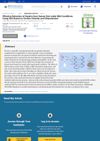
 Keratin can be successfully taken from human hair using a mix of choline chloride and ethanolamine.
41 citations
,
December 2008 in “Pediatric Dermatology” Trichoscopy can diagnose Netherton syndrome without pulling hairs.
 42 citations
,
April 2013 in “Steroids”
42 citations
,
April 2013 in “Steroids” Non-classic congenital adrenal hyperplasia is a common disorder causing symptoms like acne and infertility, and it's managed based on symptoms, not just test results. Treatment can improve fertility and reduce miscarriage risk.
7 citations
,
November 2006 in “Journal of immunological methods” The method can help diagnose and monitor diabetes by analyzing hair.
3 citations
,
February 2024 in “Forensic Sciences Research” Mitochondrial DNA from nails and hair can be effectively analyzed for forensic use.
December 2025 in “International Journal of Molecular Sciences” Bacopa procumbens extract may help protect the brain in Parkinson's disease.
 April 2026 in “PsyArXiv (OSF Preprints)”
 Nail sampling is feasible for adolescent health research, similar to hair sampling, but discomfort concerns need addressing.
 117 citations
,
May 2017 in “Human Reproduction Update”
117 citations
,
May 2017 in “Human Reproduction Update” The update highlights that non-classic congenital adrenal hyperplasia is common in women with excess male hormones, requires specific hormone tests for diagnosis, and has various treatment options depending on age and symptoms.
512 citations
,
February 2008 in “Science” Reactive oxygen species and calcium create a feedback loop that shapes root hair cells.
July 2023 in “Current Developments in Nutrition”  5 citations
,
December 2018 in “Biological & Pharmaceutical Bulletin”
5 citations
,
December 2018 in “Biological & Pharmaceutical Bulletin” Norgalanthamine helps hair cells grow by activating certain pathways related to hair growth.
 1 citations
,
August 2023 in “Expert opinion on drug delivery”
1 citations
,
August 2023 in “Expert opinion on drug delivery” Cedrol-loaded microneedles effectively promote hair growth.
Phyla nodiflora contains compounds that may help treat diabetes, hair loss, cancer, and fluid retention.
research News
February 2023 in “Chemistry & Industry” January 2013 in “프로그램북(구 초록집)” 
A genetic mutation in the CDH3 gene causes hair loss and vision problems in a young Saudi girl.
August 2025 in “Rare Metals” Metformin/dopamine-derived carbon dots help heal bacteria-infected wounds faster.
 39 citations
,
August 2022 in “Cell Death and Disease”
39 citations
,
August 2022 in “Cell Death and Disease” DA-MeHA hydrogel effectively aids stem cell-based skin regeneration.
 December 2025 in “Clinical Cosmetic and Investigational Dermatology”
 ZDHHC17 methylation may help treat or identify facial skin aging.
 October 2024 in “Journal of the Endocrine Society”
 Certain genetic variants reduce enzyme activity, contributing to non-classic congenital adrenal hyperplasia.