13 citations
,
December 2012 in “Medical mycology case reports” Misdiagnosis led to permanent hair loss, stressing the need for proper scalp tests.
February 2023 in “International Journal of Advanced Research” Trichoscopy is a cost-effective and non-invasive tool for diagnosing alopecia areata.
3 citations
,
August 2018 in “Medical Journal Armed Forces India/MJAFI” Intense Pulse Light effectively reduces hair growth in faun tail nevus.
 July 2021 in “Australasian Journal of Dermatology”
 The trichoscopy-assisted hair pull test is useful for diagnosing different types of hair loss.
 April 2026 in “Scientific Reports”
 Capillary and dermal papilla interactions are vital for hair growth and aging, with potential for treating hair loss.
December 2020 in “Journal of Face Aesthetics” Trichoscopy effectively helps diagnose different types of hair loss in women.
12 citations
,
August 2001 in “PubMed” CE-PTG is a better method for analyzing hair growth in androgenetic alopecia.
July 2025 in “Dermatologic Surgery” April 2025 in “Indian Journal of Paediatric Dermatology” Trichorrhexis invaginata can occur with tinea capitis, though it's rare.
 2 citations
,
December 2015 in “International Journal of Dermatology”
2 citations
,
December 2015 in “International Journal of Dermatology” Washing test helps identify hair loss type, low iron levels significant.
 5 citations
,
July 2019 in “Photodiagnosis and photodynamic therapy”
5 citations
,
July 2019 in “Photodiagnosis and photodynamic therapy” Using tacalcitol ointment with photodynamic therapy may effectively treat follicular mucinosis with scalp hair loss.

Microneedling may improve quality of life and reduce inflammation in frontal fibrosing alopecia.
 September 2023 in “Skin Research and Technology”
 The paper suggests a way to diagnose male hair loss and check treatment results using a dermoscope at four specific scalp points.
 August 2017 in “Journal of evolution of medical and dental sciences”
 Trichoscopy is effective for diagnosing different types of non-scarring hair loss.
8 citations
,
February 2023 in “Actas Dermo-Sifiliográficas” Dermatologists should learn trichoscopy to better diagnose hair loss conditions.
October 2022 in “Hair Transplantation” Dermoscopy helps identify hair loss types for better hair transplant evaluation.
 10 citations
,
September 2020 in “Computational and Mathematical Methods in Medicine”
10 citations
,
September 2020 in “Computational and Mathematical Methods in Medicine” Researchers developed an algorithm for self-diagnosing scalp conditions with high accuracy using smart device-attached microscopes.
 20 citations
,
August 2009 in “Journal of The European Academy of Dermatology and Venereology”
20 citations
,
August 2009 in “Journal of The European Academy of Dermatology and Venereology” Occipital scalp affects female hair loss; terminal/vellus ratio helps diagnose androgenetic alopecia.
3 citations
,
August 2013 in “Journal of the American Academy of Dermatology” A new method quickly detects hair changes from EGFR inhibitors using a microscope.
 February 2024 in “Infection and drug resistance”
 Tinea capitis in a child was caused by a fungus from cats, highlighting the need for accurate diagnosis and treatment.
November 2024 in “Medicina Estética Revista Científica de la Sociedad Española de Medicina Estética (SEME)” La detección temprana y precisa de la pseudopelada de Brocq es crucial para detener su progresión.
 18 citations
,
July 2018 in “Skin appendage disorders”
18 citations
,
July 2018 in “Skin appendage disorders” Trichoscopy helps diagnose hair and scalp disorders in dark-skinned people by identifying unique patterns.
12 citations
,
May 2012 in “Journal of Biomedical Optics” Trichoscan® is best for measuring hair growth, RCM for analyzing hair follicles, and OCT is useful for both.
 86 citations
,
October 2013 in “Dermatologic Clinics”
86 citations
,
October 2013 in “Dermatologic Clinics” Trichoscopy is a useful non-invasive method for diagnosing different hair loss conditions.

Combining Nanofat with PRP is a safe and effective treatment for female pattern hair loss.
 16 citations
,
January 2007 in “Actas dermo-sifiliográficas/Actas dermo-sifiliográficas”
16 citations
,
January 2007 in “Actas dermo-sifiliográficas/Actas dermo-sifiliográficas” The document concludes that there are no reliable treatments for frontal fibrosing alopecia, with only temporary benefits from current options.
 1 citations
,
September 2017 in “Journal of Pathology of Nepal”
1 citations
,
September 2017 in “Journal of Pathology of Nepal” Testing hair roots with a special dye is a simple, non-invasive way to check disease progress in pemphigus vulgaris patients.
 10 citations
,
March 2014 in “International Journal of Dermatology”
10 citations
,
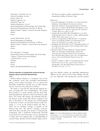
March 2014 in “International Journal of Dermatology” A hand-held dermatoscope helped differentiate between pressure-induced alopecia and alopecia areata in a young patient, who then experienced hair regrowth within a month.
Non-invasive methods can effectively diagnose and manage alopecia areata.