 151 citations
,
November 2018 in “International Journal of Pharmaceutics”
151 citations
,
November 2018 in “International Journal of Pharmaceutics” Nanoparticles improve drug delivery through the skin but more research is needed on their long-term effects and skin penetration challenges.
 5 citations
,
June 2022 in “Frontiers in veterinary science”
5 citations
,
June 2022 in “Frontiers in veterinary science” Improving how drugs are absorbed through the skin could better treat mange in wombats.
 January 2026 in “Nanoscale Advances”
 The nanocomposite effectively targets lung cancer cells without harming normal cells.
 77 citations
,
January 2015 in “International Journal of Biological Macromolecules”
77 citations
,
January 2015 in “International Journal of Biological Macromolecules” Chitosan nanoparticles improve minoxidil delivery to hair follicles for better alopecia treatment.
 1 citations
,
December 2025 in “Iraqi Journal of Pharmaceutical Sciences ( P-ISSN 1683 - 3597 E-ISSN 2521 - 3512)”
1 citations
,
December 2025 in “Iraqi Journal of Pharmaceutical Sciences ( P-ISSN 1683 - 3597 E-ISSN 2521 - 3512)” Spanlastics effectively deliver Rizatriptan Benzoate with high efficiency and controlled release.
 72 citations
,
December 2012 in “Expert Opinion on Drug Delivery”
72 citations
,
December 2012 in “Expert Opinion on Drug Delivery” Niosomes are promising for skin drug delivery, offering benefits like improved drug penetration and stability.
 57 citations
,
September 2017 in “Journal of controlled release”
57 citations
,
September 2017 in “Journal of controlled release” Nanocarrier-loaded gels improve drug delivery for cancer, skin conditions, and hair loss.
 42 citations
,
January 2021 in “Journal of Clinical Medicine”
42 citations
,
January 2021 in “Journal of Clinical Medicine” Microneedle arrays with nanotechnology show promise for painless drug delivery through the skin but need more research on safety and effectiveness.
 40 citations
,
January 2018 in “Pharmaceutics”
40 citations
,
January 2018 in “Pharmaceutics” Eucalyptol and oleic acid in nanoemulsions improve minoxidil delivery to hair follicles, potentially enhancing hair loss treatment.
 39 citations
,
September 2016 in “Expert Opinion on Drug Delivery”
39 citations
,
September 2016 in “Expert Opinion on Drug Delivery” New drug delivery methods can make natural compounds more effective and stable.
 33 citations
,
October 2016 in “European Journal of Pharmaceutical Sciences”
33 citations
,
October 2016 in “European Journal of Pharmaceutical Sciences” Effervescent formulations may improve minoxidil delivery, increasing effectiveness and reducing applications needed.
 17 citations
,
May 2021 in “Journal of Applied Pharmaceutical Science”
17 citations
,
May 2021 in “Journal of Applied Pharmaceutical Science” Transferosomes effectively deliver drugs through the skin, improving treatment for skin disorders.
 17 citations
,
October 2016 in “Artificial Cells Nanomedicine and Biotechnology”
17 citations
,
October 2016 in “Artificial Cells Nanomedicine and Biotechnology” Using tiny fat particles to deliver arginine to hair follicles could be a new way to treat hair loss.
 17 citations
,
May 2015 in “Nanomedicine: Nanotechnology, Biology and Medicine”
17 citations
,
May 2015 in “Nanomedicine: Nanotechnology, Biology and Medicine” Scientists created tiny particles loaded with a hair growth drug, minoxidil, that specifically target hair follicles and skin cells to potentially improve hair growth.
 15 citations
,
November 2020 in “Pharmaceutics”
15 citations
,
November 2020 in “Pharmaceutics” Tofacitinib nanoparticles can safely and effectively treat alopecia areata by targeting hair follicles.
 15 citations
,
October 2012 in “InTech eBooks”
15 citations
,
October 2012 in “InTech eBooks” Niosomes are a promising and effective way to deliver drugs through the skin.
 14 citations
,
January 2016 in “Elsevier eBooks”
14 citations
,
January 2016 in “Elsevier eBooks” Liposomes improve the delivery and effectiveness of cosmetic ingredients but face challenges like cost and stability.
 10 citations
,
May 2016 in “Polymer”
10 citations
,
May 2016 in “Polymer” New nanocarriers improve skin drug delivery with low toxicity at certain concentrations.
 2 citations
,
April 2021 in “International Journal of Pharmaceutics”
2 citations
,
April 2021 in “International Journal of Pharmaceutics” Serum formulations were better at delivering molecules to the hair bulb than nanoparticles.
 1 citations
,
January 2025 in “BIO Integration”
1 citations
,
January 2025 in “BIO Integration” Combining ultrasound and microneedles improves drug delivery through the skin.
 1 citations
,
November 2024 in “Pharmaceutical Sciences”
1 citations
,
November 2024 in “Pharmaceutical Sciences” Deformable vesicular carriers improve drug delivery for skin conditions and systemic treatments.
 1 citations
,
January 2023 in “Journal of pharmaceutical and biological sciences”
1 citations
,
January 2023 in “Journal of pharmaceutical and biological sciences” Ethosomes are a promising way to deliver drugs through the skin.
 January 2026 in “International Journal of Applied Pharmaceutics”
 Nanoparticle-embedded microneedles improve drug delivery through the skin but face challenges in stability and safety.
 April 2025 in “Journal of Digestive Cancer Research”
 Milk-derived vesicles are promising for delivering drugs orally and treating various conditions.
 January 2025 in “Journal of Pharmaceutical Research Science & Technology”
 Dissolving microneedles offer efficient, minimally invasive drug delivery through the skin.
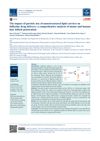 March 2024 in “Bioimpacts”
 400 nm particles penetrate hair follicles best, but mouse models aren't fully reliable for human studies.
 June 2023 in “International Journal for Research in Applied Science and Engineering Technology”
 Emulgel improves skin delivery of various drugs better than traditional methods.
 1 citations
,
January 2026 in “Frontiers in Bioengineering and Biotechnology”
1 citations
,
January 2026 in “Frontiers in Bioengineering and Biotechnology” Ionizable lipid nanoparticles are the best for delivering gene-editing therapies.
 October 2025 in “Asian Journal of Pharmaceutical Research and Development”
 Phytosome technology improves the absorption and effectiveness of citrus flavonoids.
 September 2023 in “HAL (Le Centre pour la Communication Scientifique Directe)”
 Peptide nanoparticles can effectively deliver CRISPR-Cas9 to target KRAS mutations in cancer.