36 citations
,
July 2017 in “Journal of controlled release” A new method allows for controlled, long-lasting delivery of retinoic acid through the skin with fewer side effects.
 3 citations
,
January 2023 in “Materials horizons”
3 citations
,
January 2023 in “Materials horizons” The new biomaterial helps grow blood vessels and hair for skin repair.
 January 2026 in “Preprints.org”
 Nanotechnology shows promise for treating hair loss but faces safety and approval challenges.
April 2022 in “International journal of green and herbal chemistry” Silver nanoparticles made from Tridax procumbens leaves can kill bacteria and help treat infections.
 227 citations
,
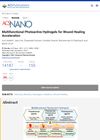
December 2021 in “ACS Nano”
227 citations
,
December 2021 in “ACS Nano” Special hydrogels that respond to light can speed up wound healing and prevent infection.
5 citations
,
December 2023 in “Materials” Organic and biogenic nanocarriers can improve drug delivery but face challenges like consistency and safety.
 1 citations
,
December 2022 in “Frontiers in Bioengineering and Biotechnology”
1 citations
,
December 2022 in “Frontiers in Bioengineering and Biotechnology” New pharmaceutical biomaterials, especially nanomaterials, show promise for improving cancer treatment and disease diagnosis.
 3 citations
,
October 2024 in “World Journal of Advanced Research and Reviews”
3 citations
,
October 2024 in “World Journal of Advanced Research and Reviews” Silver nanoparticles are useful in medicine and technology for their antibacterial properties and potential in drug delivery and dentistry.
 67 citations
,
January 2012 in “Biological and Pharmaceutical Bulletin”
67 citations
,
January 2012 in “Biological and Pharmaceutical Bulletin” Nanoparticles don't penetrate intact skin but can enter through pores or damaged skin.
 85 citations
,
July 2025 in “Nature Communications”
85 citations
,
July 2025 in “Nature Communications” Nanozymes greatly improve biocatalysis by being stable, efficient, and versatile.
 8 citations
,
January 2023 in “RSC Advances”
8 citations
,
January 2023 in “RSC Advances” Carbon dots show promise for tissue repair and growth but need more research to solve current challenges.
114 citations
,
November 2022 in “Biomedicine & Pharmacotherapy” Electrospun nanofibers with biological molecules could improve wound healing but need more research on targeted delivery and tissue regeneration.
33 citations
,
June 2022 in “Materials Today Bio” Injectable biomaterials show promise for treating spinal degeneration but need better design for effective use.
17 citations
,
January 2025 in “Journal of Nanobiotechnology” Bacterial extracellular vesicles could revolutionize regenerative medicine but need safety improvements.
 17 citations
,
January 2024 in “Journal of Materials Chemistry B”
17 citations
,
January 2024 in “Journal of Materials Chemistry B” A new nanoagent effectively kills bacteria and speeds up wound healing.
A new method allows for controlled, long-lasting delivery of retinoic acid through the skin with less inflammation.
92 citations
,
April 2021 in “Pharmaceutics” Characterizing lipid nanoparticles is challenging due to issues with sensitivity, reproducibility, and reliability.
57 citations
,
December 2012 in “Journal of Biomedical Optics” Confocal microscopy is useful for studying how nanoparticles interact with skin.
 34 citations
,
March 2020 in “BMC plant biology”
34 citations
,
March 2020 in “BMC plant biology” Graphene oxide and indole-3-acetic acid together inhibit root growth in Brassica napus L. by affecting multiple plant hormone pathways.
16 citations
,
January 2025 in “Burns & Trauma” Nanomedicine-based immunotherapy shows promise in improving tissue repair and regeneration.
14 citations
,
September 2025 in “Gels” Sodium alginate-based hydrogels are promising for medical use due to their versatility and biocompatibility.
14 citations
,
November 2021 in “Nanoscale” The research shows how a specially structured nanoemulsion delivers vitamins A and E through the skin.
5 citations
,
July 2025 in “Nutrients” Nanotechnology can improve food safety, nutrition, and health, but safety and regulation challenges need addressing.
4 citations
,
June 2025 in “MedComm” PROTACs show promise for cancer treatment, but designing them effectively is challenging.
August 2025 in “Rare Metals” Metformin/dopamine-derived carbon dots help heal bacteria-infected wounds faster.
January 2025 in “Dermatologic Therapy” Oxidative stress damages hair follicles and worsens hair loss in androgenetic alopecia.
November 2022 in “IntechOpen eBooks” Nanotechnology can improve wound healing by enhancing treatments and dressings.
 14 citations
,
January 2016 in “Elsevier eBooks”
14 citations
,
January 2016 in “Elsevier eBooks” Liposomes improve the delivery and effectiveness of cosmetic ingredients but face challenges like cost and stability.
216 citations
,
February 2022 in “Nanomaterials” Electrospun gelatin-based nanofiber dressings are promising for wound healing due to their effective healing properties and ability to protect against infections.
 70 citations
,
August 2020 in “Nanomaterials”
70 citations
,
August 2020 in “Nanomaterials” Electrospun nanofibers show promise for enhancing blood vessel growth in tissue engineering but need further research to improve their effectiveness.