26 citations
,
April 2021 in “Materials & Design” The material can detect low levels of copper ions in the body.
15 citations
,
August 2023 in “Journal of Nanobiotechnology” Nanotechnology could improve scar treatment but needs more development.
 39 citations
,
January 2015 in “Journal of Electroanalytical Chemistry”
39 citations
,
January 2015 in “Journal of Electroanalytical Chemistry” New sensor detects minoxidil accurately and effectively.
7 citations
,
December 2024 in “International Journal of Pharmaceutics” Dissolving microneedle patches can effectively deliver drugs over time.
353 citations
,
May 2016 in “TrAC Trends in Analytical Chemistry” Droplet microfluidics improves efficiency and control in chemistry, biology, and nanotechnology.
10 citations
,
November 2018 in “bioRxiv (Cold Spring Harbor Laboratory)” New laser particles can track thousands of cells in 3D models, improving single-cell analysis.
January 2025 in “Analytical Methods” A new fluorescent material can detect dextran sulfate sodium, turning green when present, useful for forensic and environmental monitoring.
9 citations
,
January 2025 in “Droplet” Precise cell manipulation technologies are advancing but still face challenges in improving accuracy for medical use.
1 citations
,
February 2026 in “ACS Nano” The TLMG hydrogel improves wound healing and monitoring with strong adhesion and conductivity.
January 2018 in “Refubium (Universitätsbibliothek der Freien Universität Berlin)” New nanocarriers were developed for safer, targeted drug delivery and diagnostics, showing promise for future medical use.
57 citations
,
December 2012 in “Journal of Biomedical Optics” Confocal microscopy is useful for studying how nanoparticles interact with skin.
9 citations
,
June 2025 in “Frontiers in Pharmacology” Microneedles improve drug delivery, patient compliance, and have potential in cancer treatment and skin care.

New hydrogel sensors can be quickly made and customized for wearable devices.

Fibronectin nanogel microneedles improve skin health and wound healing.
 January 2025 in “International Journal of Molecular Sciences”
 Nanoparticles have diverse applications, including promising cancer treatments and hair growth solutions.
2 citations
,
June 2024 in “Advanced Healthcare Materials” Computational technology advances nanocatalysis by improving design, synthesis, and detection methods.
11 citations
,
January 2015 in “Journal of nanomedicine & biotherapeutic discovery” Nanotechnology is improving skin treatments and cosmetics.
December 2025 in “Sensors” Microneedles in wearables can deliver drugs over time but face challenges in manufacturing and safety.
11 citations
,
June 2025 in “Advanced Functional Materials” The new nanosilver treatment effectively kills bacteria and speeds up wound healing with less toxicity.
May 2026 in “Microchemical Journal”  April 2026 in “Trends in biotechnology”
 Nanozymes have potential for medical use but face challenges like safety and regulation.
198 citations
,
May 2021 in “Advanced Materials” Triboelectric nanogenerators can use body movement to power therapeutic treatments, potentially transforming personalized healthcare.
4 citations
,
March 2023 in “Cancer Innovation” Flexible bioelectronics show promise in non-invasive cancer detection and treatment but need improvements in stability and effectiveness.
 December 2013 in “Biomedical and biopharmaceutical research”
 Nanotechnology shows promise for better drug delivery and cancer treatment.
73 citations
,
April 2006 in “BioTechniques” Protein microarrays are highly sensitive tools useful for disease diagnosis and studying proteins.
80 citations
,
January 2020 in “Journal of Nanobiotechnology” Nanomaterials can aid tissue repair and healing but need more safety research.
1 citations
,
January 2001 in “PubMed” Mechanoreceptors convert physical touch into electrical signals through specialized nerve structures.
 November 2023 in “ACS Nano”
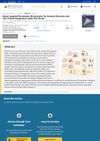
 The device helps restore sensation and grow new hair follicles after skin burns.
7 citations
,
February 2024 in “ACS Applied Materials & Interfaces” A new light-activated treatment speeds up healing of infected wounds without antibiotics.
8 citations
,
March 2025 in “Journal of Drug Delivery Science and Technology” Dissolvable microneedles are a promising, painless method for effective skin treatments.