Bioactive compounds in neurocosmetics can improve skin health and emotional well-being.
10 citations
,
August 2024 in “Neuroscience & Biobehavioral Reviews” Neurosteroids may help treat disorders with too much dopamine activity.
Neurosteroids help control dopamine responses in the brain.
35 citations
,
July 2022 in “Frontiers in Integrative Neuroscience” Formononetin may help protect the brain and treat neurological diseases.
18 citations
,
April 2024 in “Phytotherapy Research” Plant-based compounds show promise for treating neurodegenerative diseases but need more research.
 31 citations
,
June 2011 in “Movement Disorders”
31 citations
,
June 2011 in “Movement Disorders” The document describes a woman with familial Parkinson's disease due to a genetic mutation, showing severe symptoms and poor response to treatment, and suggests finasteride may help reduce symptoms in Tourette syndrome.
December 2025 in “International Journal of Molecular Sciences” Bacopa procumbens extract may help protect the brain in Parkinson's disease.
29 citations
,
October 2009 in “Pharmacology Biochemistry and Behavior”  2 citations
,
March 2023 in “Experimental neurology”
2 citations
,
March 2023 in “Experimental neurology” Pregnenolone might help manage movement issues caused by Parkinson's disease treatment without reducing the medicine's effectiveness.
 9 citations
,
December 2023 in “Journal of Neuroimmune Pharmacology”
9 citations
,
December 2023 in “Journal of Neuroimmune Pharmacology” NDP-MSH protects brain cells and reduces inflammation in Parkinson's disease by activating MC1R and involving Tregs.
 7 citations
,
June 2011 in “Movement Disorders”
7 citations
,
June 2011 in “Movement Disorders” A specific gene mutation is linked to a hereditary form of dystonia that responds well to certain medications.
 3 citations
,
July 2018 in “Biomedicine & pharmacotherapy”
3 citations
,
July 2018 in “Biomedicine & pharmacotherapy” Paeoniflorin protects brain cells by involving a specific protein and neurosteroids.
February 2026 in “Advanced Science” TTNPB helps turn stem cells into neural stem cells, improving depression-like behaviors in rats.
 4 citations
,
May 2011 in “Movement Disorders”
4 citations
,
May 2011 in “Movement Disorders” A woman's unique dementia was misdiagnosed, a genetic mutation increases Parkinson's risk with age, and finasteride may help with Tourette syndrome.
 November 2019 in “Synapse”
 Brain-made chemicals can control nerve cell function differently in various parts of a mouse's brain, which may help us understand neurological conditions.
26 citations
,
June 2011 in “Molecular Medicine” Progesterone significantly reduces neuroblastoma tumor growth without harming healthy cells.
28 citations
,
November 2009 in “European Journal of Neuroscience” Progesterone and allopregnanolone increase glycine release in rat brain cells.
 14 citations
,
October 2016 in “Psychoneuroendocrinology”
14 citations
,
October 2016 in “Psychoneuroendocrinology” Finasteride affects brain processes related to neurotransmission and metabolism, potentially helping with neuropsychiatric conditions.
 14 citations
,
October 2006 in “Journal of The American Academy of Dermatology”
14 citations
,
October 2006 in “Journal of The American Academy of Dermatology” A woman with Parkinson's disease experienced hair loss from the Parkinson's medication pramipexole, which improved after stopping the drug.
 February 2026 in “Medicina”
 Hyaluronic Acid Profhilo® reduces skin inflammation and nerve-related pain in atopic dermatitis.
33 citations
,
January 2008 in “Journal of Molecular Neuroscience” 6 citations
,
April 2021 in “NAR Genomics and Bioinformatics” PolyQ repeats in neural proteins evolve together, affecting brain function and disease.
 35 citations
,
April 2012 in “Journal of Clinical Psychopharmacology”
35 citations
,
April 2012 in “Journal of Clinical Psychopharmacology” Finasteride reduces gambling symptoms in Parkinson's patients.
 100 citations
,
May 2003 in “Journal of Neuroscience”
100 citations
,
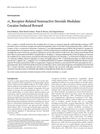
May 2003 in “Journal of Neuroscience” Neuroactive steroids affect cocaine's rewarding effects through the ς1 receptor.
 1 citations
,
July 1997 in “The Lancet”
1 citations
,
July 1997 in “The Lancet” Scientists found a new protein, AMY117, common in Alzheimer's patients, which could be important for treatment and diagnosis.
1 citations
,
July 2022 in “Frontiers in Pharmacology” Dutasteride may help protect neurons and reduce inflammation in Parkinson's disease.
44 citations
,
February 2009 in “Pain” Progesterone reduces spinal reflex activity by increasing certain GABA(A) receptor subtypes.
January 2017 in “Corpus Université Laval (Université Laval)” Dutasteride may protect brain cells in early Parkinson's, while progesterone helps neuron recovery.
83 citations
,
November 2006 in “European Journal of Neuroscience” Progesterone protects rat brain cells by enhancing GABA A receptor activity.
10 citations
,
October 2018 in “Journal of molecular and cellular cardiology/Journal of Molecular and Cellular Cardiology” The gene NM_026333 slows down aging by affecting the NCX1 pathway and could be targeted for anti-aging treatments.