11 citations
,
February 2023 in “Journal of Investigative Dermatology” Low m6Ascores in melanoma predict better survival and response to immunotherapy.
2 citations
,
July 2025 in “Analytical Chemistry” The method effectively images and correlates elements and metabolites in tissue samples at a micron scale.
 3 citations
,
October 2021 in “Research Square (Research Square)”
3 citations
,
October 2021 in “Research Square (Research Square)” The model can effectively help diagnose meibomian gland dysfunction automatically.
 January 2024 in “LA Referencia (Red Federada de Repositorios Institucionales de Publicaciones Científicas)”
 Carbon Quantum Dots can effectively detect cobalt ions and methylcobalamin in water.
 January 2025 in “New Journal of Chemistry”
 Hollow mesoporous organosilica nanoparticles are promising for biomedical use.
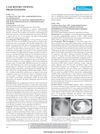 May 2025 in “The Journal of Rheumatology”
 Anti-CD19 therapy may help treat SLE and NMOSD.
June 2025 in “Formosa Journal of Sustainable Research” Mangkokan leaf extract can fight bacteria and may help prevent hair loss and treat infections.
September 2025 in “Cosmetics” NMN supplements may improve hair quality and appearance in middle-aged women.
18 citations
,
January 2002 in “Pediatric Dermatology” A rare skin condition in children can look like other diseases.
106 citations
,
February 2014 in “eLife” Lanceolate complexes in mouse hair follicles are essential for touch and depend on specific cells for maintenance and regeneration.
19 citations
,
August 2018 in “JAMA dermatology” Mesenchymal stem cells in people with Hidradenitis Suppurativa are more inflammatory, possibly contributing to the disease.
July 2024 in “Journal of Investigative Dermatology” DS-2325a is safe and well-tolerated, supporting further development for Netherton Syndrome treatment.
 January 2026 in “China National GeneBank DataBase”
 Human hair follicle stem cells can help heal wounds faster.
36 citations
,
September 2015 in “Orphanet Journal of Rare Diseases” Revertant cell therapy could be a future treatment for Ichthyosis with confetti.
34 citations
,
November 2023 in “Applied Materials Today” Nanoemulsions can effectively treat skin cancer with fewer side effects.
25 citations
,
March 2021 in “Australasian Journal of Dermatology” Ustekinumab successfully treated a man's resistant skin condition when other treatments failed.
18 citations
,
February 2021 in “Dermatologic therapy” Public interest in skin issues changed during COVID-19, with more focus on dry skin, hair problems, and hand eczema.
12 citations
,
November 2012 in “BioMolecular Concepts” PPAR β/δ is important for skin health and disease treatment, but more research is needed.
 7 citations
,
August 2022 in “Experimental dermatology”
7 citations
,
August 2022 in “Experimental dermatology” Blocking YAP/TAZ could be a new way to treat skin cancer.
 3 citations
,
June 2021 in “Clinical, Cosmetic and Investigational Dermatology”
3 citations
,
June 2021 in “Clinical, Cosmetic and Investigational Dermatology” Dermoscopy is an effective tool for accurately detecting skin cancers.
2 citations
,
September 2025 in “International Journal of Nanomedicine” Extracellular vesicles can help treat skin issues like wounds, hair loss, aging, and inflammation.
 2 citations
,
August 2019 in “Journal of skin and stem cell”
2 citations
,
August 2019 in “Journal of skin and stem cell” The study concludes that regulating apoptosis could lead to new treatments for various skin and hair conditions.
1 citations
,
September 2025 in “Cosmetics” Milk thistle can protect skin from damage and aging.
August 2025 in “American Journal of Dermatopathology” Accurate diagnosis and personalized treatment are crucial in dermatopathology.
January 2008 in “Zhongguo zuzhi gongcheng yanjiu yu linchuang kangfu” Vaginal mucosa stem cells can be effectively isolated and cultured using specific methods.
June 2025 in “Journal of Cosmetic Dermatology” Excessive scalp massage after using minoxidil can cause hair damage, but reducing massage and using MSC exosomes can help.
June 2018 in “Dermatologic Surgery”  April 2024 in “Pigment cell & melanoma research”
 Different types of resting melanocyte stem cells have unique characteristics and vary in their potential to become other cells.
 January 2019 in “Applied Organometallic Chemistry”
 The compound (NH4)2Mn0.17Cu0.83Cl4.2H₂O has a specific structure, shows weak magnetism at low temperatures, and undergoes phase changes at high temperatures.