2 citations
,
April 2025 in “Pediatric Dermatology” Macular alopecia is a distinct, non-scarring hair loss pattern that mostly affects young Hispanic/Latinx females and often resolves on its own.
 2 citations
,
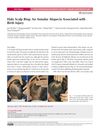
January 2023 in “Annals of Dermatology”
2 citations
,
January 2023 in “Annals of Dermatology” A hairless patch on a boy's scalp from birth injury improved with minoxidil treatment.
2 citations
,
December 2021 in “Journal of Drugs in Dermatology” Early diagnosis and treatment of alopecia in children are crucial for managing physical and psychological impacts.
2 citations
,
May 2018 in “European Journal of Dermatology” Lupus erythematosus panniculitis on the scalp can cause unique geometric hair loss patterns.
1 citations
,
June 2024 in “Archives of Dermatological Research” Alopecia may lower the risk of substance use disorder.
1 citations
,
January 2020 in “Skin Appendage Disorders” Treatment with methotrexate and prednisolone led to complete hair regrowth and no relapse for 2 years.
 1 citations
,
December 2019 in “Formuly farmacii”
1 citations
,
December 2019 in “Formuly farmacii” Many people suffer from hair loss, which is caused by a disruption in hair growth, and there is a need for personalized treatments and new drugs.
June 2026 in “Skin Appendage Disorders” GLP-1 receptor agonists may increase the risk of hair loss, especially non-scarring types, due to weight loss-related nutrient deficiencies.

GLP-1 receptor agonists increase the risk of hair loss, mainly due to weight loss-related nutrient deficiency.

GLP-1 receptor agonists increase the risk of hair loss, mainly due to nutrient deficiency from weight loss.
 March 2026 in “Indian Journal of Anaesthesia”
 Proper precautions can prevent hair loss after robotic gynecological surgery.
January 2026 in “Journal of advanced Biomedical and Pharmaceutical Sciences” Niosomal cetirizine shows promise for better alopecia treatment by targeting hair follicles effectively.
August 2025 in “EMC - AKOS - Trattato di Medicina” Non-scarring alopecia can regrow hair, but scarring alopecia is often permanent and needs quick treatment.
 July 2025 in “Clinical Cosmetic and Investigational Dermatology”
 Major depression disorder increases the risk of alopecia areata, and vice versa.
December 2024 in “Skin Appendage Disorders” Accurate diagnosis and treatment improved symptoms in a patient with alopecia linked to mycosis fungoides.
 July 2023 in “IntechOpen eBooks”
 Some types of hair loss can be reversed, others are permanent, and treatments vary by type.
 January 2022 in “Przegla̧d dermatologiczny”
 The document concludes that there are various treatments for diseases linked to scarring hair loss, especially for primary scarring alopecia.
Early diagnosis and treatment of alopecia in children are crucial for their well-being.
 August 2021 in “EMC - AKOS - Trattato di Medicina”
 Acquired alopecia is hair loss that can be reversible or irreversible, depending on whether the hair follicle is destroyed.
 March 2021 in “CRC Press eBooks”
 Hair loss without scarring is more common than permanent hair loss with scarring, and is often due to genetic factors.
 October 2017 in “Iranian Journal of Dermatology”
 Clinical exams are good for diagnosing some women's hair loss, but lab tests aren't always needed.
 January 2017 in “Turkiye Klinikleri Journal of Dermatology”
 A 9-month-old baby had a rare, persistent ring-shaped hair loss condition.
Combining vertical and horizontal sectioning improves scalp biopsy analysis for alopecia.
September 2022 in “Journal of Cosmetic Dermatology” Oral minoxidil effectively treats different types of hair loss with fewer side effects.
4 citations
,
March 2025 in “Pediatric Dermatology” Pediatric alopecia areata needs more research to understand its characteristics and related conditions.
 2 citations
,
November 2018 in “Destaques Acadêmicos”
2 citations
,
November 2018 in “Destaques Acadêmicos” Microneedling showed the most significant results for treating hair thinning in Androgenetic Alopecia.
 1 citations
,
October 2020 in “International Journal of Research in Dermatology”
1 citations
,
October 2020 in “International Journal of Research in Dermatology” The study concluded that short vellus hair and yellow dots were the most common signs of alopecia areata, indicating disease activity and remission.
June 2025 in “Medical alphabet” JAK inhibitors may help treat alopecia areata in children, but their safety needs careful evaluation.
January 2023 in “Zenodo (CERN European Organization for Nuclear Research)” Refractory alopecia areata can be managed with medical treatments, psychological support, and aesthetic options.
 March 2019 in “Chinese Journal of Dermatology”
 Hair loss, known as androgenetic alopecia, is mainly caused by genetics, but also by hormone imbalances, shrinking hair follicles, inflammation, and environmental factors.