1 citations
,
August 2021 Biomimetic dermal papilla spheres can help regenerate hair to some extent.
 44 citations
,
June 2018 in “Journal of Cellular Physiology”
44 citations
,
June 2018 in “Journal of Cellular Physiology” Researchers developed a 3D model of human hair follicle cells that can help understand hair growth and test new hair loss treatments.
 December 2024 in “Biomaterials Research”
 Delivering specific cell clusters into the skin can help regrow hair in mice.
13 citations
,
August 2024 in “iScience” 3D spheroid culture makes stem cells better at reducing inflammation.
The method effectively creates uniform, viable cell spheroids for 3D cell culture.
 28 citations
,
March 2010 in “Histochemistry and cell biology”
28 citations
,
March 2010 in “Histochemistry and cell biology” Skin cells can help create early hair-like structures in lab cultures.
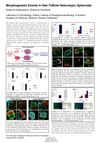
Researchers developed a method to create artificial hair follicles that may help with hair loss treatment and research.
Dermal papilla cells can help form hair-like structures in lab-grown skin cells.
July 2025 in “Burns & Trauma” 3D cell spheroids can help reduce scars by delivering therapeutic vesicles.
13 citations
,
September 2021 in “Frontiers in Cell and Developmental Biology” Suspension culture is best for stem cell differentiation into endoderm cells.
 May 2023 in “Stem cell research & therapy”
 New method efficiently isolates hair growth cells from newborn mouse skin.
 26 citations
,
August 2016 in “ACS Applied Materials & Interfaces”
26 citations
,
August 2016 in “ACS Applied Materials & Interfaces” A boronic acid copolymer quickly forms cell clusters, useful for tissue and tumor modeling.
 40 citations
,
June 2013 in “Biomaterials”
40 citations
,
June 2013 in “Biomaterials” Scientists created 3D hair-like structures that could help study hair growth and test treatments.
 2 citations
,
February 2015 in “Journal of Tissue Engineering and Regenerative Medicine”
2 citations
,
February 2015 in “Journal of Tissue Engineering and Regenerative Medicine” Transplanting a mix of specific skin cells can significantly improve the repair of damaged hair follicles.
January 2018 in “Belarusian State Pedagogical University repository (Belarusian State Pedagogical University)” Adipose-derived stem cells can be used to create cells that help grow new hair.
January 2016 in “British Biotechnology Journal” DP cells can help in hair growth and regenerative medicine.
 316 citations
,
June 2004 in “The journal of investigative dermatology/Journal of investigative dermatology”
316 citations
,
June 2004 in “The journal of investigative dermatology/Journal of investigative dermatology” Microspheres about 1.5 micrometers in size can best penetrate hair follicles, potentially reaching important stem cells.
April 2026 in “Biomedical and Biotechnology Research Journal (BBRJ)” 3D culture better preserves key properties of hair follicle cells for regeneration.
4 citations
,
February 2023 in “Stem Cell Research & Therapy” Mouse skin cells can become sperm-like cells in the lab.
 8 citations
,
October 2018 in “Applied sciences”
8 citations
,
October 2018 in “Applied sciences” Alginate spheres help maintain hair growth potential in human cells for hair loss treatment.
March 2006 in “Chinese journal of plastic surgery” Microencapsulated human hair cells can regenerate hair follicles in mice ears.
 April 2025 in “Cellular and Molecular Biology”
 Human dermal stem/progenitor cells can divide and differentiate more than hair follicle dermal papilla cells.
December 2025 in “Advanced Healthcare Materials” The Spherical Skin Model improves drug and cosmetic testing by accurately mimicking human skin for efficient compound screening.
 3 citations
,
February 2021 in “Experimental dermatology”
3 citations
,
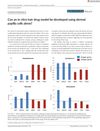
February 2021 in “Experimental dermatology” Dermal papilla microtissues could be useful for initial hair growth drug testing.
 58 citations
,
November 2012 in “PLoS ONE”
58 citations
,
November 2012 in “PLoS ONE” Human skin cells can be turned into versatile stem cells, but their ability to do so decreases with repeated use.
 November 2022 in “Journal of Investigative Dermatology”
 Human-induced stem cell-created skin models can help understand skin diseases by studying the skin's layers.
125 citations
,
March 2017 in “Micromachines” Microfluidic technology improves cell spheroid creation for better drug testing and tissue engineering.
 November 2023 in “npj regenerative medicine”
 Skin spheroids with both outer and inner layers are key for regrowing skin patterns and hair.
39 citations
,
September 2019 in “Materials & Design” Combinatorial drug treatments are more effective than single drugs for cancer therapy.
 11 citations
,
June 2012 in “Journal of Dermatological Science”
11 citations
,
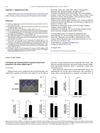
June 2012 in “Journal of Dermatological Science” Scientists identified a group of human skin cells with high growth and regeneration potential.