July 2026 in “Journal of College of Physicians And Surgeons Pakistan” The 2.5 mg dose of oral minoxidil is more effective for hair growth in androgenetic alopecia.

Oral minoxidil may have more cardiovascular risks than topical minoxidil.
 February 2026 in “Archiv Euromedica”
 Finasteride effectively treats male hair loss, with oral and topical forms improving hair growth, but oral use may have side effects.
 February 2026 in “Journal of Drugs in Dermatology”
 Dutasteride mesotherapy for hair loss can cause lasting bald patches.
 January 2026 in “Ciencia Latina Revista Científica Multidisciplinar”
 Exosomes helped regrow hair in a 14-year-old with difficult-to-treat alopecia.
January 2026 in “Open Science Framework” Oral and topical 5-alpha reductase inhibitors affect DHT levels and hair density differently in treating hair loss.
 December 2025 in “International Journal of Innovative Technologies in Social Science”
 Oral JAK inhibitors effectively treat alopecia areata and are generally well-tolerated.
 November 2025 in “Open Repository of the University of Porto (University of Porto)”
 Continuous use of finasteride and minoxidil is effective for treating androgenetic alopecia.
 August 2025 in “Archives of Dermatological Research”
 Oral minoxidil is more effective than topical minoxidil for hair growth in men.
 June 2025 in “Frontiers in Pharmacology”
 Oral minoxidil is a safe and effective treatment for alopecia, improving hair growth with minor side effects.
 April 2025 in “Journal of Pioneering Medical Science”
 Topical minoxidil is safer and improves hair density better than oral minoxidil.
 January 2025 in “Journal of the American Academy of Dermatology”
 Combining oral minoxidil and bicalutamide may help improve hair growth in adolescent girls.

Combined oral minoxidil and finasteride significantly improve hair density in men with male pattern baldness.
 January 2025 in “International Journal of Unani and Integrative Medicine”
 Combining modern and Unani treatments may offer better care for hirsutism in PCOS.
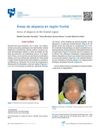 January 2025 in “Revista del Centro Dermatológico Pascua”
 Early diagnosis and treatment can help manage fibrosing alopecia in older women.
 November 2024 in “Nanomaterials”
 The nanocrystalline suspension effectively delivers dutasteride over time with minimal inflammation.

TrichoSolTM is safe for hair loss treatments with specific ingredient stability for up to 180 days.
 July 2024 in “Open Repository of the University of Porto (University of Porto)”
 Dutasteride is more effective than finasteride for hair growth, and pregabalin effectively treats neuropathic pain.
 April 2024 in “Frontiers in pharmacology”
 Brepocitinib 30mg is most effective for moderate-to-severe alopecia areata, but ritlecitinib 50mg may offer a better balance of safety and effectiveness.
 December 2023 in “International Journal of Biomedicine”
 Topical finasteride might help with male hair loss with fewer side effects than pills, but more research is needed.

Oral Minoxidil could be a safe and effective alternative treatment for various non-androgenic alopecias.
 November 2023 in “Clinical, Cosmetic and Investigational Dermatology”
 Saw palmetto extract reduced hair loss and improved hair growth in people with hair thinning.
 September 2023 in “Journal of microbiology and biotechnology”
 A type of collagen helps hair grow by boosting cell growth and activating a specific hair growth pathway.
 August 2023 in “Vittalle”
 Mais estudos são necessários para garantir a eficácia e qualidade dos tratamentos de alopecia com plantas medicinais.
 August 2023 in “Anales de la Facultad de Ciencias Médicas”
 The patient with lupus and hair loss improved with oral and topical minoxidil.
 May 2023 in “International Journal of Trichology”
 Low-dose oral Minoxidil is an effective treatment for hair loss with minimal serious side effects.
Vitamin D is crucial for skin health and managing skin diseases.
 May 2019 in “Australasian Journal of Dermatology”
 The conclusion is that managing hair loss conditions like FFA and melanoma requires individualized approaches, considering new findings and balancing treatment benefits with potential risks.
 October 2018 in “InTech eBooks”
 The most effective treatments for hair loss are minoxidil, finasteride, PRP, and hair transplants, with steroids and immunosuppressants for autoimmune types.
 January 2017 in “Elsevier eBooks”
 Sex hormones affect reproduction, sexual development, and oral health, and it's important for dental practitioners to understand their effects and interactions.