14 citations
,
January 2025 in “Biomaterials Research” Bioactive glasses help heal skin wounds by promoting tissue repair and preventing infections.
14 citations
,
July 2022 in “Applied Sciences” Extracellular vesicles can help repair and regenerate tissues with less risk of rejection.
11 citations
,
January 2016 in “Evidence-based Complementary and Alternative Medicine” Rice bran extract can increase melanin production and may help treat melanin deficiency.
3 citations
,
October 2020 in “IntechOpen eBooks” Regenerative medicine may offer long-lasting relief for chronic pain and neuro-degenerative conditions.
 March 2026 in “Molecules”
 Dang Gui may help treat immune-related diseases by boosting and regulating the immune system.
January 2026 in “Therapeutics” SCUBE3 is a potential target for cancer and alopecia treatment but is challenging to target due to its varied roles.
January 2026 in “Biomolecules” TSC22D genes are key in metabolic diseases and cancer, offering potential as treatment targets.
 October 2024 in “Dermatologic Surgery”
 PRP and PRF show promise for hair growth but need more research for consistent and safe use.
 February 2018 in “InTech eBooks”
 PRP therapy is effective for hair regrowth and improving hair quality with minimal side effects.
 31 citations
,
August 2022 in “Frontiers in Oncology”
31 citations
,
August 2022 in “Frontiers in Oncology” Photobiomodulation therapy helps manage cancer treatment side effects but needs more research for optimization.
The hydrogel helps bone growth and healing in jaw and facial defects.
June 2025 in “Preprints.org” EDA is vital for bone and cartilage formation and could help treat skeletal disorders.
82 citations
,
May 2020 in “International Journal of Molecular Sciences” Injectable biomaterials can effectively regenerate dental tissues.
37 citations
,
February 2024 in “Military Medical Research” Biomaterials can help heal wounds without scars and regenerate skin features.
20 citations
,
November 2014 in “Developmental Dynamics” Palate formation and skin healing share similar biological processes.
17 citations
,
October 2023 in “Science Progress” Polycaprolactone and barium titanate composites show promise for use in biomedical applications.
9 citations
,
July 2025 in “Pharmaceuticals” Plant-derived exosomes can help deliver drugs and enable communication between different organisms.
 7 citations
,
December 2021 in “Pharmaceutics”
7 citations
,
December 2021 in “Pharmaceutics” Natural products like plant extracts can help promote hair growth and could be used to treat hair loss.
2 citations
,
November 2025 in “Biomedicines” Platelet- and marrow-derived biologics help heal tissues and reduce infections but need standardized methods for better use.
January 2026 in “Burns & Trauma” RNA modifications help heal wounds and could lead to new treatments.
14 citations
,
February 2024 in “Biomolecules” TRPV channels are important in osteoarthritis and could be key to new treatments.
 9 citations
,
March 2022 in “Antioxidants”
9 citations
,
March 2022 in “Antioxidants” Synthetic antioxidants are effective, cheap, and stable, with some like zinc and cholecalciferol reducing child and cancer deaths, but the safety of additives like BHA, BHT, TBHQ, and PEG needs more research.
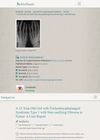 August 2022 in “Journal of Comprehensive Pediatrics”
 A girl with a rare genetic disorder had a unique bone condition, highlighting the need for careful diagnosis and suggesting the disorder might be more common than thought.
 8 citations
,
January 2023 in “RSC Advances”
8 citations
,
January 2023 in “RSC Advances” Carbon dots show promise for tissue repair and growth but need more research to solve current challenges.
 1 citations
,
August 2024 in “Polymers”
1 citations
,
August 2024 in “Polymers” Bacterial cellulose is a promising material for biomedical uses but needs improvements in antimicrobial properties and degradation rate.
80 citations
,
January 2020 in “Journal of Nanobiotechnology” Nanomaterials can aid tissue repair and healing but need more safety research.
 November 2023 in “ACS Omega”
 New liposome treatment successfully delivers CRISPR to deactivate a key enzyme in androgen-related disorders.
July 2025 in “Nano Research” Nanotechnology can improve tissue healing by controlling immune responses.
115 citations
,
August 2020 in “International Journal of Molecular Sciences” A PRP concentration of 1.0 × 10^6 plt/μL is best for tissue repair.
83 citations
,
January 2023 in “Development” Hox genes are crucial for development and tissue maintenance, affecting structures and functions throughout life.