November 2025 in “Journal of Investigative Dermatology” IMG-007 helps regrow hair and reduce scalp inflammation in severe alopecia areata.
April 2023 in “Journal of Investigative Dermatology” Contact immunotherapy can change immune responses in alopecia areata, suggesting new treatment targets.
15 citations
,
March 2021 in “EMBO Reports” PRSS35 enzyme may help start skin tumors and could be a target for cancer treatment.
April 2023 in “Journal of Investigative Dermatology” CD8+ T cells attack hair follicle stem cells, causing scarring and hair loss.
 59 citations
,
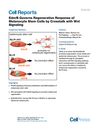
April 2016 in “Cell Reports”
59 citations
,
April 2016 in “Cell Reports” EdnrB signaling helps melanocyte stem cells regenerate and could be targeted to treat pigmentation issues.
 15 citations
,
August 2013 in “Stem Cells and Development”
15 citations
,
August 2013 in “Stem Cells and Development” The method increases stem-like cells for better skin regeneration.
 7 citations
,
February 2025 in “Stem Cell Research & Therapy”
7 citations
,
February 2025 in “Stem Cell Research & Therapy” Human hair follicle stem cells improve ovarian function in mice with damaged ovaries.
56 citations
,
March 2003 in “Journal of Investigative Dermatology” 17β-estradiol can reduce inflammation in the skin.
February 2026 in “Advanced Science” Targeting the p300/AR axis may help treat polycystic ovary syndrome.
June 2010 in “European Journal of Cancer Supplements” Senescent fibroblasts can help start tumors in normal skin cells.
32 citations
,
February 2019 in “eLife” BMP signaling is essential for the development of touch domes.
79 citations
,
January 2002 in “Nucleic Acids Research” BMP-2 activates the Dlx3 gene in mouse skin cells, important for hair and skin development.
November 2025 in “Journal of Investigative Dermatology” Skin-associated cartilage cells can influence hair growth by altering specific signaling pathways.
112 citations
,
January 2013 in “Experimental dermatology” Faulty Notch signalling may cause hair follicle changes and inflammation in hidradenitis suppurativa.
November 2025 in “The Journal of Immunology” The S1PR 1&4 modulator may effectively treat alopecia areata by reducing hair loss and immune cell activity.
 45 citations
,
April 2016 in “Journal of Dermatological Science”
45 citations
,
April 2016 in “Journal of Dermatological Science” The Wnt/β-catenin pathway can activate melanocyte stem cells and may help regenerate hair follicles.
 May 2026 in “Zenodo (CERN European Organization for Nuclear Research)”
 Hidradenitis suppurativa tunnels have different microenvironments, suggesting targeted treatments could be more effective.
 May 2026 in “Zenodo (CERN European Organization for Nuclear Research)”
 Hidradenitis suppurativa tunnels have different microenvironments, suggesting targeted treatments could be more effective.
16 citations
,
November 2005 in “Journal of Clinical Pathology” CD1d expression in scalp skin and hair follicles changes with the hair cycle and may help protect against microbes.
35 citations
,
June 2012 in “PloS one” Keratin 15 expression in skin cells is regulated by two mechanisms involving PKC/AP-1 and FOXM1.
 April 2017 in “Journal of Dermatological Science”
 B cells can both help and hinder the body's defense against melanoma.
49 citations
,
July 2000 in “Journal of Histochemistry & Cytochemistry” POMC-derived peptides are important for skin functions like immune response and stress management.
April 2016 in “The journal of investigative dermatology/Journal of investigative dermatology” Laminin-511 is involved in psoriasis development and can be regulated by cannabinoid receptor type 1.
 3 citations
,
August 2012 in “Nature Cell Biology”
3 citations
,
August 2012 in “Nature Cell Biology” Certain proteins help nerve cells branch, and other findings relate to cancer, stem cell behavior, and cell division.
 May 2017 in “Journal of The American Academy of Dermatology”
 LED light helps human hair root cells grow and prevents them from dying by activating specific growth pathways.
 20 citations
,
January 2008 in “Journal of Korean Medical Science”
20 citations
,
January 2008 in “Journal of Korean Medical Science” NGAL may help maintain skin balance and is linked to skin disorders and cancers.
 November 2022 in “The journal of investigative dermatology/Journal of investigative dermatology”
 Targeted cancer therapies can cause skin side effects, but activating SOS in the skin may help reduce them.
 July 2025 in “Scientific Reports”
 Six key genes can predict bladder cancer outcomes and may serve as prognostic biomarkers.
April 2011 in “The FASEB Journal” Profilin1 speeds up wound healing.
5 citations
,
September 2013 in “BMB Reports” BMPR1a-ECD reduces wrinkles much more effectively than retinoic acid.