 4 citations
,
May 2025 in “npj Parkinson s Disease”
4 citations
,
May 2025 in “npj Parkinson s Disease” PINK1 is important for controlling gut immune responses linked to early Parkinson's disease.
 4 citations
,
February 2025 in “GeroScience”
4 citations
,
February 2025 in “GeroScience” Increasing neuropeptide Y in the brain can slow aging signs in mice.
 22 citations
,
November 2017 in “Scientific Reports”
22 citations
,
November 2017 in “Scientific Reports” The pituitary gland functions normally even after losing most SOX2+ stem cells.
May 2022 in “Hormones and behavior” Prairie dogs with fewer neighbors are more stressed but their number of babies isn't affected.
January 2021 in “Deep Blue (University of Michigan)” Androgen receptors in the brain affect metabolism and reproduction differently in males and females, and may help manage PCOS symptoms in females.
July 2025 in “PNAS Nexus” A new tool accurately identifies human cornea cell states and key factors.
18 citations
,
November 2007 in “Acta Veterinaria Hungarica” The ovine interdigital sinus has a complex structure with three layers and various skin-like features.
 November 2022 in “The journal of investigative dermatology/Journal of investigative dermatology”
 The research identified specific genes that are active in the cells crucial for hair growth.
 October 2023 in “IBRO neuroscience reports”
 Rat hair follicle stem cells have functional oxytocin receptors, useful for studying neuropsychiatric disorders.
2 citations
,
June 2020 in “bioRxiv (Cold Spring Harbor Laboratory)” Corneal regeneration relies on distinct stem cell compartments in the limbal niche.
April 2021 in “bioRxiv (Cold Spring Harbor Laboratory)”  25 citations
,
April 2008 in “Archives of Dermatological Research”
25 citations
,
April 2008 in “Archives of Dermatological Research” Encapsulated human hair cells can substitute for natural hair cells to grow hair.
5 citations
,
September 2011 in “Biochimica et Biophysica Acta (BBA) - Molecular Basis of Disease” Hairless protein helps control hair growth by regulating vitamin D receptor activity.
 September 2024 in “Journal of the American Academy of Dermatology”
 Oxytocin receptors are found in skin cells near touch and pain neurons.
 21 citations
,
October 2013 in “Molecular Biology of the Cell”
21 citations
,
October 2013 in “Molecular Biology of the Cell” The protein CCN2 controls hair growth by affecting hair follicle formation and stem cell activity in mice.
Pvalb8 is essential for zebrafish hearing and hair cell development, and its mutation causes hearing loss.
Transplanted rat hair follicles grew hair and had increased but not fully restored nerve connections in mice.
13 citations
,
February 2025 in “Nature Communications” A new neural network helps identify key regulators in cell changes, aiding in understanding diseases and finding new treatments.
 42 citations
,
July 2007 in “Journal of Biological Chemistry”
42 citations
,
July 2007 in “Journal of Biological Chemistry” Most Hairless gene mutations reduce its ability to work with the Vitamin D Receptor, which might explain a certain type of hair loss.
1 citations
,
November 2023 in “Journal of Microbiology and Biotechnology” Immortalized human dermal papilla cells were created that grow better and can still help form hair.
 3 citations
,
July 2021 in “Life science alliance”
3 citations
,
July 2021 in “Life science alliance” PNKP is essential for keeping adult mouse progenitor cells healthy and growing normally.
1 citations
,
April 2025 in “BMC Veterinary Research” PSAT1 is key for hair growth and stem cell function in cashmere goats.
 10 citations
,
July 2022 in “The journal of investigative dermatology/Journal of investigative dermatology”
10 citations
,
July 2022 in “The journal of investigative dermatology/Journal of investigative dermatology” Human nails and hair follicles have similar gene activity, especially in the cells that contribute to their growth and development.
71 citations
,
October 2014 in “The Journal of Steroid Biochemistry and Molecular Biology” Vitamin D receptor helps prevent skin cancer and supports skin health.
 1 citations
,
August 2023 in “bioRxiv (Cold Spring Harbor Laboratory)”
1 citations
,
August 2023 in “bioRxiv (Cold Spring Harbor Laboratory)” Certain cells in the adult mouse ear come from cranial neural crest cells, but muscle and hair cells do not.
 June 2025 in “International Journal of Nephrology and Renovascular Disease”
 PLA2R1 overexpression harms kidney cells by stopping their growth cycle.
 24 citations
,
September 2008 in “Clinical and experimental dermatology”
24 citations
,
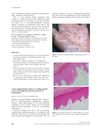
September 2008 in “Clinical and experimental dermatology” Repigmentation in vitiligo may come from melanocyte stem cells in the skin.
Moles may stop growing because of cell cooperation, not just because of aging cells.
 3 citations
,
November 2018 in “Journal of cellular physiology”
3 citations
,
November 2018 in “Journal of cellular physiology” Serenoa repens and N-acetyl glucosamine/milk proteins complex may help with hair growth and prevent hair loss.
Par3–mInsc and Gαi3 work together to ensure proper cell division orientation in skin development.