3 citations
,
April 2021 in “Journal of Clinical Medicine” Further research is needed to understand lymph node involvement in axillary hidradenitis suppurativa.
 12 citations
,
November 2015 in “Cell Death & Differentiation”
12 citations
,
November 2015 in “Cell Death & Differentiation” Inflammation helps stem cells repair tissue by directing their behavior.
May 2026 in “Journal of Human Immunity” Ruxolitinib reduced inflammation and improved symptoms in APECED patients but may cause anemia and weight gain.
22 citations
,
August 2021 in “Frontiers in medicine” Immune cells in Hidradenitis suppurativa become more inflammatory and may be important for treatment targets.
April 2020 in “International Journal of Dermatology” T-cell patterns in skin help distinguish alopecia areata from androgenetic alopecia.
 3 citations
,
April 2002 in “The Lancet”
3 citations
,
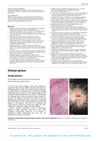
April 2002 in “The Lancet” Painful hair loss in an elderly woman was caused by giant cell arteritis, not just aging.
 January 2007 in “Journal of The American Academy of Dermatology”
 Post-steroid panniculitis is now rare because doctors taper steroids more carefully.
107 citations
,
October 2022 in “Frontiers in Immunology” T cells and inflammation are crucial in atherosclerosis, with anti-inflammatory treatments showing promise.
 66 citations
,
March 2018 in “British journal of dermatology/British journal of dermatology, Supplement”
66 citations
,
March 2018 in “British journal of dermatology/British journal of dermatology, Supplement” An imbalance between certain immune cells is linked to a chronic skin condition and may be influenced by obesity, smoking, and autoimmune issues.
 24 citations
,
January 2012 in “Indian Journal of Dermatology, Venereology and Leprology”
24 citations
,
January 2012 in “Indian Journal of Dermatology, Venereology and Leprology” Diffuse alopecia areata involves more inflammation and higher allergy-related antibodies than patchy types.
 51 citations
,
October 1981 in “British Journal of Dermatology”
51 citations
,
October 1981 in “British Journal of Dermatology” Some patients developed skin inflammation after obesity surgery, and a medication called dapsone helped treat it.
July 2024 in “Journal of Investigative Dermatology” Mechanical tension worsens keloid scars by activating inflammation and fibrosis pathways.
 April 2017 in “Journal of Investigative Dermatology”
 Cholecystokinin may help reduce skin inflammation in psoriasis.
Isotretinoin and other medications showed promising results for treating a rare scalp condition linked to severe acne.
 32 citations
,
February 2016 in “The American journal of dermatopathology/American journal of dermatopathology”
32 citations
,
February 2016 in “The American journal of dermatopathology/American journal of dermatopathology” Extramammary Paget disease can spread deeply into tissues, reaching up to 3.6 mm.

The reviewers suggest clarifying the abstract, adding background on inflammation's effect on stem cells and cancer, discussing immune cells' role in tumors, and considering inflammation's potential to reduce cancer growth.
December 2020 in “Galen Medical Journal” Alopecia patients have more mast cells in their scalps, especially in severe cases and older age, with alopecia areata showing the highest increase.
 April 2026 in “Ankara Eğitim ve Araştırma Hastanesi Tıp Dergisi”
 Severe acne patients have higher inflammatory markers than healthy people.
July 2025 in “Pharmaceutics” Recombinant Human Annexin A5 may help treat localized scleroderma by reducing skin thickening and inflammation.
July 2024 in “Journal of Investigative Dermatology” IL-13 protein is much higher in the skin of atopic dermatitis patients than in healthy skin.
9 citations
,
September 2024 in “Journal of Clinical Medicine” Hidradenitis suppurativa is linked to autoinflammation and immune system issues.
IL-26 has antimicrobial and pro-inflammatory effects in the chronic skin condition Hidradenitis Suppurativa.
 May 2025 in “Orphanet Journal of Rare Diseases”
 TNF-α blockers and IL inhibitors improve symptoms in most patients with severe scalp condition, but more research is needed.
 April 2018 in “Journal of Investigative Dermatology”
 Acne patients' skin, both with and without lesions, shows a strong immune response and higher antimicrobial activity.
 1 citations
,
October 2025
1 citations
,
October 2025 γδ T cells help control tissue scarring and blood vessel growth in response to foreign objects.
 May 2025 in “The Journal of Rheumatology”
 A woman with skin and joint issues progressed from one type of lupus to another, highlighting the need to recognize complex conditions.
1 citations
,
January 2010 in “Acta Chirurgica Latviensis” Inflammation in psoriasis may trigger antimicrobial peptides and cell death.
September 2017 in “Griffith Research Online (Griffith University, Queensland, Australia)” Blocking IL-17 can reduce joint inflammation in Ross River Virus infections.
 April 2023 in “Journal of Investigative Dermatology”
 Mast cells and the CB1 receptor may be key in causing IgA vasculitis.
19 citations
,
August 2018 in “JAMA dermatology” Mesenchymal stem cells in people with Hidradenitis Suppurativa are more inflammatory, possibly contributing to the disease.