 16 citations
,
September 2018 in “Journal of Molecular Liquids”
16 citations
,
September 2018 in “Journal of Molecular Liquids” The PS-b-PAA copolymer nanomicelles are effective for delivering a cancer treatment drug in photodynamic therapy.
December 2024 in “Macromolecular Bioscience” The new collagen template speeds up production and supports skin healing without harmful reactions.
43 citations
,
July 1994 in “Journal of Cell Science” Cross-linked proteins help maintain the structure of hair, feathers, and hagfish teeth.
 26 citations
,
August 2016 in “ACS Applied Materials & Interfaces”
26 citations
,
August 2016 in “ACS Applied Materials & Interfaces” A boronic acid copolymer quickly forms cell clusters, useful for tissue and tumor modeling.
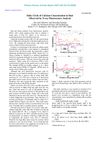
Hair can show daily calcium changes, linked to body calcium levels and influenced by hormones, and can help assess calcium metabolism issues.
1 citations
,
February 2023 in “IntechOpen eBooks” Targeted photodynamic therapy is a promising method for precise disease treatment and diagnosis.
January 2026 in “SSRN Electronic Journal”  October 2025 in “Advanced Healthcare Materials”
 The hydrogels improve wound healing and tissue regeneration better than traditional treatments.

A new sprayable hydrogel helps heal wounds faster and reduces inflammation.
5 citations
,
March 2025 in “Tissue Engineering and Regenerative Medicine” 2 citations
,
December 1994 in “International Journal of Cosmetic Science” Polymer complexation makes hyaluronic acid stick to hair better, enhancing its moisturizing effects.
 March 2026 in “Research Square”
 Polymer dot nanozymes and exosomes, with laser stimulation, speed up wound healing.
 2 citations
,
January 2020
2 citations
,
January 2020 The document describes a method for preparing hair for microscopy by embedding it in plastic, cutting it, and storing it cold before imaging.
January 2016 in “Frontiers in Bioengineering and Biotechnology” Keratin-based hydrogels can be improved for medical use by adding PEG, making them more soluble and adjustable.
49 citations
,
January 1972 in “Biochimica et Biophysica Acta (BBA) - Protein Structure” 11 citations
,
September 1996 in “Journal of applied polymer science” Potassium cyanide treatment changes hair's disulfide bonds, making it more elastic.

The hydrogel significantly improves healing in diabetic wounds.
1 citations
,
October 2025 in “Plastic & Reconstructive Surgery Global Open” The dermal filler is safe and effective for improving facial appearance.
September 2025 in “International Journal of Biological Macromolecules” The new hydrogel with curcumin speeds up wound healing safely and effectively.
 January 2019 in “The Review of Laser Engineering”
 Multiphoton excitation microscopy is a promising tool for deep tissue imaging and clinical applications.
March 2026 in “Advanced Healthcare Materials” May 2010 in “Europe PMC (PubMed Central)” Near-infrared probes can safely and effectively image cysteine protease activity for disease diagnosis.
 August 2021 in “Han'gug miyong haghoeji/Journal of the Korean society of cosmetology”
 Using natural polyphenol cross-linkers like tannic acid and green tea extract in perm treatments improves curling and protects hair.
4 citations
,
January 2006 in “International Journal of Cosmetic Science” The method shows how hair lipids form specific patterns and their roles in hair structure.
1 citations
,
January 2024 in “Egyptian Dental Journal /Egyptian Dental Journal” The combined treatment improves lip texture, elasticity, and firmness for up to nine months.
 January 2024 in “Authorea (Authorea)”
 Using laccase to add poly(tyrosine) to wool makes it less likely to shrink and stronger.

Stiffness gradients in alginate gels can guide cancer cell invasion and study cellular behaviors.
 10 citations
,
January 2024 in “Polymer Chemistry”
10 citations
,
January 2024 in “Polymer Chemistry” Lipid–polymer hybrid nanoparticles can improve genome editing delivery and outcomes.
7 citations
,
May 2024 in “Gels” The new collagen and tannic acid hydrogel effectively stops bleeding and aids tissue repair better than current options.
15 citations
,
January 2024 in “Journal of Materials Chemistry B” The hydrogel speeds up wound healing and improves skin repair better than commercial options.