December 2021 in “Meditsinskiy sovet = Medical Council” Basic skin care products can effectively prevent and treat radiation dermatitis.
 2 citations
,
July 1982 in “British Journal of Dermatology”
2 citations
,
July 1982 in “British Journal of Dermatology” Retinol acetate can reduce the harmful effects of the drug benoxaprofen on white blood cells.
1 citations
,
November 2023 in “Skin Appendage Disorders” 308 nm excimer lamp therapy is effective for alopecia areata but less so for severe cases.
3 citations
,
August 2024 in “Journal of Cosmetic Dermatology” Combining laser therapy with hair extraction improves eyebrow scar treatment.
 June 2017 in “Journal of The American Academy of Dermatology”
 LED light helps hair follicle cells grow and prevents them from dying by activating certain cell pathways.
 5 citations
,
October 2021 in “Dermatologic Surgery”
5 citations
,
October 2021 in “Dermatologic Surgery” Platelet-rich plasma (PRP) can significantly improve melasma, a skin pigmentation disorder, but may not add benefits when used with certain other treatments.
December 2025 in “Journal of Veterinary Clinics” CO₂ laser surgery successfully healed a dog's chronic paw condition.
85 citations
,
November 2004 in “Journal of the American Academy of Dermatology” The 308-nm excimer laser helps hair regrowth in some alopecia areata cases but not all.
June 2023 in “bioRxiv (Cold Spring Harbor Laboratory)” Scientists created cell lines to study a genetic skin disorder using CRISPR technology.

Activating certain cells in hair follicles can prevent hair loss caused by cancer treatments.
26 citations
,
January 1992 in “Carcinogenesis” TPA strongly increases ODC activity in certain skin cells, potentially aiding tumor growth.
September 2025 in “Global Journal of Pharmacy & Pharmaceutical Sciences” PDRN from salmon sperm DNA can improve skin health and appearance.
6 citations
,
January 2020 in “Elsevier eBooks” Nanoparticles could make hair dyes safer by reducing harmful effects.
 92 citations
,
January 1999 in “Physics in Medicine and Biology”
92 citations
,
January 1999 in “Physics in Medicine and Biology” Skin can be cooled quickly and safely during laser treatments to protect it without affecting deeper layers.
 September 2019 in “Journal of Investigative Dermatology”
 Researchers developed a new method to deliver molecules to hair follicles to manage hair growth without damaging surrounding skin.
 August 2025 in “Journal of Cosmetic Dermatology”
 Topical treatments and lasers can improve axillary hyperpigmentation, but no best method is established yet.
 1 citations
,
January 2000 in “Journal of pharmacopuncture”
1 citations
,
January 2000 in “Journal of pharmacopuncture” Microneedle Therapy System effectively treats acne, scars, and hair loss safely.
 August 2019 in “Journal of The American Academy of Dermatology”
 PFD patch helps laser tattoo removal, trichoscopy diagnoses AGA, and serum boosts SOD activity.

Activating certain hair follicle cells could prevent hair loss from cancer treatments.
 April 2021 in “Journal of Investigative Dermatology”
 Photobiomodulation therapy may help treat hair loss in people with darker skin, but more research is needed.
 April 2003 in “Journal of Cutaneous Medicine and Surgery”
 Lasers are effective for some skin conditions but can cause side effects like scarring and pigment changes; careful selection is important, and botulinum toxin type A is successful in reducing sweat in palmar hyperhidrosis.
 September 2024 in “Heliyon”
 Repeated hair dyeing significantly damages hair.
 10 citations
,
January 2013 in “Journal of The European Academy of Dermatology and Venereology”
10 citations
,
January 2013 in “Journal of The European Academy of Dermatology and Venereology” The home-use IPL device effectively reduced hair and delayed its regrowth after six months of use, with users happy and no negative side effects.
31 citations
,
January 2014 in “The Scientific World JOURNAL” Eclipta prostrata extract protects skin cells from UVB damage and has strong antioxidant properties.
4 citations
,
October 2024 in “Tissue Engineering and Regenerative Medicine” 36 citations
,
May 2025 in “Antioxidants” Lipid peroxidation worsens skin diseases but may help treat cancer.
 May 2023 in “Indian journal of dermatology, venereology, and leprology”
 The document concludes that understanding tissue degeneration is crucial for diagnosing skin lesions.
 14 citations
,
January 2005 in “Pediatric Dermatology”
14 citations
,
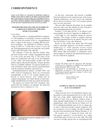
January 2005 in “Pediatric Dermatology” UVA1-light therapy successfully treated a child's skin condition, mycosis fungoides.
26 citations
,
January 2012 in “JEADV. Journal of the European Academy of Dermatology and Venereology/Journal of the European Academy of Dermatology and Venereology” The ESLD recommends international safety guidelines and standards for home-use light-based hair removal devices.
November 2021 in “Natural product research” Certain polyphenols may help treat skin pigmentation disorders.