6 citations
,
July 1985 in “British Journal of Dermatology” Topical minoxidil showed limited effectiveness for hair regrowth in alopecia areata.
5 citations
,
May 1994 in “Facial plastic surgery clinics of North America” Minoxidil was promising for treating male and female pattern baldness in 1994, but more research on genetics and other treatments was needed.
14 citations
,
January 2014 in “Indian Journal of Dermatology Venereology and Leprology” Frontal fibrosing alopecia can affect men's beards and leads to permanent hair loss.
January 2026 in “Journal of Case Reports and Scientific Images” Homeopathic treatment led to full recovery from scarring alopecia.
 June 2023 in “Brazilian Journal of Health Review”
 Common baldness is a hereditary condition that can be treated with medications or surgery to prevent progression and improve self-esteem.
3 citations
,
July 2023 in “International Journal of Trichology” DPCP can help regrow hair in some people with severe alopecia.
 January 2023 in “Skin appendage disorders”
 Two Hispanic women developed Plica neuropathica, a condition causing tangled hair, possibly due to hair damage and various risk factors.
 December 2023 in “EPRA international journal of multidisciplinary research”
 Alopecia areata causes sudden hair loss, has genetic links, and can be managed but not cured.
36 citations
,
July 1988 in “Archives of Dermatological Research” Pili annulati is caused by a protein metabolism disorder affecting hair structure.
 September 2016 in “Journal of Dermatology and Dermatologic Surgery”
 A woman's severe hair loss was caused by scalp psoriasis, not the initially thought condition, and treatment improved her psoriasis but couldn't restore her lost hair.
March 2023 in “Medica Hospitalia: Journal of Clinical Medicine” PRP is a safe and effective treatment for hair growth in alopecia areata.
 May 2023 in “Elsevier eBooks”
 Scarring alopecia causes permanent hair loss, and treatment aims to reduce inflammation and stop it from getting worse.
 18 citations
,
November 2012 in “Australasian Journal of Dermatology”
18 citations
,
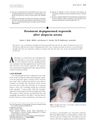
November 2012 in “Australasian Journal of Dermatology” A 66-year-old man with a rare case of male frontal fibrosing alopecia did not regrow hair despite treatment.
 23 citations
,
April 2002 in “Journal of the American Academy of Dermatology”
23 citations
,
April 2002 in “Journal of the American Academy of Dermatology” Depigmented hair regrowth after alopecia areata can be permanent.
6 citations
,
March 2024 in “Therapeutic Delivery” Nanoparticle drug delivery could improve alopecia areata treatment.
 122 citations
,
April 1995 in “Journal of Cutaneous Pathology”
122 citations
,
April 1995 in “Journal of Cutaneous Pathology” The document describes how to tell different types of non-scarring hair loss apart by looking at hair and scalp tissue under a microscope.
April 2012 in “Journal of evolution of medical and dental sciences” No effective treatment exists to stimulate hair growth in atrichia with papular lesions.
 July 2009 in “Medical & surgical dermatology”
 Low-dose acitretin helps nail psoriasis, stem cells may treat scarring alopecia, Chinese men have lower baldness rates, lateral foldplasty is good for ingrown toenails, hair diameter helps diagnose female baldness, childhood trauma linked to alopecia areata, certain hair-weaving leads to scalp conditions in African American women, and new methods for hair research and understanding hair and sweat gland development were introduced.
5 citations
,
October 2019 in “JAAD Case Reports” These hair loss conditions might be part of a spectrum, not separate issues.
141 citations
,
November 2007 in “Journal of Investigative Dermatology” Balding cells age faster due to stress, suggesting stress-targeting treatments for hair loss.
1 citations
,
August 2005 in “Springer eBooks” Alopecia areata is an autoimmune disease with genetic links, treatable with certain medications, and can affect mental health.
 February 2023 in “Siriraj Medical Journal”
 Not all cases with typical signs of Alopecia Areata are actually diagnosed as such.
 June 2022 in “Authorea (Authorea)”
 A 59-year-old woman was diagnosed with a rare hair loss condition called lipedematous alopecia.
37 citations
,
April 1977 in “Journal of Cutaneous Pathology” Skin biopsy can help diagnose hair loss from trichotillomania.
 April 2024 in “International journal of research in dermatology”
 Azathioprine can cause hair loss and matted hair.
 45 citations
,
December 2014 in “Journal of the European Academy of Dermatology and Venereology”
45 citations
,
December 2014 in “Journal of the European Academy of Dermatology and Venereology” Plasmacytoid dendritic cells are a key factor in causing hair loss in alopecia areata and could help differentiate it from other hair loss conditions.
 December 2007 in “CRC Press eBooks”
 Alopecia areata incognita causes widespread hair loss without patches and needs a scalp biopsy for diagnosis.
January 2013 in “Touro Scholar (Touro College)” DPCP works best for alopecia areata, but more research is needed for better treatments.
December 2025 in “Zenodo (CERN European Organization for Nuclear Research)” Ayurvedic treatment successfully managed Alopecia Areata.