Lichen spinulosus, usually seen in young people, can rarely occur in adults, as shown by a 52-year-old woman with a rough, bumpy rash.
 1 citations
,
September 2021 in “CRC Press eBooks”
1 citations
,
September 2021 in “CRC Press eBooks” Frontal Fibrosing Alopecia is a hair loss condition mainly affecting postmenopausal women, with unclear causes and various clinical patterns.
 4 citations
,
June 2021 in “Wounds-a Compendium of Clinical Research and Practice”
4 citations
,
June 2021 in “Wounds-a Compendium of Clinical Research and Practice” Chronic scalp lesions with crusts and pus that heal with strong topical steroids suggest Erosive Pustular Dermatosis, confirmed by biopsy showing specific immune cells.
 3 citations
,
April 2016 in “International Journal of Dermatology”
3 citations
,
April 2016 in “International Journal of Dermatology” A young man was diagnosed with trichoepitheliomas, causing thick skin and hair loss.
 1 citations
,
March 2020 in “Australasian Journal of Dermatology”
1 citations
,
March 2020 in “Australasian Journal of Dermatology” The paper concludes that recognizing bitemporal alopecia areata is important for early treatment and preventing its progression.
4 citations
,
November 2019 in “Dermatology - Open Journal” Lichen planus pigmentosus is hard to treat and may be more common in North Africa than previously thought.
 17 citations
,
May 1987 in “Clinical and Experimental Dermatology”
17 citations
,
May 1987 in “Clinical and Experimental Dermatology” A patient with Sézary syndrome showed improvement after treatment and the study suggested follicular mucinosis might indicate future lymphoma risk.
52 citations
,
April 2000 in “International Journal of Dermatology” Tinea capitis in Benghazi mainly affects children under 10, with Trichophyton violaceum as the leading cause.
 25 citations
,
October 2018 in “Journal of The American Academy of Dermatology”
25 citations
,
October 2018 in “Journal of The American Academy of Dermatology” Erosive pustular dermatosis of the scalp is a type of skin inflammation often confused with other conditions, requiring continuous treatment.
12 citations
,
June 2011 in “Journal of Dermatological Case Reports” Shaving, erythromycin cream, and clotrimazole powder effectively treated the bad odor and rough hair.
 April 2020 in “International journal of research in dermatology”
 An 8-year-old girl has a rare, irreversible hair loss condition caused by a genetic mutation.
 September 2011 in “International Journal of Dermatology and Venereology”
 Hair loss can occur in people with systemic lupus erythematosus.
 June 2024 in “British Journal of Dermatology”
 Scalp disease in dermatomyositis causes significant symptoms and has unique features.
5 citations
,
February 2013 in “PubMed” An 11-year-old girl's hair loss was caused by a Cladosporium fungal infection, which was cured with itraconazole treatment.
37 citations
,
January 2003 in “Journal of the European Academy of Dermatology and Venereology” Turner's syndrome may be linked to autoimmune diseases like psoriasis and alopecia areata, needing comprehensive care.
 September 1997 in “Journal of The European Academy of Dermatology and Venereology”
 Examining scalp tissue under a microscope helps diagnose and understand hair loss diseases.
November 2021 in “CRC Press eBooks” Tinea capitis is a fungal infection of the scalp that mainly affects children and can cause symptoms from mild itching to severe inflammation.
 January 2020 in “Revista da Sociedade Portuguesa de Dermatologia e Venereologia”
 Frontal fibrosing alopecia in Brazil mostly affects postmenopausal women, often linked with hypothyroidism and eyebrow hair loss.
4 citations
,
October 2001 in “Mycoses” A young cat had a rare fungal infection caused by Microsporum gypseum.
 January 2021 in “Our Dermatology Online”
 A young man's hair loss was the only sign of syphilis, which improved after treatment.
 September 2023 in “Small animal advances”
 The kitten's skin infection was cured with medication in three weeks.
175 citations
,
December 1980 in “Archives of Dermatology” Trichothiodystrophy is a condition with brittle hair and various physical and mental issues due to low sulfur in proteins.
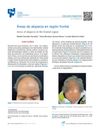 January 2025 in “Revista del Centro Dermatológico Pascua”
 The document presents a clinical case of a 71-year-old woman with fibrosing alopecia in a pattern distribution (FAPD), a scarring type of alopecia affecting the frontal region. It highlights the condition's distinction from androgenetic alopecia through its scarring nature and specific histological features, such as lymphocytic infiltration and follicular degeneration. FAPD is more prevalent in postmenopausal women and lacks definitive treatment guidelines. Current treatments, including oral minoxidil, spironolactone, and topical steroids, focus on halting progression rather than promoting hair regrowth in scarred areas. Early diagnosis and intervention are essential for improving outcomes.
 7 citations
,
July 2020 in “Journal of The American Academy of Dermatology”
7 citations
,
July 2020 in “Journal of The American Academy of Dermatology” Skin symptoms linked to COVID-19 are hard to confirm, and more testing is needed to identify which are truly caused by the virus.
3 citations
,
October 2025 in “Biomedicines” New treatments for seborrheic dermatitis show promise for difficult cases.
August 2024 in “Postgraduate Medical Journal” A rare skin reaction from cancer treatment was successfully managed with topical treatments and antihistamines.
 June 2022 in “Authorea (Authorea)”
 A 59-year-old woman was diagnosed with a rare hair loss condition called lipedematous alopecia.
 60 citations
,
September 2010 in “Journal of the American Academy of Dermatology”
60 citations
,
September 2010 in “Journal of the American Academy of Dermatology” Small white dots on the scalp seen with a dermoscope correspond to sweat ducts and vary with different hair disorders.
 45 citations
,
January 2015 in “Dermatology”
45 citations
,
January 2015 in “Dermatology” Hair loss in secondary syphilis is more common than thought and can be reversed with antibiotics.
 2 citations
,
August 1994 in “Archives of dermatology”
2 citations
,
August 1994 in “Archives of dermatology” A 19-month-old boy with a rare hair disorder showed mild improvement with treatment, but his family chose gentle hair care due to limited success.