 1 citations
,
December 2023 in “Annals of Phytomedicine An International Journal”
1 citations
,
December 2023 in “Annals of Phytomedicine An International Journal” Nanoemulgel improves delivery and effectiveness of plant-based drugs for various conditions.
1 citations
,
December 2023 in “Life” PRP helps skin heal, possibly through special cells called telocytes.
November 2025 in “Contribuciones a las Ciencias Sociales” PRP is a safe and versatile treatment option, but more standardized clinical trials are needed to confirm its effectiveness.
A mix of Polygonatum sibiricum and Nelumbinis semen may ease menopause symptoms with fewer side effects.
 August 2005 in “Microscopy and Microanalysis”
 Polymethylene wax in hair relaxers makes hair smooth and shiny with less damage.
 March 2025 in “Scientific Reports”
 Menthol-based microemulsions improve skin delivery of finasteride and silodosin.
 12 citations
,
April 2014 in “Facial Plastic Surgery Clinics of North America”
12 citations
,
April 2014 in “Facial Plastic Surgery Clinics of North America” Direct excision techniques can rejuvenate the neck but may not enhance the jawline and could cause neck-face disharmony if done incorrectly.
 June 2026 in “Discover Immunity.”
 Mesenchymal stem cells help improve skin healing and rejuvenation.
8 citations
,
January 2025 in “Gels” The developed nasal gel improves cilostazol delivery to the brain, enhancing its effectiveness and reducing side effects.
A standardized consent form for PRP injections improves patient trust and legal protection.
 January 2025 in “International Journal of Biology Pharmacy and Allied Sciences”
 The herbal hair removal cream effectively removes hair naturally and gently.
9 citations
,
June 2021 in “Journal of Inflammation Research” Euph E and Euri A from Euphorbia neriifolia help control inflammation and immune response in cells.
 September 2025 in “Institutional Repositories DataBase (IRDB)”
 Lactic acid bacteria fermentation can turn waste into valuable skincare ingredients.
80 citations
,
August 2022 in “Materials Today Bio” The hydrogel dressing effectively treats chronic wounds by regulating inflammation and improving healing.
November 2025 in “Aesthetic Surgery Journal Open Forum” Platelet-rich plasma (PRP) effectively improves skin aging with minimal risk.
The new gel effectively treats psoriasis with minimal side effects.
16 citations
,
November 2018 in “Medicinal Chemistry” The compound GD-23 may reduce anxiety like diazepam by targeting the TSPO receptor.
2 citations
,
April 2019 in “Pharmaceutical sciences and research” The lotion with menthol promotes more hair growth than the one without menthol.
36 citations
,
August 2020 in “Polymers” The patch delivers more drugs through the skin effectively.
9 citations
,
September 2010 in “Dermatologic therapy” Combining cetirizine and topical steroids can effectively manage severe lichen planus pilaris.
 5 citations
,
July 2020 in “Journal of Cosmetic Dermatology”
5 citations
,
July 2020 in “Journal of Cosmetic Dermatology” A vibrating anesthetic device significantly reduces pain during mesotherapy for hair loss without complications.
 January 2024 in “Journal of Education, Health and Sport”
 More research is needed to fully understand the benefits of platelet-rich plasma in medicine.
 August 2024 in “Quality in Sport”
 PRP helps with skin, hair, and wound treatments but needs more research for standard use.
 4 citations
,
November 2023 in “Biological and Pharmaceutical Bulletin”
4 citations
,
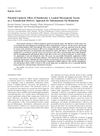
November 2023 in “Biological and Pharmaceutical Bulletin” The serum reduced thigh fat and improved skin firmness.
January 2026 in “Journal of Ethnopharmacology” Cedrol promotes hair growth better than baricitinib by regulating immune cells.
 June 2026 in “Gümüşhane Üniversitesi Fen Bilimleri Enstitüsü Dergisi”
 PVA/agar films with Achillea millefolium essential oil are promising for wound dressings due to good strength and selective antibacterial effects.
 3 citations
,
July 2024 in “Cureus”
3 citations
,
July 2024 in “Cureus” Platelet-rich plasma (PRP) shows promise for treating melasma but needs more research for confirmation.
 November 2020 in “Black Sea scientific journal of academic research”
 Some plants can help treat skin conditions.
 September 2025 in “ACS Applied Polymer Materials”
 The hydrogel speeds up wound healing, fights bacteria, reduces inflammation, and monitors pH.
1 citations
,
December 2016 in “Rossijskij žurnal kožnyh i veneričeskih boleznej” A new treatment using unactivated platelet leukocyte autoplasma cured 80% of non-scarring alopecia patients.