3 citations
,
November 2025 in “Biomimetics” Hydrogels show promise in preventing and treating skin damage from radiation therapy.
3 citations
,
January 2023 in “Journal of Hunan University Natural Sciences” The natural shampoo with plant extracts works well like commercial ones but needs more testing.
2 citations
,
October 2025 in “Chinese Medicine” Berberine delivery systems improve wound healing by enhancing bioavailability, reducing inflammation, and promoting tissue regeneration.
2 citations
,
June 2024 in “Heliyon” The rare cliff plant Oresitrophe rupifraga has diverse metabolites, with leaves rich in phenolic acids and rhizomes and bulblets high in terpenoids, aiding its growth and potential use.
 2 citations
,
November 2023 in “International Journal for Research in Applied Science and Engineering Technology”
2 citations
,
November 2023 in “International Journal for Research in Applied Science and Engineering Technology” Nanofibers help heal burns effectively by improving skin restoration and reducing scars.
 1 citations
,
October 2025 in “International Journal of Nanomedicine”
1 citations
,
October 2025 in “International Journal of Nanomedicine” Exosomes could revolutionize skin disease treatment and healing.
1 citations
,
September 2025 in “Journal of Cosmetic Dermatology” The framework suggests sun protection, retinoids, and antioxidants to improve skin longevity.
 1 citations
,
January 2017 in “Elsevier eBooks”
1 citations
,
January 2017 in “Elsevier eBooks” The document concludes that new treatments for hair loss may involve a combination of cosmetics, clinical methods, and genetic approaches.
 1 citations
,
January 2017 in “Indian Journal of Pharmaceutical Sciences”
1 citations
,
January 2017 in “Indian Journal of Pharmaceutical Sciences” Women with PCOS often have different clinical signs, hormone levels, and gynecological issues compared to those without the condition.
 April 2026 in “Nanomaterials”
 Plant-derived vesicles from Ayurvedic plants may improve treatment delivery for hair growth and other conditions.
 March 2026 in “Brazilian Journal of Microbiology”
 Restoring skin bacteria may help reduce hair loss.
 February 2026 in “Biomedicines”
 Nanotechnology offers promising new treatments for hair loss by improving targeted delivery and addressing key causes.
 February 2026 in “International Journal of Web of Multidisciplinary Studies”
 Restoring microbial balance and using exosome therapies may help treat hair disorders like alopecia and acne.
 February 2026 in “MDPI (MDPI AG)”
 Exosome-based treatments may improve skin and hair issues, but more research is needed for safety and effectiveness.
 January 2026 in “Preprints.org”
 Nanotechnology shows promise for treating hair loss but faces safety and approval challenges.
January 2026 in “Pharmaceutics” Nanotechnology in skincare improves ingredient stability, skin penetration, and controlled release for better cosmetic solutions.
 January 2026 in “International Journal of All Research Education & Scientific Methods”
 Alopecia is caused by various factors, and new treatments like gene editing and regenerative medicine offer hope for personalized hair regrowth solutions.
December 2025 in “International Journal of Molecular Sciences” Exosome-based therapies show promise for treating alopecia areata but need more research.
 December 2025 in “Frontiers in Medicine”
 ARWH is a rare hair disorder with no cure, but potential treatments include minoxidil and other therapies.
November 2025 in “Pharmacological Research” Plant-derived nanoparticles from Polygoni Multiflori Radix promote hair growth better than Minoxidil by affecting androgen pathways.
October 2025 in “Plant Science Today” Cytokinins help Vitex negundo grow better and bloom more.
August 2025 in “Sri Lankan Journal of Applied Sciences” Certain plants in Sri Lanka, like turmeric and aloe vera, may effectively treat skin diseases.
 May 2025 in “International Journal of Applied Pharmaceutics”
 Nanocarriers could improve hair loss treatments by delivering drugs directly to hair follicles.
 April 2025 in “BioNanoScience”
 New methods using biomaterials, stem cells, and nanoparticles show promise for improving hair growth and treating hair loss.

The plant extract helped increase hair growth in men without severe side effects.
 February 2025 in “Brazilian Journal of Case Reports”
 Medicinal plant treatments effectively reduce hair loss in Korean men and women.
 January 2025 in “International Journal of Pharmaceutical Research and Development”
 Herbal products are preferred for treating hair loss due to their reliability in promoting regrowth.
 August 2024 in “Applied Sciences”
 Plant extracts may help prevent or reverse hair graying.

YH0618 helps reduce chemotherapy-induced hair loss by targeting specific proteins and pathways.
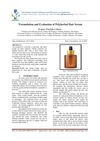 June 2024 in “International Journal of Pharmaceutical Research and Applications”
 Polyherbal hair serum can hydrate the scalp and promote hair growth safely.