10 citations
,
June 2023 in “Medical Mycology Case Reports” An elderly man had a scalp infection misdiagnosed as dandruff, treated successfully with antifungal medication.
22 citations
,
December 2016 in “Journal of Pakistan Association of Dermatologists” Patients on hemodialysis often experience skin and nail issues.
 4 citations
,
November 2012 in “Dermatitis”
4 citations
,
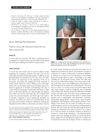
November 2012 in “Dermatitis” A man got severe skin irritation after using marking nut sap for hair loss.
June 2005 in “Journal of Investigative Dermatology” A bull with a gene mutation was asymptomatic, synthetic retinoids cause hair loss, and new therapeutic targets were identified for skin diseases.
July 2011 in “Journal of Pediatric and Adolescent Gynecology” A 15-year-old girl has a skin condition causing blisters on her feet, likely inherited from her family.
 August 2009 in “Mechanisms of Development”
 Adult hair follicle cells can create new hair follicles from corneal cells with the right support.
 1 citations
,
December 2022 in “Life”
1 citations
,
December 2022 in “Life” Topical corticosteroids are the main treatment for Erosive Pustular Dermatosis, but recurrence is common after stopping treatment.
 August 2023 in “American Journal of Hospice and Palliative Medicine”
 People in palliative care often have skin problems due to their main illness or other health issues, and treatments focus on comfort and quality of life.
19 citations
,
April 1999 in “British Journal of Dermatology” Keratin 2e shows a unique pattern in developing fetal skin, different from other keratins.
22 citations
,
March 1999 in “International Journal of Clinical Practice” Diphencyprone (DCP) is an effective treatment for severe alopecia areata and resistant warts, with some risks.
 February 2022 in “Cleveland Clinic Journal of Medicine”
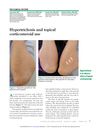
 Prolonged use of topical corticosteroids can cause excessive hair growth.
238 citations
,
October 1994 in “Current opinion in genetics & development” The document concludes that recent research has improved understanding of skin diseases and the balance between cell growth and differentiation in the epidermis.
 1 citations
,
January 2019 in “International Journal of Medical Reviews and Case Reports”
1 citations
,
January 2019 in “International Journal of Medical Reviews and Case Reports” Treatment with moisturizers improved the skin condition of a girl with a rare genetic skin disorder.
5 citations
,
April 1984 in “Archives of Dermatology” Porphyria cutanea tarda causes skin issues due to an enzyme deficiency.
7 citations
,
January 1988 12 citations
,
January 1991 in “Acta Dermato Venereologica” Basal cell epithelioma-like changes are most similar to normal basal cells.
31 citations
,
February 1982 in “Archives of dermatology” Etretinate was effective for certain skin conditions, but caused side effects like chapped lips, dry mucous membranes, and hair loss.
 January 2018 in “Elsevier eBooks”
 Topical imiquimod is as effective as 5-fluorouracil for treating actinic keratosis, with about a 5% risk of it turning into squamous cell carcinoma.
 2 citations
,
May 2022 in “JAAD case reports”
2 citations
,
May 2022 in “JAAD case reports” Using powdered umbilical remnant allograft can effectively treat chronic scalp wounds resistant to traditional treatments.
Targeting the PGI2 pathway may help heal diabetic foot ulcers.
August 2022 in “Tissue Engineering Part A” Advancements in skin treatment and wound healing include promising gene therapy, 3D skin models, and potential new therapies.
 4 citations
,
February 2018 in “Journal of Investigative Dermatology”
4 citations
,
February 2018 in “Journal of Investigative Dermatology” The document concludes that a protein involved in hair growth may link to baldness and that more research is needed on its role in hair loss and skin cancer treatments.
 July 2003 in “Journal of Cutaneous Medicine and Surgery”
 The document concludes that various treatments for skin conditions are effective, but some require further research, and certain factors like gender and lifestyle can influence disease outcomes.
6 citations
,
January 2004 in “Der Hautarzt” 5 citations
,
March 1982 in “Journal of Infection” Misdiagnosed skin infections led to ineffective treatments and serious complications.
 April 2017 in “Journal of Investigative Dermatology”
 Blood cells turned into stem cells can become skin cells similar to normal ones, potentially helping in skin therapies.
Pseudopelade is likely an independent disease due to its distinct features.
 28 citations
,
January 2014 in “Indian Journal of Dermatology, Venereology and Leprology”
28 citations
,
January 2014 in “Indian Journal of Dermatology, Venereology and Leprology” Chinese patients with primary cicatricial alopecia often have folliculitis decalvans, benefit from treatment, but may experience relapse, with dermoscopy being a useful diagnostic tool.
2 citations
,
September 2023 in “Journal of clinical medicine” Scalp skin grafts effectively cover lower limb defects with high success and minimal complications.
 July 2023 in “Health Sciences Quarterly”
 Acne, dermatophytosis, and viral warts are the most common skin problems in a Turkish dermatology clinic.