 December 2023 in “Natural product research”
 Lignans from Urtica triangularis may help treat benign prostatic hyperplasia (BPH).
 13 citations
,
May 2019 in “Cancer Prevention Research”
13 citations
,
May 2019 in “Cancer Prevention Research” Grape seed extract may safely and effectively help prevent lung cancer.
 2 citations
,
January 2007 in “Acta Dermato Venereologica”
2 citations
,
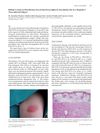
January 2007 in “Acta Dermato Venereologica” A patient developed a blister at the injection site after hepatitis C treatment.
 1 citations
,
May 2025 in “Natural Products and Bioprospecting”
1 citations
,
May 2025 in “Natural Products and Bioprospecting” PEVIII is a promising treatment for Pseudomonas aeruginosa keratitis.
7 citations
,
October 2018 in “South African journal of botany” Clausena anisata may be effective in treating acne due to its ability to fight bacteria, reduce inflammation, and possibly lower sebum production.
12 citations
,
December 2016 in “Medical Hypotheses” A vaccine may prevent benign prostatic hyperplasia (BPH).
January 2019 in “Springer eBooks” PLGA nanospheres in cosmetics improve skin and hair treatment effectiveness.
June 2026 in “Frontiers in Physiology” The cream effectively reduces oily skin, improves hydration, and changes skin bacteria.
3 citations
,
October 2024 in “International Journal of Molecular Sciences” Acetylsalicylic acid affects platelet-rich plasma activation, requiring personalized approaches for effective treatment.
3 citations
,
June 2024 in “International Journal of Molecular Sciences” Prolactin affects skin health and may lead to new treatments for skin and hair issues.
Patients with lichen planopilaris have a higher risk of heart disease.
Melatonin may protect against cell damage in pancreatitis.
 282 citations
,
April 2007 in “Journal of Agricultural and Food Chemistry”
282 citations
,
April 2007 in “Journal of Agricultural and Food Chemistry” Apple polyphenol, especially oligomeric procyanidins, can reduce fat absorption and lower blood fat levels.
18 citations
,
September 2021 in “Colloids and surfaces. B, Biointerfaces” Nanoparticles can effectively deliver spironolactone to hair follicles for treating alopecia and acne.
49 citations
,
July 2007 in “Ophthalmic Plastic and Reconstructive Surgery” Surgical excision is an effective treatment for persistent nodules from poly-L-lactic acid injections.
June 2018 in “Dermatologic Surgery”  March 2017 in “Open access journal of surgery”
 The document concludes that more standardized research is needed to fully understand and optimize the use of platelet-rich fibrin in regenerative medicine.
 January 2024 in “ASEAN Journal of Psychiatry”
 H. pylori infection may be linked to insulin resistance in women with PCOS.
3 citations
,
February 2018 in “Aesthetic plastic surgery” The Locked Cheek Lift is a simple, effective method for cheek and lower eyelid rejuvenation with a high success rate and minimal complications.
 January 2025 in “Journal of Plastic Reconstructive & Aesthetic Surgery”
 Two L-PRP treatments improve hair density in mild to moderate alopecia.
12 citations
,
March 2023 in “The FASEB Journal” Platelet-rich plasma can improve erectile function in older individuals by reducing prostate enlargement.
 16 citations
,
August 2014 in “Archives of Pharmacal Research”
16 citations
,
August 2014 in “Archives of Pharmacal Research” Special nanoparticles increased skin absorption of hair loss treatments with fewer side effects.
60 citations
,
March 2021 in “Bioactive Materials” The developed materials improved wound healing by balancing ROS levels.
 August 1994 in “Drugs & Therapy Perspectives”
 The document concludes that H2-antagonists and proton pump inhibitors are highly effective for ulcers, eradicating Helicobacter pylori is important to prevent recurrence, and misoprostol helps with NSAID-related ulcers.
 31 citations
,
October 2010 in “Progress in lipid research”
31 citations
,
October 2010 in “Progress in lipid research” LPA3 is crucial for embryo implantation and links LPA to prostaglandin signaling.

Platelet-rich plasma improves skin flap survival by reducing tissue death.
June 2026 in “Biomolecules and Biomedicine” Phoenixin levels are higher in PCOS patients and may help in diagnosis.
38 citations
,
January 2017 in “PPAR Research” PPAR-γ helps control skin oil glands and inflammation, and its disruption can cause hair loss diseases.
 22 citations
,
June 2018 in “Journal of Neuroinflammation”
22 citations
,
June 2018 in “Journal of Neuroinflammation” Procyanidins from grape seeds reduce nerve pain by blocking specific proteins and inflammation.
16 citations
,
June 1992 in “Journal of Investigative Dermatology”