 1 citations
,
November 2005 in “Dermatologic Surgery”
1 citations
,
November 2005 in “Dermatologic Surgery” Aminoguanidine increases VEGF in stored hair micrografts, potentially improving their viability after transplant.
 1 citations
,
May 1999 in “Journal of The European Academy of Dermatology and Venereology”
1 citations
,
May 1999 in “Journal of The European Academy of Dermatology and Venereology” Treat hair loss with medicine, continue indefinitely.
 July 2026 in “Dermatology and Therapy”
 Hair growth supplements significantly improve hair growth and health in women.
 July 2026 in “International Journal of Drug Delivery Technology”
 Curcumin and piperine may effectively and safely promote hair regrowth in alopecia.
 June 2026 in “Discover Nano”
 Lipid nanocarriers could effectively promote hair regrowth with fewer side effects.

Current treatments for androgenetic alopecia have limitations, and personalized approaches and new methods are needed for better results.
 June 2026 in “Aesthetic Cosmetology and Medicine”
 The polynucleotide-based gel effectively treats hair loss with minimal side effects.
 April 2026 in “Frontiers in Cell and Developmental Biology”
 Hair cell loss usually happens after hearing loss starts.
 March 2026 in “Frontiers in Pharmacology”
 New treatments for hair loss show promise but need more testing for effectiveness and safety.
 February 2026 in “Cureus”
 Combination therapy is better for long-term control and outcomes in type 2 diabetes.
 February 2026 in “Frontiers in Medicine”
 Oral minoxidil improved hair loss more than oral dutasteride.

The study found that different genes are active in cashmere goats' hair growth stages, which can help improve cashmere production.
 January 2026 in “MEDS Clinical Medicine”
 Plum-blossom needle therapy shows promise for treating hair loss but needs more research.
 December 2025 in “International Journal of Innovative Technologies in Social Science”
 Effective treatments for hair loss include minoxidil, 5α-reductase inhibitors, and personalized combination therapies.

Platycladi Cacumen may help treat hair loss by targeting specific proteins and pathways.
 November 2025 in “Eduvest - Journal Of Universal Studies”
 PRP and minoxidil improved hair growth in a young man with no side effects.
 October 2025 in “Frontiers in Medicine”
 The minoxidil-finasteride combination is more effective for hair growth than minoxidil alone.
 September 2025 in “International Journal of Innovative Technologies in Social Science”
 Dutasteride is more effective than finasteride for hair loss, but more research is needed on safety and dosing.
 January 2025 in “il Diabete”
 Targeted drug delivery to pancreatic beta-cells can improve type 2 diabetes treatment.
 August 2024 in “International Journal of Basic & Clinical Pharmacology”
 Secretome-based therapies could improve hair growth better than current treatments.
 July 2024 in “International Journal of Medical Arts”
 Latanoprost is more effective than minoxidil for treating alopecia areata.

Teprotumumab for thyroid eye disease commonly causes fatigue, brittle nails, dry eyes, hair loss, muscle spasms, and dry mouth, with rare serious events like blood clots.
 March 2024 in “bioRxiv (Cold Spring Harbor Laboratory)”
 Minoxidil treatment improves heart defects in a DiGeorge syndrome model.
 February 2024 in “International journal of biology, pharmacy and allied sciences”
 Plant-based treatments can effectively and safely treat hair loss.
 December 2023 in “International Journal of Medical Arts”
 Transplanted hair follicles show significant changes after FUE, needing more research.
Stopping minoxidil and draining fluid around the heart can save lives in rare cases.
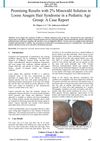 May 2023 in “International journal of science and research”
 2% minoxidil solution improved hair density and quality in children with Loose Anagen Hair Syndrome.
 January 2023 in “Han'gug mi'saengmul saengmyeong gong haghoeji/Han-guk misaengmul saengmyeong gonghak hoeji”
 NOC-4 extract promotes black hair and hair growth effectively.
 July 2022 in “medRxiv (Cold Spring Harbor Laboratory)”
 Satoyoshi syndrome is likely an autoimmune disease that mainly affects young women and improves with immune-related treatments.
 February 2021 in “Journal of pharmaceutical and biological sciences”
 No cure exists for alopecia areata, and treatments are personalized.