9 citations
,
May 2025 in “Stem Cell Research & Therapy” Extracellular vesicles can both worsen and help treat age-related diseases and are useful for early diagnosis.
1 citations
,
May 2022 in “IntechOpen eBooks” Natural products might help treat COVID-19, but current drugs like hydroxychloroquine haven't worked.
 October 2025 in “Pharmaceutics”
 Microneedles improve drug delivery for skin diseases, enhancing treatment effectiveness and patient compliance.
August 2025 in “The Journal of Sexual Medicine” Finasteride, dutasteride, and silodosin have the highest risk for causing sexual dysfunction.
 February 2025 in “International Journal of Molecular Sciences”
 RIPK1 inhibitors may help prevent alopecia areata by reducing immune cell activity.
 June 2023 in “British journal of dermatology/British journal of dermatology, Supplement”
 Patients with alopecia areata face challenges accessing Janus kinase inhibitors, but some see positive results.
59 citations
,
September 2021 in “Journal of Allergy and Clinical Immunology” Netherton syndrome has two subtypes with shared immune traits but different allergic and immune responses, suggesting targeted treatments.
55 citations
,
October 2015 in “Journal of Investigative Dermatology” Alopecia areata is linked to immune-related genes, suggesting JAK inhibitors as a potential treatment.
 May 2026 in “Premier journal of science.”
 Future treatments for hair loss may focus on personalized and regenerative approaches.
April 2017 in “The journal of investigative dermatology/Journal of investigative dermatology” Researchers found three different ways drugs work to treat hair loss from alopecia areata and identified key factors for personalized treatment.
 April 2025 in “International Journal of Molecular Sciences”
 New treatments for hair loss show promise with advanced therapies and better targeting.
May 2024 in “Frontiers in Medicine” Targeted immunological therapies offer safer and more effective treatments for skin conditions like eczema and psoriasis.
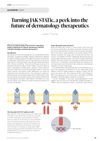 August 2024 in “New Zealand Medical Student Journal”
 JAK inhibitors show promise for treating skin diseases effectively and safely.
 March 2026 in “Saudi Journal of Pathology and Microbiology”
 Personalized genomic interventions can effectively manage chronic hair loss.
 December 2025 in “ADMET & DMPK”
 Personalized treatments for hair loss focus on specific genetic and biological pathways.
 April 2024 in “Frontiers in pharmacology”
 Brepocitinib 30mg is most effective for moderate-to-severe alopecia areata, but ritlecitinib 50mg may offer a better balance of safety and effectiveness.
 June 2026 in “Saudi Medical Horizons Journal”
 JAK inhibitors show promise in treating skin conditions like eczema, hair loss, and vitiligo but need more safety research.
 January 2024 in “Wiadomości Lekarskie”
 Recognize Polish academic titles as proof of language proficiency for foreign-trained doctors.
 223 citations
,
September 2018 in “Rheumatology”
223 citations
,
September 2018 in “Rheumatology” JAK inhibitors are effective in treating various immune-related diseases, not just rheumatoid arthritis.
 9 citations
,
January 2023 in “Dermatology and therapy”
9 citations
,
January 2023 in “Dermatology and therapy” A 14-year-old girl with severe hair loss regrew her hair using upadacitinib.
Baricitinib shows promise for treating alopecia areata with mild side effects.
 January 2024 in “Wiadomości Lekarskie”
 Aortic aneurysm treatment has shifted to less invasive methods, improving safety and outcomes.
September 2025 in “Acta Dermato Venereologica” Baricitinib can help improve hair loss and skin color issues in people with Down syndrome.
 June 2025 in “International Journal of Computational Intelligence Systems”
 The TPAP method effectively categorizes androgenetic alopecia patients with high accuracy, but needs real-world validation.
 4 citations
,
November 2017 in “Scientific Reports”
4 citations
,
November 2017 in “Scientific Reports” The research provides a gene-based framework for hair biology, highlighting the Hippo pathway's importance and suggesting links between hair disorders, cancer pathways, and the immune system.
 January 2026 in “Dermatology Reports”
 Upadacitinib improved symptoms and hair regrowth in a teen with multiple autoimmune conditions.
 37 citations
,
September 2018 in “Journal of the American Academy of Dermatology”
37 citations
,
September 2018 in “Journal of the American Academy of Dermatology” Ruxolitinib can help regrow hair in severe alopecia areata.
 January 2026 in “International Journal of All Research Education & Scientific Methods”
 Alopecia is caused by various factors, and new treatments like gene editing and regenerative medicine offer hope for personalized hair regrowth solutions.
 January 2025 in “Universidad de Córdoba Insitutional Repository (Universidad de Córdoba)”
 An imbalanced scalp microbiome may worsen alopecia areata severity and inflammation, but treatment can partially restore balance.
 184 citations
,
February 2015 in “EBioMedicine”
184 citations
,
February 2015 in “EBioMedicine” A patient with Alopecia Areata had complete hair regrowth after using the drug baricitinib.