36 citations
,
June 2015 in “International journal of toxicology” Trichloroethylene causes skin inflammation in mice by increasing certain immune proteins.
7 citations
,
March 1990 in “Pigment Cell Research” Certain chemicals cause hair graying in black mice but not yellow mice.
 April 2026 in “Frontiers in Cell and Developmental Biology”
 Hair follicles in mice help detect and respond to germs.
7 citations
,
April 2004 in “International Journal of Dermatology” The newborn's skin blistering is due to a genetic condition called epidermolytic hyperkeratosis.
1 citations
,
October 2023 in “PROTOPLASMA”  April 2016 in “Journal of Investigative Dermatology”
 Phenylephrine may help prevent hair loss from pulling on the hair roots.
 8 citations
,
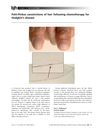
February 2005 in “British Journal of Haematology”
8 citations
,
February 2005 in “British Journal of Haematology” Chemotherapy caused the patient's hair to have alternating thick and thin segments.
 January 2022 in “Dermatology Review”
 EGFR inhibitors can cause unusual localized hair growth.
 2 citations
,
September 2020 in “Biomedical materials”
2 citations
,
September 2020 in “Biomedical materials” Recombinant keratin materials may better promote skin cell differentiation than natural keratin.
March 2026 in “Tissue Engineering and Regenerative Medicine”  April 2023 in “Journal of Investigative Dermatology”
 The document's conclusion cannot be provided because the content is not accessible.
Lichen spinulosus, usually seen in young people, can rarely occur in adults, as shown by a 52-year-old woman with a rough, bumpy rash.
3 citations
,
April 2015 in “Current problems in dermatology” A more sensitive assay was developed to detect enzyme activity converting arginine to citrulline in hair follicles.
5 citations
,
August 2016 in “International Journal of Cosmetic Science” Shampoo coacervates can cause scalp irritation due to released surfactants.
 15 citations
,
July 1997 in “Clinics in Dermatology”
15 citations
,
July 1997 in “Clinics in Dermatology” Traditional Chinese medications can cause skin reactions, and better testing and reporting are needed to identify allergens.
July 2024 in “Journal of Investigative Dermatology” IL-13 protein is much higher in the skin of atopic dermatitis patients than in healthy skin.
Nod factor can trigger changes in legume root hairs with just one molecule.
April 2026 in “Expert Opinion on Biological Therapy” Prurigo nodularis is hard to diagnose and treat, but new biologics offer hope for better management.
63 citations
,
April 2005 in “Mechanisms of development” Mice with too much Claudin-6 have skin barrier problems and abnormal hair growth.
12 citations
,
December 2023 in “Plant Communications” ADF8 and ADF11 help root hairs grow longer at high pH.
April 2021 in “Journal of Investigative Dermatology”  17 citations
,
December 2010 in “Journal of Investigative Dermatology”
17 citations
,
December 2010 in “Journal of Investigative Dermatology” Flightless I protein affects hair growth, with low levels delaying it and high levels increasing hair length in rodents.
 3 citations
,
November 2022 in “Frontiers in molecular biosciences”
3 citations
,
November 2022 in “Frontiers in molecular biosciences” Plasmalogens activate a channel in cells that may stimulate hair growth.
 January 2022 in “Journal of Skin and Stem Cell”
 Trichodynia is a painful scalp condition needing targeted treatments beyond symptom management.
 4 citations
,
January 2015 in “Sen'i Gakkaishi”
4 citations
,
January 2015 in “Sen'i Gakkaishi” Hair and wool strength is affected by the number and type of bonds in their protein structures, with hair having more protein aggregates than wool.
 3 citations
,
January 2022 in “Journal of The American Academy of Dermatology”
3 citations
,
January 2022 in “Journal of The American Academy of Dermatology” Using sunscreen and moisturizers may increase the chance of developing Frontal fibrosing alopecia (FFA), but the exact reason why is still unclear.
November 2025 in “Journal of Investigative Dermatology” A new genetic mutation causing Xeroderma Pigmentosum was found in an 8-year-old girl, affecting her DNA repair.
2 citations
,
January 2018 in “Biomolecules & therapeutics” Polyamidoamine dendrimers can change the strength and direction of electroosmotic flow through the skin, affecting drug delivery.
4 citations
,
December 2018 in “Zenodo (CERN European Organization for Nuclear Research)” Biomagnetic forces can deform red blood cells.
44 citations
,
January 2017 in “Journal of Investigative Dermatology” Mutations in the KLHL24 gene cause skin blistering in epidermolysis bullosa simplex.