 September 2025 in “Journal of Science Innovations and Nature of Earth”
 Anthocyanins in berries and purple veggies offer health benefits but need better processing for full use.
June 2025 in “OPAL (Open@LaTrobe) (La Trobe University)” A new hair dye method uses polyphenols and oxidation to create a long-lasting brown color on gray hair.
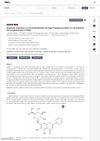
Enzymatic synthesis improved the water solubility of the flavonoid baicalin, which may help treat hair loss conditions.
9 citations
,
December 2023 in “Materials Today Bio” Multibranch carboxyl-modified cellulose is a safe and effective material for stopping bleeding.
2 citations
,
October 2024 in “Artificial Cells Nanomedicine and Biotechnology” Greenly synthesized silver nanoparticles from lentils show strong anticancer and antimicrobial effects.
 76 citations
,
July 2019 in “Scientific Reports”
76 citations
,
July 2019 in “Scientific Reports” Baicalin nanocapsules greatly enhance its anticancer effects on breast cancer cells.
A new compound from Royoporus badius activates immune cells and induces inflammatory responses.
 9 citations
,
November 2012 in “Biomolecules & therapeutics”
9 citations
,
November 2012 in “Biomolecules & therapeutics” A compound from brown algae boosts the production of a certain inflammatory substance in skin cells.
 June 2024 in “International journal of biological macromolecules”
 The hydrogel effectively stops bleeding and heals diabetic wounds quickly.
2 citations
,
July 2025 in “Acta Pharmacologica Sinica” Isoginkgetin reduces inflammation in cells by blocking NF-κB activation.
 2 citations
,
September 2022 in “Cellular and molecular biology”
2 citations
,
September 2022 in “Cellular and molecular biology” Agaricus bisporus derived β-Glucan could be an effective cervical cancer treatment with antimicrobial and antioxidant properties.
 13 citations
,
August 2019 in “Biological & Pharmaceutical Bulletin”
13 citations
,
August 2019 in “Biological & Pharmaceutical Bulletin” Certain flavonoids help grow back colored hair after skin injury.
15 citations
,
June 2021 in “International Journal of Molecular Sciences” CMC2.24 and CMC2.23 reduce melanin safely and effectively.
 November 2022 in “Journal of Investigative Dermatology”
 Apocynin may protect skin cells from aging and damage caused by UVB light.
3 citations
,
May 2021 in “Genetics and Biodiversity Journal” Citrullus colocynthis fruit extract has strong antioxidant and cancer-fighting potential.
 1 citations
,
October 2021 in “Bioactive compounds in health and disease”
1 citations
,
October 2021 in “Bioactive compounds in health and disease” Hibiscus anthocyanins help protect the liver and improve antioxidants in diabetic rats.
17 citations
,
May 2019 in “Molecules” These temporary hair dyes may be harmful to human health.
2 citations
,
June 2025 in “International Journal of Molecular Sciences” Carthamus caeruleus root juice may reduce inflammation.
 March 2024 in “Journal of Experimental & Biomedical Sciences/Biomedical Science Letters”
 BCC can protect heart cells from damage caused by oxidative stress.
 December 2011 in “The Diabetes Educator”
 The Blood Glucose Management Service improved patient safety and outcomes in managing blood sugar in hospitalized patients.
 August 2019 in “Journal of Invertebrate Pathology”
 Thymosin beta 4 protects cells from damage by blocking a harmful microRNA and boosting a protective gene.
New pyridine compounds effectively inhibit GSK3, a diabetes treatment target.
January 1980 in “Lluc: revista de cultura i d'idees” Agaricus bisporus β-Glucan particles could effectively treat cervical cancer and offer antimicrobial and antioxidant benefits.
 January 2025 in “Nanoscale”
 Boron/nitrogen-doped carbon nano-onions improve targeted breast cancer treatment by enhancing drug delivery and reducing side effects.
January 2026 in “International Journal of Biological Macromolecules” 4 citations
,
September 2013 in “Journal of biomolecular structure and dynamics/Journal of biomolecular structure & dynamics” Caribine from traditional Chinese medicine may help treat hair loss.
Rice bran polysaccharides have potential uses in food, health, and cosmetics due to their beneficial bioactive properties.
The hydrogel significantly improves healing in diabetic wounds.
1 citations
,
October 2023 in “Pharmaceuticals” Sulfated polysaccharides from Microcosmus exasperatus may help treat cancer without causing blood thinning.
 July 1989 in “British Journal of Dermatology”
 Long-term use of canthaxanthin may cause reversible changes in the eye, including crystal deposits and altered vision responses.