3 citations
,
October 2023 in “Journal of Pain” Certain proteins might predict surgical success in trigeminal neuralgia treatment.
 3 citations
,
October 2022 in “Frontiers in Surgery”
3 citations
,
October 2022 in “Frontiers in Surgery” Proteomics combined with other technologies can lead to a better understanding of skin diseases.
2 citations
,
February 2025 in “PLoS ONE” Key proteins influence wool quality by affecting hair follicle development in sheep.
1 citations
,
April 2023 in “Animals” Deleting the EDAR gene in Cashmere goats affects genes and proteins related to hair growth.
 1 citations
,
February 2023 in “All Life”
1 citations
,
February 2023 in “All Life” The research identified proteins that change as goat hair follicles begin to form, helping to understand how cashmere grows.
 1 citations
,
December 2018 in “IntechOpen eBooks”
1 citations
,
December 2018 in “IntechOpen eBooks” Human hair shows promise for non-invasive medical testing, but more research is needed to standardize its use.
High CCL11 levels may indicate poor response to baricitinib in severe alopecia areata.
 October 2025 in “Frontiers in Veterinary Science”
 Key proteins affecting cashmere fiber quality were identified for better breeding.
 July 2025 in “Scientific Reports”
 Dermal papilla cell-conditioned medium can help reduce skin aging caused by oxidative stress.
March 2025 in “International Journal of Molecular Sciences” PLIN2 affects hair growth in cashmere goats, potentially improving cashmere quality.
 October 2024 in “Archives of Dermatological Research”
 Male and female pattern hair loss have different molecular pathways, suggesting unique treatment targets for each sex.
March 2024 in “International journal of molecular sciences” The research identified key proteins that affect wool fiber thickness in Angora rabbits.
 21 citations
,
March 2018 in “Experimental Dermatology”
21 citations
,
March 2018 in “Experimental Dermatology” The guide explains how to study human skin fat cells and their tissue, aiming to improve research and medical treatments.
October 2023 in “International journal of molecular sciences” Key proteins and pathways regulate wool fiber diameter in Alpine Merino sheep.
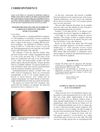 21 citations
,
January 2005 in “Pediatric Dermatology”
21 citations
,
January 2005 in “Pediatric Dermatology” An 8-year-old girl with vitiligo developed extra hair growth on her knee after using tacrolimus ointment.
 20 citations
,
October 2016 in “Veterinary dermatology”
20 citations
,
October 2016 in “Veterinary dermatology” Dogs with generalized discoid lupus erythematosus have similar symptoms to humans and need continuous treatment.
 11 citations
,
April 2020 in “Journal of Dermatological Treatment”
11 citations
,
April 2020 in “Journal of Dermatological Treatment” Taking oral isotretinoin with creams worked better for treating a type of hair loss than creams alone.
 November 2021 in “International journal of life science and pharma research”
 The new gel for psoriasis is effective, stable, and easy to apply.
68 citations
,
August 2014 in “PeerJ” Human hair proteins vary by individual, body site, and ethnicity, useful for forensics.
4 citations
,
July 2025 in “Annals of the New York Academy of Sciences” Combining skeletal and molecular anthropology improves identifying human remains.
1 citations
,
May 2025 in “BMC Genomics” lncRNAs may help control cashmere goat hair growth by responding to light changes.
1 citations
,
February 2023 in “Pharmaceutics” Cell proteomic footprinting enhances cancer vaccine quality by ensuring correct antigen composition.
 February 2026 in “International Journal of Molecular Sciences”
 New biological pathways and potential treatment targets for male pattern baldness were identified.
 November 2025 in “BMC Genomics”
 Melatonin helps control hair growth in cashmere goats, which could improve cashmere production.
 October 2025 in “International Journal of Molecular Sciences”
 Early intervention in patch-type alopecia may prevent progression to more severe forms by targeting immune pathways and preserving keratin.
November 2025 in “Psychoneuroendocrinology” Hair proteomics could be a useful, non-invasive tool for identifying stress-related disorders.
59 citations
,
January 2021 in “Genes” Twelve key genes may improve cashmere production by influencing hair follicle cycles.
30 citations
,
June 2022 in “Animals” Key genes, including KRT39 and KRT74, influence hair length in Inner Mongolia cashmere goats.
11 citations
,
July 2022 in “Frontiers in Immunology” Four specific genes are linked to keloid formation and could be potential treatment targets.
 7 citations
,
June 2022 in “Frontiers in Veterinary Science”
7 citations
,
June 2022 in “Frontiers in Veterinary Science” Researchers found genes linked to hair growth cycles in Inner Mongolia cashmere goats, which could help understand and treat hair loss.