5 citations
,
March 2017 in “Molecular biology of the cell” Different parts of cells interact at specific areas to control cell functions like energy production and fat storage.
5 citations
,
December 2002 in “The journal of investigative dermatology. Symposium proceedings/The Journal of investigative dermatology symposium proceedings” Skin cells might help spread prion diseases like Creutzfeldt-Jakob disease.
4 citations
,
December 2018 in “International Journal of Research -GRANTHAALAYAH” Biomagnetic forces can deform red blood cells, not just mechanical factors.
3 citations
,
March 2024 in “Viruses” γδ T cells are essential for wound healing after poxvirus infection.
 3 citations
,
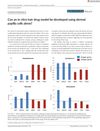
February 2021 in “Experimental dermatology”
3 citations
,
February 2021 in “Experimental dermatology” Dermal papilla microtissues could be useful for initial hair growth drug testing.
2 citations
,
February 2025 Merkel cell polyomavirus can infect and persist in skin cells, evading the immune system, but certain treatments can control it.
 2 citations
,
January 2023 in “Applied Science and Convergence Technology”
2 citations
,
January 2023 in “Applied Science and Convergence Technology” 3D bioprinting is useful for making tissues, testing drugs, and delivering drugs, but needs better materials, resolution, and scalability.
2 citations
,
January 2022 in “The Application of Clinical Genetics” A young Russian girl with Meier-Gorlin syndrome has two new mutations in the CDC6 gene.
 2 citations
,
May 2021 in “Bioengineering”
2 citations
,
May 2021 in “Bioengineering” Blood stem cells are diverse, influenced by many factors, and understanding them is key for progress in regenerative medicine.
 2 citations
,
January 2008 in “Elsevier eBooks”
2 citations
,
January 2008 in “Elsevier eBooks” Humans have limited regenerative abilities, but new evidence shows the adult brain and heart can regenerate, and future treatments may improve this by mimicking stem cell environments.
1 citations
,
May 2022 in “IntechOpen eBooks” Natural products might help treat COVID-19, but current drugs like hydroxychloroquine haven't worked.
 1 citations
,
March 2020 in “Journal of Pharmacological Sciences”
1 citations
,
March 2020 in “Journal of Pharmacological Sciences” Benzothiazepines like diltiazem reduce anxiety in mice by making neurosteroids.
 1 citations
,
September 2016 in “Acta Chromatographica”
1 citations
,
September 2016 in “Acta Chromatographica” Created method to measure doxazosin mesylate and finasteride together.
1 citations
,
January 2012 in “Pigment Cell & Melanoma Research” Stem cell niches are crucial for maintaining stem cells, with Paneth cells and TGF-beta playing key roles.
 1 citations
,
February 2009 in “Clinical Genetics”
1 citations
,
February 2009 in “Clinical Genetics” New genes linked to male pattern baldness were found on chromosome 20p11.
 1 citations
,
October 1996 in “Journal of Cutaneous Medicine and Surgery”
1 citations
,
October 1996 in “Journal of Cutaneous Medicine and Surgery” Gene therapy shows promise for treating skin disorders and cancer, but faces technical challenges.
 June 2026 in “arXiv (Cornell University)”
 The new method improves SNP analysis in genetic studies by combining tests, enhancing accuracy and cost-effectiveness.
 April 2026 in “Journal of Dermatological Science”
 Hair organoids are effective for testing hair loss treatments.
March 2026 in “Virulence” Vimentin and keratin help viruses spread and could be targets for antiviral treatments.

Men with hair loss and shorter height may be perceived as less attractive.
January 2026 in “Dermatologic Therapy” Current models for studying alopecia are inadequate, and more human-like systems are needed.
November 2025 in “Advanced Healthcare Materials” Bioprinting is improving skin models for better testing of skin diseases without using animals.
 July 2025 in “Advanced Science”
 Collagen VI and Semaphorin 3C are important for hair pigmentation and could help treat pigmentation disorders.

New hair regrowth therapies show promise but need more research.
Testosterone's health effects are complex and not definitively understood.
Hit15 shows promise as a COVID-19 treatment by reducing virus infection and inflammation.
 June 2024 in “The American journal of psychiatry”
 Schizophrenia risk genes may affect early brain development, contributing to the disease.
 March 2024 in “International journal of pharmaceutical and bio-medical science (Print)”
 Angelica Sinensis and Chinese Arborvitae have various medicinal benefits, including anti-inflammatory and anti-cancer effects.
December 2023 in “International journal of molecular sciences” Chromosomal differences affect how muscle cells respond to testosterone.
 August 2023 in “Frontiers in Endocrinology”
 Mutations in mitochondrial DNA might significantly contribute to the development of Polycystic Ovarian Syndrome.