Search
for
Sort by
Research
510-540 / 1000+ results
research Safety and Efficacy Assessment of Red Ginseng Oil (RXGIN) in Men with Lower Urinary Tract Symptoms in a Randomized, Double-Blind, Placebo-Controlled Trial
Red ginseng oil improves urinary symptoms and some sexual functions in men safely.
research Application of 3D Reflectance Confocal Microscopy: Melanocytic Proliferations as 3D Models; JAAD Supplemental Material
3D models from confocal microscopy improve melanoma detection on sun-damaged skin.
research Restolin - Successful Hair Loss Treatment!
research Dermatological drugs, topical agents, and cosmetics
Tretinoin gel is safe for sun exposure, but tacalcitol doesn't significantly improve non-segmental vitiligo.
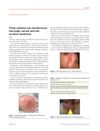
research Three orphans one should know: red scalp, red ear and red scrotum syndrome
The document concludes that early recognition and appropriate treatment of red scalp, red ear, and red scrotum syndromes can lead to remission.
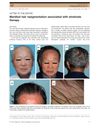
research Manifest hair repigmentation associated with etretinate therapy
An 82-year-old man's white hair regained color after taking etretinate for psoriasis.

research Synergistic delivery of ginseng exosomes and biomimetic melanosomes via temporally controlled hydrogel microneedles restrain the pathologic triad of vitiligo
A new microneedle treatment can effectively repigment skin in vitiligo.

research The role of 3Rs in the age of One Health: where we are and where we’re going
Innovative methods are reducing animal testing and improving biomedical research.
research Alopecia totalis successfully treated with modified platelet-rich plasma therapy in a patient recalcitrant to traditional treatment modalities
Modified PRP therapy successfully treated severe alopecia unresponsive to traditional methods.
research Update in minimally invasive periorbital rejuvenation with a focus on platelet‐rich plasma: A narrative review
PRP is effective for improving the appearance around the eyes.
research Efficacy and safety of autologous cell-based therapies for atrophic acne scar treatment: an updated systematic review and meta-analysis with in-depth methodological and clinical insights
Autologous cell-based therapies, especially SVF, effectively and safely improve atrophic acne scars.

research Role of Autologous Micrografting Technology through Rigenera® System in the Treatment of Androgenetic Alopecia
Autologous micrografting via the Rigenera® system shows promise in improving hair loss treatment.
research Combination therapy with oral PUVA and corticosteroid for recalcitrant alopecia areata
The combination of oral PUVA and corticosteroids helps regrow hair in severe alopecia areata.

research Tissue Expanders for Hair Restoration in the Scalp: Overexpansion Does Matter
Tissue expansion is a safe and effective method for scalp hair restoration with high success and patient satisfaction.
research ROS-responsive hydrogel-delivered miR-665 targets STAT3 to alleviate inflammation and promote hair follicle regeneration in alopecia areata
A new treatment using a special gel with miR-665 reduces inflammation and helps hair regrow in alopecia areata.
research Elevating Dermatology Beyond Aesthetics: Perinatal-Derived Advancements for Rejuvenation, Alopecia Strategies, Scar Therapies, and Progressive Wound Healing
research Review of Made in Italy: Hair Restoration Live Video Surgery Workshop
The workshop successfully improved hair restoration skills and techniques.

research 924 Efficient genome editing using CRISPR/Cas9 ribonucleoprotein approach in iPS cells for recessive dystrophic epidermolysis bullosa
Researchers fixed gene mutations causing a skin disease in stem cells, which then improved skin grafts in mice.
research Procesul de vindecare fără cicatrizare – review de literatură
Fetal skin can heal without scars, offering insights for better wound treatments.
research Adipocyte-Derived Stem and Regenerative Cells in Facial Rejuvenation
Adding stem cells to fat grafts for facial rejuvenation might improve outcomes, but more research is needed to confirm safety and effectiveness.
research Efficacy and safety of ritlecitinib in adolescents with alopecia areata: Results from the ALLEGRO phase 2b/3 randomized, double‐blind, placebo‐controlled trial
Ritlecitinib effectively regrows hair in adolescents with alopecia areata and is safe.
research Excimer Laser: A Module of the Alopecia Areata Common Protocol
The excimer laser may help hair regrow in alopecia areata patients.
research Hypothesis: Wound‐induced TLR3 activation stimulates endogenous retinoic acid synthesis and signalling during regeneration
Activating TLR3 may help produce retinoic acid, important for tissue regeneration.
research Dr Reddy's Laboratories has announced the launch of its finasteride and simvastatin tablets,
research Nifedipine: a new treatment for perniosis
Nifedipine may help treat perniosis, improving symptoms and clearing lesions for some patients.
research Correction of the Cornrow Transplant and Other Common Problems in Surgical Hair Restoration
Dr. Vogel improved hair restoration by reducing and recycling hair plugs, achieving a more natural look and a 50-80% survival rate for replanted follicles. He emphasized understanding natural hair loss patterns, educating patients about alopecia, and refusing to operate on those who don't understand these aesthetics.
research Correction of involutional skin changes using microfocused ultrasound combined with PRP-therapy
Combining microfocused ultrasound with PRP-therapy improves skin quality and patient satisfaction more than ultrasound alone.
research Adjuvant Scalp Rolling for Patients With Refractory Alopecia Areata
Scalp rolling might help regrow hair in people with a hair loss condition called Alopecia Areata.
research Autologous Cell Therapy for Aged Human Skin: A Randomized, Placebo-Controlled, Phase-I Study
RCS-01 therapy is safe and may improve skin structure by affecting gene expression.