miR-214-3p helps nerve repair and recovery.
April 2025 in “International Journal of Dermatology” Renaming frontal fibrosing alopecia to a syndrome could improve diagnosis and treatment.
3 citations
,
October 2025 in “Dentistry Journal” Low-speed protocols with certified centrifuges and FDA-approved glass tubes are best for effective PRF outcomes.
 39 citations
,
July 2015 in “British Journal of Dermatology”
39 citations
,
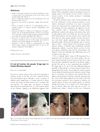
July 2015 in “British Journal of Dermatology” The pseudo 'fringe sign' can also appear in frontal fibrosing alopecia, not just in traction alopecia, showing that this condition may be more common than thought.
 August 2019 in “Stem cells”
 New treatments for hair loss, fertility, and wound healing are being explored.
 13 citations
,
September 2018 in “Scientific Reports”
13 citations
,
September 2018 in “Scientific Reports” The research found that a complex gene network, controlled by microRNAs, is important for hair growth in cashmere goats.
21 citations
,
January 2006 in “Hormone Research in Paediatrics” A mutation in the VDR gene affects hair cycling without needing ligand binding.
 June 2025 in “Aesthetic Cosmetology and Medicine”
 Polydeoxyribonucleotides may help with healing and anti-aging, but more research is needed.
 4 citations
,
October 2024 in “BMC Oral Health”
4 citations
,
October 2024 in “BMC Oral Health” Platelet-rich fibrin shows promise for treating oral lesions but needs more research.
36 citations
,
October 2009 in “Journal of biological chemistry/The Journal of biological chemistry” Two new compounds were found to build bone and muscle without affecting reproductive organs and skin oil glands.
MFN2 mutations cause mitochondrial problems, unusual fat distribution, and low leptin despite high body fat.
 January 2022 in “Figshare”
 Melatonin affects when and how certain genes work during the growth of goat hair follicles.
 10 citations
,
September 2015 in “PLoS ONE”
10 citations
,
September 2015 in “PLoS ONE” New mutations in the VDR gene cause vitamin D-resistant rickets without hair loss.
 2 citations
,
January 2023 in “Eastern Journal Of Medicine”
2 citations
,
January 2023 in “Eastern Journal Of Medicine” PRF is preferred for better healing in dental surgeries.
 20 citations
,
March 2019 in “Nutrients”
20 citations
,
March 2019 in “Nutrients” Rumex japonicus Houtt. may be an effective treatment for atopic dermatitis by reducing inflammation.
 September 2019 in “Journal of Investigative Dermatology”
 Retinol significantly reduces neck wrinkles.
10 citations
,
August 1998 in “Journal of Investigative Dermatology” December 2016 in “Chin J Anat Clin” Rat hair follicle stem cells can be effectively isolated and used for tissue engineering.
 4 citations
,
September 2016 in “PubMed”
4 citations
,
September 2016 in “PubMed” Using platelet-rich fibrin matrix with hair transplant techniques helps in hair regrowth in male baldness patients.
July 2024 in “Journal of Investigative Dermatology”  13 citations
,
June 2020 in “BMC genomics”
13 citations
,
June 2020 in “BMC genomics” A specific microRNA, chi-miR-30b-5p, slows down the growth of hair-related cells by affecting the CaMKIIδ gene in cashmere goats.
 7 citations
,
January 2015 in “Dermatology”
7 citations
,
January 2015 in “Dermatology” Two gene variations, rs6493497 and rs7176005, may be linked to female hair loss in Chinese people.
 February 2022 in “Research Square (Research Square)”
 A protein made in a plant stopped hair growth in mice.
 July 2023 in “Frontiers in veterinary science”
 Certain long non-coding RNAs are important for controlling hair growth cycles in sheep.
3 citations
,
December 2024 in “Journal of Animal Science” LncRNA MSTRG.14227.1 hinders hair follicle development in cashmere goats, affecting cashmere quality.
 November 2022 in “Journal of Investigative Dermatology”
 Some people with schwannomatosis have a new type of mutation in the LZTR1 gene.

sFRP4 partially inhibits hair regeneration, but the study needs clearer data analysis and better explanation of the process.
December 2005 in “Science s STKE” Localized ROS production is essential for cell growth and movement in plants and animals.
 2 citations
,
February 2022 in “Human Gene Therapy”
2 citations
,
February 2022 in “Human Gene Therapy” Increasing miR-149 reduces hair follicle stem cell growth and hair development by affecting certain cell growth pathways.
 3 citations
,
October 2021 in “Research Square (Research Square)”
3 citations
,
October 2021 in “Research Square (Research Square)” The model can effectively help diagnose meibomian gland dysfunction automatically.