7 citations
,
October 2024 in “Journal of the American Academy of Dermatology” Continued ritlecitinib treatment helps sustain hair regrowth in alopecia areata patients.
 1 citations
,
March 2023 in “Science Translational Medicine”
1 citations
,
March 2023 in “Science Translational Medicine” Blocking a certain signal in the gp130 receptor can improve tissue healing and lessen osteoarthritis symptoms.
23 citations
,
December 2013 in “Molecular cancer therapeutics” Breast cancer treatments work better with AR activation, improving results and reducing side effects.
 April 2023 in “Journal of Investigative Dermatology”
 ALRN-6924 can protect hair follicles from chemotherapy damage by temporarily stopping cell division.
4 citations
,
March 2025 in “The Journal of Dermatology” Ritlecitinib is effective and safe for hair regrowth in Asian patients with alopecia areata.
November 2023 in “SKIN The Journal of Cutaneous Medicine” Ritlecitinib effectively maintains hair regrowth in alopecia areata patients.
 19 citations
,
September 2019 in “EMBO molecular medicine”
19 citations
,
September 2019 in “EMBO molecular medicine” Blocking TSLP reduces skin inflammation and cell overgrowth in psoriasis.
16 citations
,
April 2006 in “Pediatrics International” High-dose mizoribine effectively controls symptoms in adolescents with lupus while reducing steroid use, with manageable side effects.
 29 citations
,
January 2016 in “CNS drugs”
29 citations
,
January 2016 in “CNS drugs” Teriflunomide is effective and generally safe for treating relapsing-remitting multiple sclerosis.
 29 citations
,
January 2010 in “Methods in Enzymology”
29 citations
,
January 2010 in “Methods in Enzymology” The document concludes that careful design of genetic fate mapping experiments is crucial for accurate cell lineage tracing in mice.
5 citations
,
August 2005 in “Anatomy and Embryology” Rat skin has a linear system of nerve fibers linked to hair follicles and muscles.
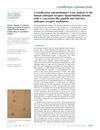 1 citations
,
November 2008 in “Acta crystallographica”
1 citations
,
November 2008 in “Acta crystallographica” Scientists successfully created and analyzed the structure of a part of the human androgen receptor with specific modulators and a peptide to understand how it binds differently in various tissues.
303 citations
,
October 2000 in “Nature” RXRα is crucial for hair growth and skin cell function.
April 2023 in “Journal of Investigative Dermatology” Targeting mTOR in myeloid cells may help reduce psoriasis symptoms.
4 citations
,
January 2023 in “bioRxiv (Cold Spring Harbor Laboratory)” PrrH sRNA controls pyochelin gene expression in Pseudomonas aeruginosa based on heme levels.
44 citations
,
May 1998 in “PubMed” The retinoid receptor antagonist effectively disrupts vitamin A-related development in embryos.
21 citations
,
December 1994 in “Journal of Investigative Dermatology” 125 citations
,
February 2007 in “The EMBO Journal” Fgfr2b helps maintain healthy skin and prevent cancer.
1 citations
,
June 2014 in “Journal of developmental biology” Retinoic acid helps change skin cells and is important for skin development and hair growth.
July 2026 in “Skin Appendage Disorders” Ritlecitinib effectively regrows hair in treatment-resistant alopecia areata with mild side effects.
 May 2017 in “Journal of The American Academy of Dermatology”
 PLAU and SerpinB2 affect cell death differently in various forms of leprosy and could be targets for new treatments.
July 2024 in “Journal of Investigative Dermatology” 28 citations
,
November 2013 in “Cell and Tissue Research”  1 citations
,
April 2021 in “bioRxiv (Cold Spring Harbor Laboratory)”
1 citations
,
April 2021 in “bioRxiv (Cold Spring Harbor Laboratory)” RD26 controls root hair growth during drought by repressing key genes, helping plants save energy.
1 citations
,
November 2025 in “American Journal of Clinical Dermatology” Ritlecitinib is generally safe for long-term use in treating alopecia areata.
1 citations
,
October 2025 in “Journal of Dermatological Treatment” Dupilumab improves eczema in Netherton Syndrome but not ichthyosis linearis circumflexa.
 August 2004 in “Journal of the American College of Surgeons”
 Several genes, including Hox-7A, Stra6, and Lim-1, are involved in normal palate formation.
 1 citations
,
April 2017 in “Journal of Investigative Dermatology”
1 citations
,
April 2017 in “Journal of Investigative Dermatology” CCL5 is important for the hair growth potential of human dermal papilla cells.
3 citations
,
November 2005 in “Journal of Investigative Dermatology Symposium Proceedings” Enhancing regulatory T cells may help treat autoimmune diseases like alopecia areata.
 January 2023 in “Annals of dermatology/Annals of Dermatology”
 A substance called miR-1246 may help treat severe hair loss by reducing certain immune cell activities.