 1 citations
,
November 2017 in “Skin appendage disorders”
1 citations
,
November 2017 in “Skin appendage disorders” Ingrown hairs are a common feature in scarring alopecias due to follicular damage.

Loose anagen hair syndrome in children may improve with age, but treatment results vary.
 December 2025 in “Russian Journal of Skin and Venereal Diseases”
 Thinner hair follicle structures are linked to non-scar alopecia.
 October 2024 in “BMC Genomics”
 Understanding hair follicle development can help improve cashmere quality.
 October 2024 in “SPIRE - Sciences Po Institutional REpository”
 Glypicans help hair follicle stem cells differentiate by interacting with specific receptors, influencing hair growth.

Hair RiseTM microemulsion effectively promotes hair growth and treats hair loss better than standard treatments.
 February 2024 in “Journal of Dermatological Science”
 Curved hair can develop when hair cells merge abnormally during growth.
 June 2023 in “Biochimica and biophysica acta. Molecular and cell biology of lipids”
 Impaired ABCA5 activity disrupts cholesterol balance in hair follicle cells, affecting hair growth.

Activating certain cells in hair follicles can prevent hair loss caused by cancer treatments.

Activating certain hair follicle cells could prevent hair loss from cancer treatments.
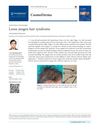 February 2023 in “Cosmoderma”
 Loose anagen hair syndrome causes easily shed hair but usually improves with time.
 November 2022 in “Journal of Investigative Dermatology”
 The lotion with specific plant extracts effectively increased hair growth and improved hair cycle in subjects after 3 months.
 November 2022 in “The journal of investigative dermatology/Journal of investigative dermatology”
 Researchers made a detailed map of gene activity for different parts of human hair follicles to help create targeted hair disorder treatments.
 July 2022 in “The journal of investigative dermatology/Journal of investigative dermatology”
 The early genes of a specific virus can cause abnormal skin cell growth and hair follicle changes.
May 2022 in “British Journal of Dermatology” The girl's hair condition improved on its own in 24 months.
 April 2020 in “Journal of animal research”
 Canine hair follicles have stem cells in the bulge region.
Shikimic acid can promote hair growth and may help treat hair loss.
 September 2019 in “The journal of investigative dermatology/Journal of investigative dermatology”
 Hair follicles repair 3D injuries using a 2D healing process.
 September 2017 in “The journal of investigative dermatology/Journal of investigative dermatology”
 Human hair follicles have a unique way of using energy and might use the Cori cycle; blocking CCR5 could help treat hair loss.
 April 2017 in “Journal of Investigative Dermatology”
 The hair follicle dermal sheath is essential for hair shedding and needs to communicate with the outer root sheath for normal hair growth cycles.
 April 2017 in “Journal of Investigative Dermatology”
 Scientists created a tiny, 3D model of a hair follicle that grows and acts like a real one.
April 2017 in “Journal of dermatological science” Removing PLCg1 from skin cells caused thicker oil glands and less hair in mice.
August 2016 in “Journal of Investigative Dermatology” EZH2 is essential for hair growth and skin cell development.
April 2016 in “Journal of Investigative Dermatology” CD73 may regulate hair growth and could be targeted for hair growth treatments.
June 2014 in “Biotechnology and Bioprocess Engineering” Injecting lab-grown hair cells into the scalp can regrow hair.
 January 2014 in “Journal of the Korean Society of Design Culture”
 The study confirmed that changes in hair structure in women with hair loss conditions matched what is taught in beauty college trichology courses.
Somatostatin helps hair follicles suppress immune responses, which might aid in treating certain hair loss conditions.
March 2010 in “Faculty Opinions – Post-Publication Peer Review of the Biomedical Literature” Beard hair medulla cells have a unique and varied keratin pattern.
January 2008 in “Bradford Scholars (University of Bradford)” Alopecia areata may be caused by antibodies targeting specific hair follicle proteins, hindering hair growth.
April 2007 in “Linchuang pifuke zazhi” TGF-β1 and 2 may play a role in hair loss in AGA.