 July 2016 in “American Journal of Dermatopathology”
 The meeting showcased rare skin disease cases, highlighting the need for accurate diagnosis and treatment.
 195 citations
,
February 2007 in “The Journal of Clinical Endocrinology and Metabolism”
195 citations
,
February 2007 in “The Journal of Clinical Endocrinology and Metabolism” Dutasteride and finasteride may reduce sperm count and volume but don't affect movement or shape; effects are reversible after stopping.
 83 citations
,
April 1992 in “Clinical Endocrinology”
83 citations
,
April 1992 in “Clinical Endocrinology” Having enough iron improves the effectiveness of a specific hair loss treatment in women.
 78 citations
,
August 2012 in “Human molecular genetics online/Human molecular genetics”
78 citations
,
August 2012 in “Human molecular genetics online/Human molecular genetics” A new gene, JMJD1C, may affect testosterone levels in men.
 73 citations
,
January 2013 in “Annals of Dermatology”
73 citations
,
January 2013 in “Annals of Dermatology” People with hair loss, especially those with certain types, have lower zinc levels, and zinc supplements might help.
 56 citations
,
January 2008 in “Dermatology”
56 citations
,
January 2008 in “Dermatology” Higher iron levels in the blood are not linked to increased hair loss in women.
 37 citations
,
March 2014 in “Journal of Trace Elements in Medicine and Biology”
37 citations
,
March 2014 in “Journal of Trace Elements in Medicine and Biology” Lower hair zinc and copper levels found in Turkish males with hair loss; higher BMI linked to less hair zinc.
 17 citations
,
August 2007 in “Bioorganic & Medicinal Chemistry Letters”
17 citations
,
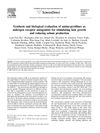
August 2007 in “Bioorganic & Medicinal Chemistry Letters” A compound made by Pfizer can potentially stimulate hair growth and reduce oil production, making it a good candidate for topical use.
 14 citations
,
January 2020 in “Advances in Dermatology and Allergology”
14 citations
,
January 2020 in “Advances in Dermatology and Allergology” Higher interleukin-15 levels are linked to more severe alopecia areata, but not to age or gender.
 14 citations
,
August 2007 in “Bioorganic & Medicinal Chemistry Letters”
14 citations
,
August 2007 in “Bioorganic & Medicinal Chemistry Letters” The compound (1R,2S)-4-(2-Cyano-cyclohexyl-oxy)-2-trifluoromethyl-benzonitrile can stimulate hair growth and reduce oil production when applied topically.
 11 citations
,
February 2019 in “Journal of Cosmetic Dermatology”
11 citations
,
February 2019 in “Journal of Cosmetic Dermatology” Low zinc and biotin levels linked to male hair loss; supplements may help.
 11 citations
,
March 2009 in “Bioorganic & Medicinal Chemistry Letters”
11 citations
,
March 2009 in “Bioorganic & Medicinal Chemistry Letters” Chemicals called 4-(alkylthio)- and 4-(arylthio)-benzonitrile derivatives can potentially reduce oil production on skin, which could help treat conditions like acne and hair loss.
 11 citations
,
August 2007 in “Bioorganic & Medicinal Chemistry Letters”
11 citations
,
August 2007 in “Bioorganic & Medicinal Chemistry Letters” Scientists made a chemical (compound 4e) that can be applied on skin to reduce oil production, which can help with acne, but it might cause skin sensitivity to light.
 10 citations
,
May 2017 in “PLOS ONE”
10 citations
,
May 2017 in “PLOS ONE” Men and premenopausal women in Korea show different patterns in iron and vitamin D levels, with no clear pattern for postmenopausal women.
 10 citations
,
August 2014 in “Skin research and technology”
10 citations
,
August 2014 in “Skin research and technology” Sleep, testosterone levels, and a specific enzyme activity affect skin oil production in women.
 10 citations
,
February 2008 in “International Journal of Andrology”
10 citations
,
February 2008 in “International Journal of Andrology” A combination of nanomilled oral testosterone and dutasteride normalized testosterone levels in men with low testosterone and is safe for short-term use.
 8 citations
,
September 2018 in “Journal of Cosmetic Dermatology”
8 citations
,
September 2018 in “Journal of Cosmetic Dermatology” Lower irisin levels in the blood may indicate more severe acne.
 7 citations
,
April 2009 in “Bioorganic & Medicinal Chemistry Letters”
7 citations
,
April 2009 in “Bioorganic & Medicinal Chemistry Letters” Diphenyl ethers can potentially reduce excess oil production when applied on the skin, helping treat conditions like acne.
 6 citations
,
September 2019 in “Journal of cosmetic dermatology”
6 citations
,
September 2019 in “Journal of cosmetic dermatology” Lower melatonin levels are linked to more skin aging.
 4 citations
,
September 2024 in “Frontiers in Endocrinology”
4 citations
,
September 2024 in “Frontiers in Endocrinology” Serum steroid profiling, especially 11-deoxycortisol, helps distinguish between adrenocortical carcinoma and adenoma, considering sex and functional status.
 4 citations
,
January 1989 in “Journal of Steroid Biochemistry”
4 citations
,
January 1989 in “Journal of Steroid Biochemistry” Women with hyperandrogenism have higher androgen levels and lower SHBG, which may contribute to conditions like excessive hair growth and early puberty.
 3 citations
,
September 2017 in “Galen medical journal”
3 citations
,
September 2017 in “Galen medical journal” Patients with psoriasis and cutaneous-oral lichen planus have higher blood homocysteine levels than healthy people.
 2 citations
,
April 2021 in “International Journal of Pharmaceutics”
2 citations
,
April 2021 in “International Journal of Pharmaceutics” Serum formulations were better at delivering molecules to the hair bulb than nanoparticles.
 1 citations
,
November 2011 in “Dermatologica Sinica”
1 citations
,
November 2011 in “Dermatologica Sinica” Women using hair relaxers with alopecia had lower zinc levels, suggesting zinc deficiency might contribute to hair loss.

Higher apelin-12 levels may indicate more severe acne.
 April 2025 in “Egyptian journal of Immunology”
 Calprotectin levels are higher in alopecia areata patients, indicating systemic inflammation.
 January 2025 in “International Journal of Dermatology Venereology and Leprosy Sciences”
 People with acne tend to have lower iron levels.
 January 2025 in “International Journal of Gynaecology Research”
 Adolescent females with PCOS have higher serum cystatin C levels, indicating potential metabolic and cardiovascular issues.
 November 2022 in “SAS journal of medicine”
 There's no link between low iron levels and the hair loss condition, alopecia areata.
 January 2022 in “International Journal of Medicine in Developing Countries”
 Many patients with hair loss had low iron and vitamin D levels, but thyroid issues were not common.