24 citations
,
May 2022 in “BMC Veterinary Research” lncRNAs play a key role in hair follicle development, affecting cashmere quality and yield.
 3 citations
,
December 2022 in “npj Regenerative Medicine”
3 citations
,
December 2022 in “npj Regenerative Medicine” HSPGs help control stem cell behavior, affecting hair growth and offering a target for hair loss treatments.

Bio-nanovesicles could improve hair and skin regeneration by delivering important molecules to repair and heal.
January 2026 in “Materialia” Porcine ADM scaffold helps hair growth in mice.
October 2025 in “Burns & Trauma” Engineered probiotics can help heal wounds faster, especially in diabetic foot ulcers.

Combining PRP with Tressfix Serum is more effective for hair regrowth in telogen effluvium than using either alone.
 April 2023 in “Journal of Cutaneous and Aesthetic Surgery”
 Using different hair loss treatments at various times can improve results and reduce side effects for people with chronic hair loss.

The study concludes that long COVID recovery involves time, various treatments, and a strong patient-provider relationship.
June 2024 in “Journal of Drug Delivery Science and Technology” Nanocarrier-based treatments show promise for better hair growth in androgenetic alopecia but need more research.
11 citations
,
July 2018 in “AJGP” Low-dose oral minoxidil effectively reduces hair loss in women with female pattern hair loss.
1 citations
,
February 2024 in “Cosmetics” Cannabidiol shows promise as an effective treatment for acne.
 July 2026 in “Veterinary Sciences”
 AKT1 gene is crucial for better cashmere production in younger goats.
June 2026 in “Journal of Dermatological Science” N,N-Dimethylglycine sodium salt helps prevent hair loss and promotes hair growth.

Vegan exosome-like vesicles from microalgae improve skin and hair health, reducing wrinkles and enhancing elasticity.
 March 2026 in “Zenodo (CERN European Organization for Nuclear Research)”
 The N-K GM Series offers treatments for full hair restoration and permanent hair removal, claiming 100% effectiveness without side effects.
 March 2026 in “Zenodo (CERN European Organization for Nuclear Research)”
 The N-K GM Series offers treatments for full hair restoration and permanent hair removal, claiming 100% effectiveness without side effects.
 January 2026 in “Dermatology and Therapy”
 General anesthesia might be linked to certain types of hair loss, but more research is needed.
January 2026 in “Dermatologica Sinica” Both oral and topical minoxidil effectively regrow hair in men with similar results.
November 2025 in “Cosmetics” Centella asiatica with growth factors improves hair and scalp health.
July 2025 in “Case Reports in Dermatology” Early detection and treatment are crucial to prevent irreversible hair loss in Lichen Planopilaris.
 April 2025 in “Archives of Dermatological Research”
 The combination of finasteride and minoxidil is as safe and effective as minoxidil alone for improving hair growth in men.
 January 2025 in “Advanced Materials Interfaces”
 Tannic acid can reduce hair loss by 56.2% by coating hair and releasing beneficial molecules.
 July 2024 in “Skin Appendage Disorders”
 The supplement significantly improves hair density and appearance in people with hair loss.
 1 citations
,
November 1983 in “The Lancet”
1 citations
,
November 1983 in “The Lancet” Acute leukemias with the Philadelphia chromosome may be biphenotypic, and identifying this is important for proper treatment.
 December 2025 in “Cureus”
 Low serum ferritin is linked to hair loss in women.
 January 2018 in “International journal of medical biochemistry”
 Women with telogen effluvium have lower levels of iron, folate, and vitamin B12.
AGA causes permanent hair loss; women use 2% minoxidil, men use 1 mg finasteride daily.
 April 2008 in “Blackwell Publishing Ltd eBooks”
 AGA causes permanent hair loss; minoxidil helps men, finasteride helps men, minoxidil somewhat helps women, estrogens/antiandrogens lack evidence for women.
 May 2013 in “Trends in Urology & Men's Health”
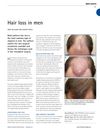
 Male-pattern hair loss is normal, often involves hormone effects on hair follicles, and can be treated with medication or surgery, but new treatments are being researched.
 January 2026 in “Bandung Conference Series Medical Science”
 Wearing a hijab does not cause hair loss.