 15 citations
,
April 2016 in “Hormones”
15 citations
,
April 2016 in “Hormones” Mutations in the NR3C1 gene cause a rare condition that affects hormone signaling and can lead to various symptoms, with dexamethasone as a treatment option.
346 citations
,
April 2020 in “Frontiers in Oncology” EMT and metabolic pathways help cancer cells resist treatment and spread.
 7 citations
,
January 2023 in “Journal of Hematology & Oncology”
7 citations
,
January 2023 in “Journal of Hematology & Oncology” Using protein degradation to fight cancer drug resistance shows promise but needs more precise targeting and fewer side effects.
12 citations
,
October 2023 in “International Journal of Molecular Sciences” Understanding how skin cells react to pressure can help diagnose and manage pressure-related skin disorders.
7 citations
,
October 2022 in “Development” Overactive Wnt5a disrupts hair follicle orientation in mice.
14 citations
,
March 2022 in “Plant Cell & Environment” The protein AtRXR3 limits root hair growth in Arabidopsis, affecting phosphorus uptake.
 October 2024 in “Current Issues in Molecular Biology”
 Platycladus orientalis leaf extract helps hair grow by activating certain proteins.
141 citations
,
May 2007 in “Cancer Research” CD34 is crucial for skin tumor development in mice.
39 citations
,
April 2023 in “Science Advances” CD34+ cells help heal damaged limbs by promoting blood vessel growth.
37 citations
,
December 2022 in “Acta Pharmaceutica Sinica B” Smart delivery methods for CRISPR gene editing are crucial for clinical success.
37 citations
,
February 2024 in “Military Medical Research” Biomaterials can help heal wounds without scars and regenerate skin features.
5 citations
,
May 2023 in “Frontiers in Cell and Developmental Biology” Integrin α6 helps identify different neural crest cell types in the skin.
7 citations
,
July 2024 in “Current Issues in Molecular Biology” Understanding skin stem cells and their regulation is key to improving skin healing and treating disorders.
 September 2023 in “Stem Cells International”
 Substances from fat-derived stem cells can promote hair growth and counteract hormone-related hair loss by activating a key hair growth pathway.
29 citations
,
March 2022 in “Biomedicines” Enhancing antioxidant responses can improve treatments for various diseases.
 May 2026 in “The EMBO Journal”
 Feather follicles form through specific cellular flows and mechanical changes in the skin.
 1 citations
,
March 2024 in “Signal transduction and targeted therapy”
1 citations
,
March 2024 in “Signal transduction and targeted therapy” NF-κB signaling is crucial in many diseases and can be targeted for new treatments.
 38 citations
,
September 2021 in “Signal Transduction and Targeted Therapy”
38 citations
,
September 2021 in “Signal Transduction and Targeted Therapy” Genetic differences affect COVID-19 severity and treatment development.
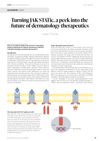 August 2024 in “New Zealand Medical Student Journal”
 JAK inhibitors show promise for treating skin diseases effectively and safely.
 159 citations
,
October 2015 in “Science Advances”
159 citations
,
October 2015 in “Science Advances” Blocking JAK-STAT signaling can lead to hair growth.
 49 citations
,
October 2009 in “Cancer research”
49 citations
,
October 2009 in “Cancer research” Disrupting Stat3 in hair follicle stem cells greatly reduces skin tumor formation.
 January 2025 in “Acta Dermatovenerologica Alpina Pannonica et Adriatica”
 Baricitinib is effective and safe for treating severe alopecia areata.
 January 2023 in “National Journal of Physiology, Pharmacy and Pharmacology”
 Tofacitinib effectively reduced hair loss in alopecia areata patients without adverse effects.
 August 2022 in “Nature Biotechnology”
 Drug approvals slowed in 2Q22, but notable drugs like Amvuttra, Camzyos, and Olumiant were approved.
 11 citations
,
February 2021 in “Journal of Cosmetic Dermatology”
11 citations
,
February 2021 in “Journal of Cosmetic Dermatology” Oral tofacitinib helped regrow hair in over half of the patients with severe alopecia, but relapses and side effects were common.
 1 citations
,
January 2008 in “touchREVIEWS in Endocrinology”
1 citations
,
January 2008 in “touchREVIEWS in Endocrinology” Generalized glucocorticoid resistance causes hormone imbalances and varied symptoms due to gene mutations.
 December 2016 in “Springer eBooks”
 Chrousos Syndrome is caused by mutations that make the body less sensitive to glucocorticoids, leading to various symptoms and requiring high-dose treatment.
 December 2022 in “Revista Medicina Cutánea Ibero-Latino-Americana”
 JAK inhibitors help treat alopecia areata but have high recurrence after stopping.
 March 2018 in “Suez Canal University Medical Journal”
 New drugs targeting the JAK-STAT pathway show promise for treating inflammatory skin diseases.
 124 citations
,
October 2019 in “Frontiers in Immunology”
124 citations
,
October 2019 in “Frontiers in Immunology” Janus kinase inhibitors are promising treatments for autoimmune skin diseases like eczema and psoriasis.